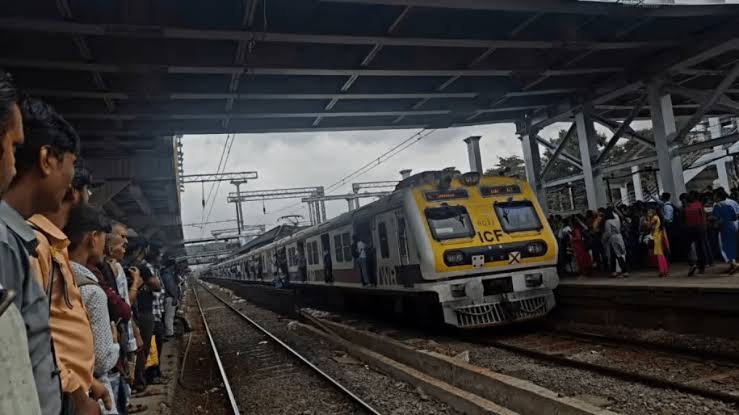
Western Railway approves faster services from Mumbai
Western Railway has approved higher operating speeds for 23 pairs of Mumbai-originating trains, allowing eligible LHB services to run at up to 130 kmph on suitable sections instead of the earlier 110 kmph limit. The move could reduce journey times on several long-distance routes, while also putting greater emphasis on track quality, signalling and timetable efficiency across the regional rail network. The clearance covers trains operating from Mumbai Central, Dadar and Bandra Terminus, with the services using Linke Hofmann Busch (LHB) coaches designed for higher-speed operation. Most of the identified services will run with 22 coaches, increasing the potential passenger capacity alongside the speed improvement.
Among the services covered are the Dadar–Ekta Nagar Express, Bandra–Bhavnagar Express, Bandra–Bhuj Express, Bandra–Okha Express, Dadar–Bhagat Ki Kothi Express and Dadar–Sri Ganganagar Express. Other services on the list include the Veraval–Bandra, Indore–Hisar and Okha–Jaipur routes. A separate clearance has also been granted to the Ahmedabad–Patna Express, which can operate at 130 kmph. Its rake will be expanded from 20 to 22 coaches, adding capacity to the speed upgrade. The change does not mean trains will travel at 130 kmph continuously. Actual speeds will continue to depend on track conditions, signalling arrangements, curves, railway crossings, temporary and permanent restrictions and station halts. The expected reduction in end-to-end travel time will therefore vary between routes.
Railway infrastructure specialists say the significance of the decision lies in improving average journey speeds rather than simply raising the maximum permissible speed. On longer corridors, even modest improvements in running speed can accumulate into meaningful time savings, provided the infrastructure allows trains to sustain higher speeds. The initiative also points to the economic value of making better use of existing rail assets. Increasing train speeds without building an entirely new corridor can improve network productivity and passenger convenience, although sustained benefits require continued investment in track renewal, signalling and maintenance. For Mumbai, faster long-distance services could strengthen rail’s competitiveness for intercity travel. This has wider urban implications because reliable rail connections can reduce dependence on private vehicles for longer journeys and support more efficient movement between major employment and economic centres. The next step will be the introduction of revised schedules reflecting the approved speeds. Until those timetables are formally notified, the precise journey-time reductions remain indicative rather than guaranteed.
Ultimately, the impact of the Mumbai rail speed upgrade will depend on how much of the available 130 kmph capability can be translated into consistent, safe running across the network. For passengers, the value will be measured not by the top speed alone, but by shorter and more predictable journeys.