


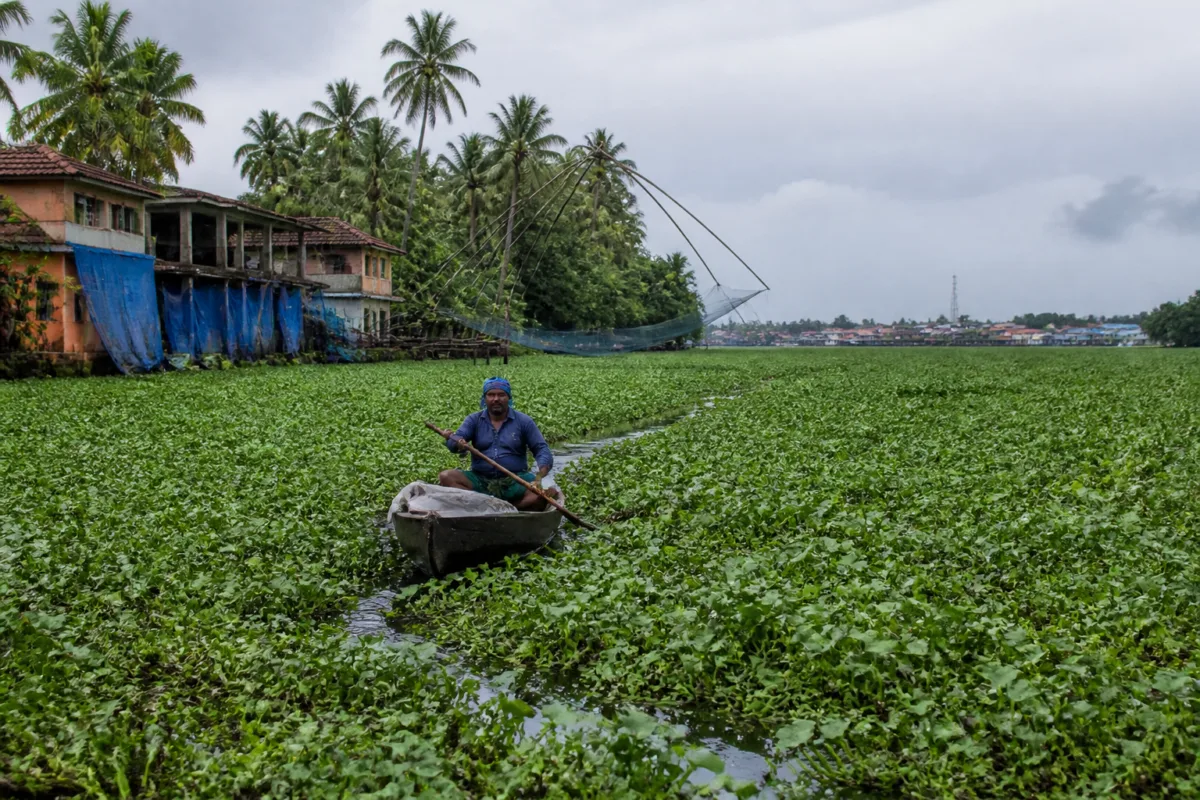
An extensive algae infestation has covered canals and parts of the Veeranpuzha in Kerala’s Vypin region, disrupting boat movement, fishing operations and the supply of river fish, according to a report by Mathrubhumi – Kochi published on October 28. The affected areas include Edavanakkad, Nayarambalam and Njarakkal, where water hyacinth and other aquatic weeds have spread across large stretches of the waterways.
The report said the infestation has reached a level at which the water surface is almost completely covered in several locations. Small boats and larger vessels are both taking longer to move through the affected waterways, creating direct operational difficulties for fishing communities that depend on canals, rivers and interconnected water bodies.
The impact is particularly severe for workers using Chinese nets and stake nets placed in the river. Algae carried by the river’s flow are entering canals and shrimp enclosures, while the growth around fishing equipment is obstructing regular operations. The disruption has affected hundreds of workers, according to the report, and the availability of river fish in local markets has also declined.
People fishing with nets in the Puthen Thodu area and those using fishing rods are facing similar difficulties. The spread has also affected the movement of boats used for fishing and related activities. Mathrubhumi reported that the growth is commonly associated with a reduction in the salinity of the water, but that the scale of the infestation this year is considerably more extensive than usual.
The environmental effects extend beyond navigation and fishing. When water hyacinth and other algae cover the surface, sunlight and air are prevented from reaching the water below. Residents told the publication that even after the vegetation dies and decays, removing the accumulated remains can take months. Reduced water flow may allow waste to collect in the waterways, raising concerns about sanitation and the possible spread of infectious diseases.
The problem also exposes the maintenance challenge facing the region’s canals and connected water bodies. The report said some local self-government institutions are considering the use of modern equipment, including floating trash skimmers, to remove aquatic weeds. Engineering colleges have proposed testing biological control methods and converting removed vegetation into handicraft materials or organic manure.
Residents have called for urgent action and regular cleaning of the canals through community participation. The report did not specify a confirmed region-wide clearance schedule or a final decision on the proposed technologies. Immediate priorities identified in the report include removing the accumulated vegetation, restoring water movement and preventing the material from spreading further into canals, rivers and shrimp enclosures.

