


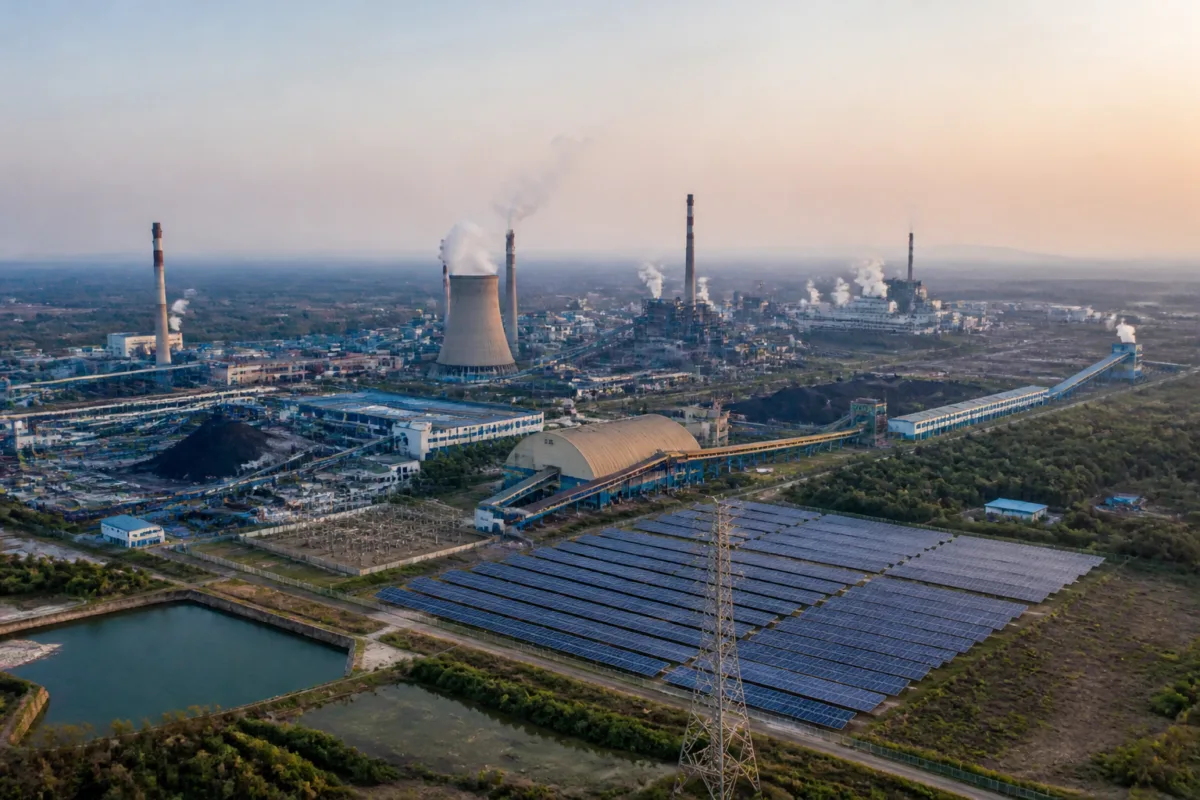
Vedanta Aluminium Metal Limited (VAML) reported a 63% increase in renewable energy use during FY26, alongside lower emissions intensity and resource-efficiency gains at its operations in Jharsuguda and Lanjigarh in Odisha and Korba in Chhattisgarh.
According to the company, its operations consumed 2,562.81 million units of renewable energy during the year and saved 635,757 MWh through energy-efficiency initiatives. VAML said these measures reduced emissions intensity by 11.4% against its FY21 baseline, bringing it to 16.57 tonnes of carbon dioxide equivalent per tonne of aluminium.
The company also said it had signed agreements for 493 MW of round-the-clock renewable power as part of its 2030 clean-power ambition. The agreements indicate a planned expansion of renewable supply for continuous industrial operations, although the report does not state when the contracted capacity will become fully operational.
Aluminium production is energy-intensive, making electricity sourcing and efficiency central to the sector’s environmental performance. VAML reported production of 2.45 million tonnes of aluminium in FY26 and said this represented more than half of India’s aluminium output. Its Jharsuguda facility remains, according to the company, the world’s largest single-location aluminium smelter.
The reported transition also includes water and industrial by-product management. VAML said it recycled 19.91 million cubic metres of water in FY26, compared with 16.79 million cubic metres in FY25. It also reported more than 100% fly ash utilisation by using current and previously accumulated material. The company said the fly ash was directed towards productive uses including cement manufacturing and construction.
These measures connect the company’s energy strategy with wider infrastructure and construction supply chains. Aluminium is used in automotive, electrical, packaging, renewable-energy and electric-mobility applications, while fly ash utilisation can reduce the volume of industrial by-products requiring storage or disposal. The report does not provide site-level details on the quantity of fly ash supplied to individual construction projects or the emissions avoided through those uses.
VAML CEO Rajesh Kumar said the company was publishing the results alongside climate and nature disclosures to account for its progress and next priorities. The company also said biodiversity assessments had been completed across all sites within its reporting boundary during FY26.
The company reported that women represented 19% of its workforce and 21% of management positions during the year. Its stated sustainability programme therefore combines renewable-energy procurement, operational efficiency, water recycling, by-product utilisation and biodiversity assessment across a large industrial footprint.
The figures are company-reported and cover VAML’s stated FY26 performance. The report does not include an independent assurance statement, comparative renewable-energy volumes for the previous year or a detailed breakdown of the 493 MW agreements by project, location and commissioning schedule. Those details will be important for assessing how the reported commitments translate into sustained emissions reductions at its aluminium operations.

