


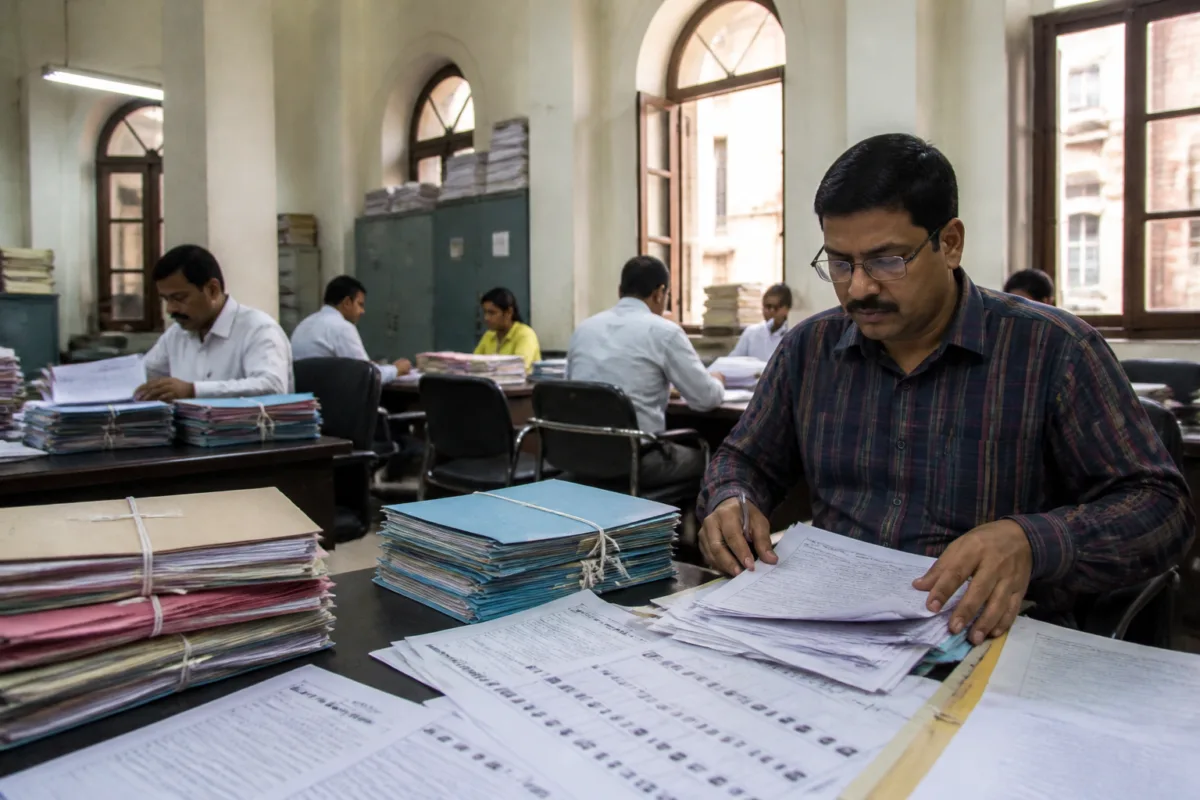
Uttar Pradesh will have 3,786 fewer polling stations after the Election Commission approved a statewide rationalisation exercise covering all 403 assembly constituencies and 75 districts ahead of the 2027 assembly elections. The number of polling stations will fall from 1,77,516 to 1,73,730, a 2.13% reduction based on the prescribed norm of 1,200 voters per polling station.
Chief Electoral Officer Navdeep Rinwa said the Commission approved the proposals on November 4. The rationalisation exercise began on October 16, after which district-wise proposals were submitted for approval.
The revised polling station arrangement will be used for publishing draft electoral rolls under the ongoing Special Summary Revision. January 1, 2027, has been set as the qualifying date for the revision exercise.
Rinwa directed district election officers to ensure that booth-level officers are deployed at every approved polling station. Voters whose polling stations have changed must be informed individually in writing through their respective booth-level officers.
The revised arrangement places responsibility on several layers of the election administration. Supervisors will monitor compliance, while electoral registration officers and assistant electoral registration officers have been instructed to personally verify the exercise. Officials have also been directed to ensure that members of the same family are registered in the same part of the electoral roll.
The changes will require clear communication because the polling station listed for a voter may not remain the same after the rationalisation. District election officers and electoral registration officers have been asked to share the approved polling station lists with recognised political parties and conduct publicity campaigns to inform voters before polling.
The Election Commission has also specified a correction mechanism for discrepancies identified after publication of the draft electoral rolls. Voters will be able to seek rectification through Form 8.
The exercise affects the physical and administrative points through which voters access the electoral process, although the supplied information does not specify how individual polling station locations or voter allocations will change in each district. The next formal step is the publication of the draft electoral rolls under the Special Summary Revision, followed by the voter communication and verification measures ordered by the Chief Electoral Officer.

