


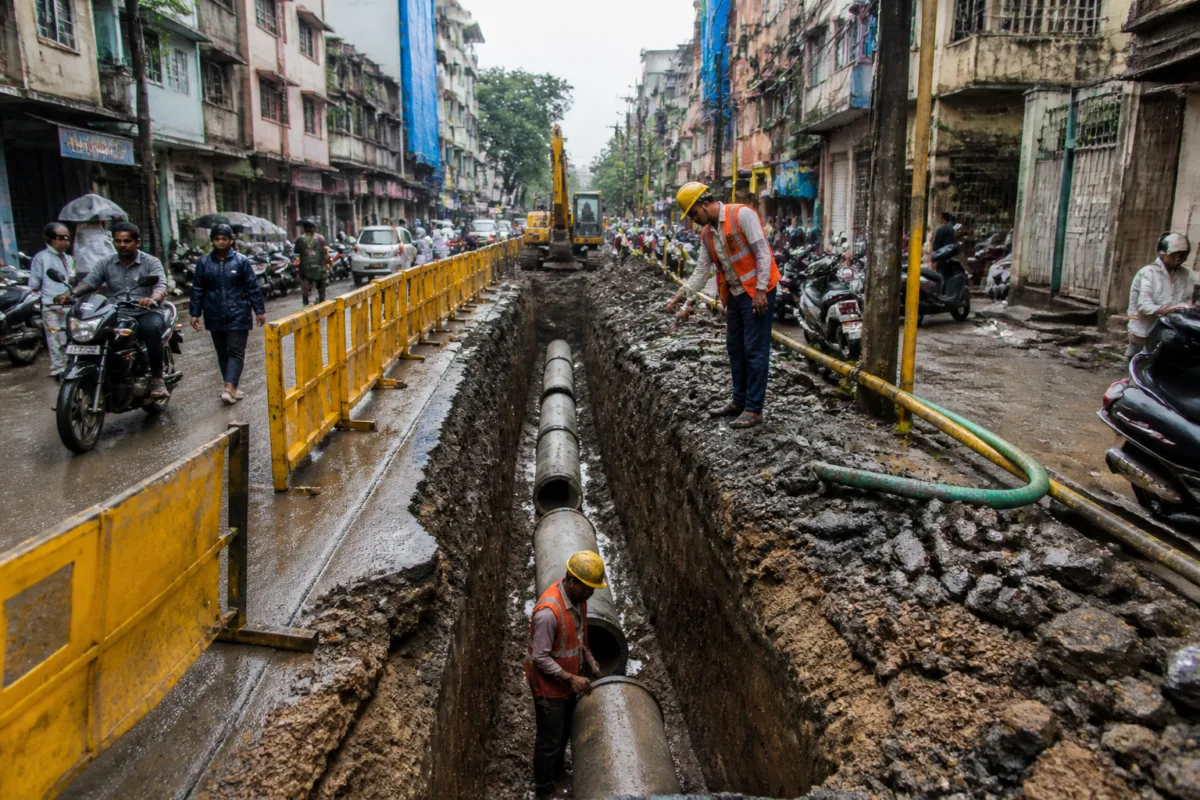
Ulhasnagar’s water supply project under the Centre’s AMRUT 2.0 mission remains incomplete more than two years after work began, with only 60% of the project completed and the contractor seeking a second extension until July 2027. The Ulhasnagar Municipal Corporation has prepared a proposal for a one-year extension, which will be placed before the municipal general body on 20 November 2026.
The project’s work order was issued in January 2024, with completion originally scheduled within 18 months. Only 32.78% of the work was completed during the original period, leading to a first extension of 12 months. That extended deadline ended on 31 July 2026, but the project has reached only 60% completion so far, leaving 40% of the work pending.
The contractor and project consultant, M/s Konark Infrastructure Limited, has attributed the delay to technical difficulties at the work sites. According to the municipal administration, some locations required a design change involving the use of 400-millimetre pipelines instead of the originally planned 1,500-millimetre pipelines. Approval for this change from the Maharashtra Jeevan Pradhikaran took considerable administrative time.
Construction of new water tanks at Patel Nagar and Vitthalwadi has also slowed because workers encountered extremely hard rock while excavating the foundations. The need to maintain uninterrupted water supply and arrange alternative systems added to the implementation challenges, the municipal administration said.
The city’s physical layout has created further difficulties. Narrow roads and underground electricity, telecommunications and sewage lines have made excavation hazardous and forced the work to proceed cautiously and in stages. These constraints have affected the pace of pipeline and associated infrastructure work in densely built parts of Ulhasnagar.
Property surveys, which are a key component of the project, have also not been completed. The scheme requires a survey of 157,300 consumers, of which about 80% has been completed. Closed homes and incomplete information have lengthened the process. The survey is intended to support the project’s consumer-level water-supply infrastructure and records.
The installation of domestic water meters has faced a separate obstacle. The project set a target of 93,609 household meters, but only 34,313 have been installed so far. The municipal administration has cited opposition from residents and difficulties with internal plumbing connections as reasons for the shortfall.
The proposed extension must now be considered by the municipal general body. Its decision will determine whether the contractor receives additional time until July 2027 to complete the remaining work. The pending approval, along with the incomplete surveys and meter installations, leaves the project’s next implementation phase dependent on the municipal body’s decision on 20 November.

