


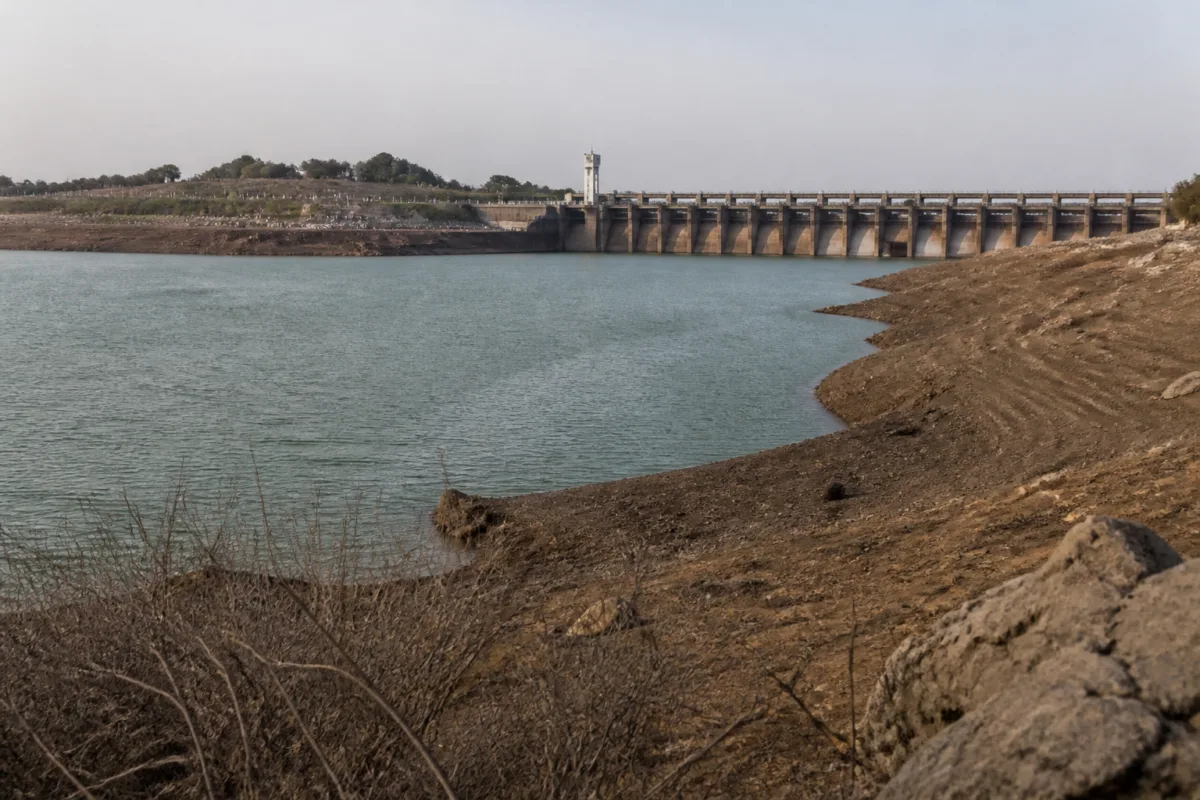
Tungabhadra dam water storage has fallen to 34.64 TMC feet, raising the possibility that water releases to canals may be stopped within the next 10 days, according to the Tungabhadra Board. The development could affect irrigation planning as the reservoir also has to retain water for drinking-water needs.
The reservoir is expected to continue supplying canals until November 20, in line with the decision taken by the Irrigation Consultative Committee. A longer release period, potentially until December 10, had been considered if northeast, or retreating monsoon, rains produced fresh inflows into the reservoir. The board said the rainfall deficit has made that possibility difficult.
According to the board, inflows had already stopped by September 10 because of a weak monsoon. The absence of adequate post-monsoon rain has since left the reservoir without fresh inflows. This has reduced the room available to maintain canal releases while preserving water for drinking purposes.
“Farmers have demanded that water be released through the canals until December 10, but fulfilling that demand is difficult under the present circumstances,” the Tungabhadra Board said. The statement places the current decision within a wider allocation problem: water stored in the reservoir must be divided between agricultural use and drinking-water requirements when inflows are not replenishing the system.
The reservoir has a maximum storage capacity of 105.78 TMC feet. The board said the reservoir had stored about 96 TMC feet this year, compared with only 89 TMC feet in 2023, when the region experienced drought conditions. Despite the higher seasonal peak compared with 2023, the present storage position has become critical because the reservoir is now receiving no inflow.
Kiran, a section engineer with the Tungabhadra Board, said the situation this year had again taken on the characteristics of the drought conditions seen in 2023. He said water may have to be conserved for drinking purposes, making it necessary to consider stopping canal releases on November 20 as decided at the Irrigation Consultative Committee meeting.
The reported storage level also shows why a higher seasonal peak does not necessarily guarantee irrigation supplies through the later part of the year. Once inflows stopped and post-monsoon rain failed to arrive, the reservoir’s remaining water became the primary buffer for canal releases and drinking-water needs. The board’s immediate position is that canal supply beyond November 20 cannot currently be assured.
The next formal milestone is the November 20 deadline set for canal releases under the Irrigation Consultative Committee’s decision. Any extension towards December 10 would depend on fresh inflows, but the board has indicated that inadequate rainfall has made such an extension difficult.

