


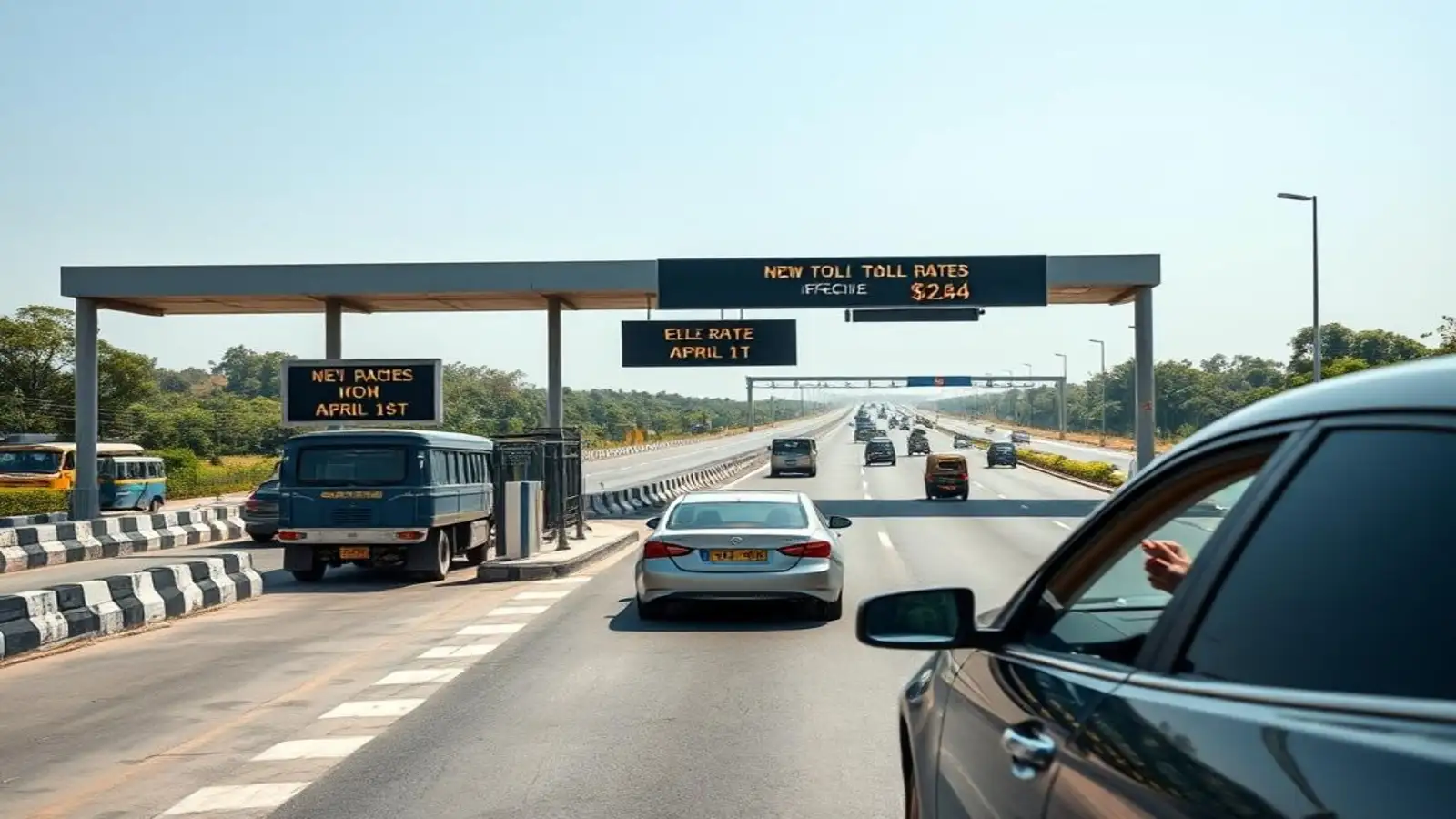
Motorists across India will experience an increase in toll fees, a move that will impact millions of daily commuters, long-distance travelers, and freight operators. The National Highways Authority of India (NHAI) has announced a nationwide toll hike, with rates rising by as much as 12% on various highways, following the annual adjustment tied to the Wholesale Price Index (WPI).
This hike aims to reflect the rising inflation and the increasing costs of maintaining and operating India’s expansive highway network.
For those who frequently travel through national highways, this change is bound to have a significant financial impact. The adjustment is not limited to specific states but spans several regions, with major toll plazas in states such as Karnataka, Tamil Nadu, Uttar Pradesh, and Haryana being affected. Among the most notable changes are on key routes like the Bengaluru-Mysuru Expressway, Delhi-Gurgaon Expressway, and multiple toll points in Tamil Nadu. For instance, commuters traveling on the Bengaluru-Mysuru route will now pay ₹120 for a single trip in a car, up from ₹115, while heavy vehicles will face a rise of ₹20-₹30, depending on the axle count. Similarly, in Tamil Nadu, 44 toll plazas will see hikes ranging from 3% to 12%, with specific increases in the Outer Ring Road near Chennai, where cars will now be charged ₹140, up from ₹133.
This toll hike has several implications, especially for logistics and transport operators. With the increase in toll rates, fleet managers will need to rework their operational budgets and may need to renegotiate contracts with clients to account for the higher costs. The rising tolls are also likely to impact business decisions, as companies may adjust their routes or schedules to mitigate the added cost. For commuters, this hike might mean a 5% to 10% increase in their monthly travel expenses, depending on the routes they frequently use.
The NHAI’s annual revision of toll rates is a standard procedure, driven by inflationary pressures and the growing expenses of highway maintenance. This year’s hike follows a pattern observed in previous years, where tolls have been revised to maintain the quality of road infrastructure and fund further expansions. However, the rising costs are not without controversy. While many understand the need for upgraded highways and better road safety features, the financial burden on everyday users has become a point of contention.
For travelers, especially those relying on toll roads for daily commutes, the hike is a reminder of the importance of planning. Using digital tools such as NHAI’s official toll rate finder or apps like Google Maps can help in pre-planning routes, avoiding toll-heavy stretches, or finding the most cost-effective alternatives. Fleet operators, on the other hand, are advised to incorporate these increased costs into their logistics strategies, automating toll reimbursements where possible to avoid delays.
As the country continues to build and expand its highway network, these toll hikes are inevitable. However, stakeholders – from commuters to business owners – must stay vigilant, reviewing toll charges and considering more sustainable and economical travel alternatives, such as carpooling or investing in electronic toll payment systems like FASTag, which can save both time and money. These adjustments to the road toll structure come at a time when India’s transportation sector is undergoing a significant transformation, with a clear focus on creating a robust and future-ready infrastructure.
Ultimately, while toll hikes are an inconvenience for many, they are a necessary part of sustaining and improving the country’s road network. As infrastructure quality improves, the hope is that these increases will eventually lead to safer, more efficient travel across the nation.
