


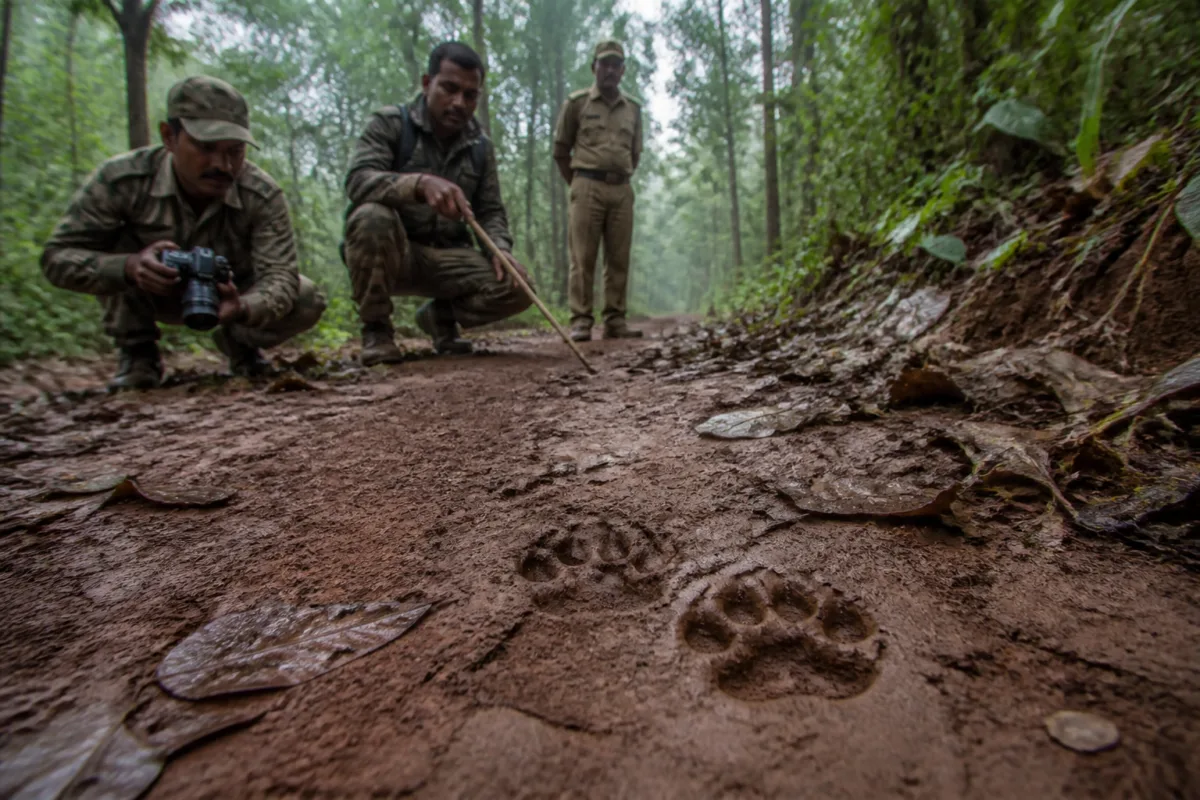
Tiger pugmarks found in Koraput’s Semiliguda forest range have triggered heightened surveillance and public safety measures, days after a separate radio-collared tiger was tracked nearly 200km away in Malkangiri district. Forest officials said the origin of the uncollared animal remains unconfirmed, while teams have been deployed to monitor its movement and reduce the risk of an encounter with residents.
The pugmarks were detected in the Semiliguda range of Koraput district, which officials said does not have a resident tiger population. Koraput divisional forest officer Sidharth Jain said the department was investigating where the animal had come from. He also said the tiger seen in Semiliguda appeared to be different from the radio-collared animal recently spotted in the Motu forest range of neighbouring Malkangiri.
The distinction has operational significance for forest teams. The location of the Malkangiri tiger can be tracked through its radio collar, allowing officials to monitor its movement more directly. The Semiliguda animal is not fitted with a collar, making field surveillance and the identification of trails central to the response.
Principal chief conservator of forests (wildlife) Prem Kumar Jha said separate teams had been deployed to monitor both animals. He said tracking the radio-collared tiger was relatively easier, while the tiger in Semiliguda would require extensive engagement by forest personnel and ground-level surveillance.
Officials suspect that the Koraput tiger may have moved from Andhra Pradesh’s Nagarjunasagar-Srisailam Tiger Reserve, one of the country’s largest tiger habitats. The department has not confirmed that origin. The uncertainty means that forest personnel are relying on pugmark evidence, field observation and movement tracking to determine the animal’s route.
The response has been structured around both human safety and the protection of the tiger. The forest department has begun disseminating awareness messages through public announcement systems in nearby villages. Residents have been advised to remain cautious, avoid entering vulnerable forest areas and refrain from approaching or disturbing the animal.
Rapid response teams and field staff have also been deployed to monitor the tiger’s movement, identify its trails and map its locations. These measures are intended to help officials understand where the animal is moving and prevent an untoward incident in areas used by local residents.
Jain appealed to residents to follow instructions issued by forest personnel and immediately inform the nearest forest officials if they see the tiger, find pugmarks or notice unusual movement. He said precautionary measures were being taken in accordance with guidelines issued by the National Tiger Conservation Authority.
The simultaneous monitoring of the two animals highlights the different administrative challenges posed by collared and uncollared wildlife. While the Malkangiri tiger can be followed through remote tracking, the Semiliguda operation depends more heavily on field teams, local alerts and information from residents. Officials said surveillance and public advisories would continue as they work to establish the Koraput animal’s origin and movement pattern.

