


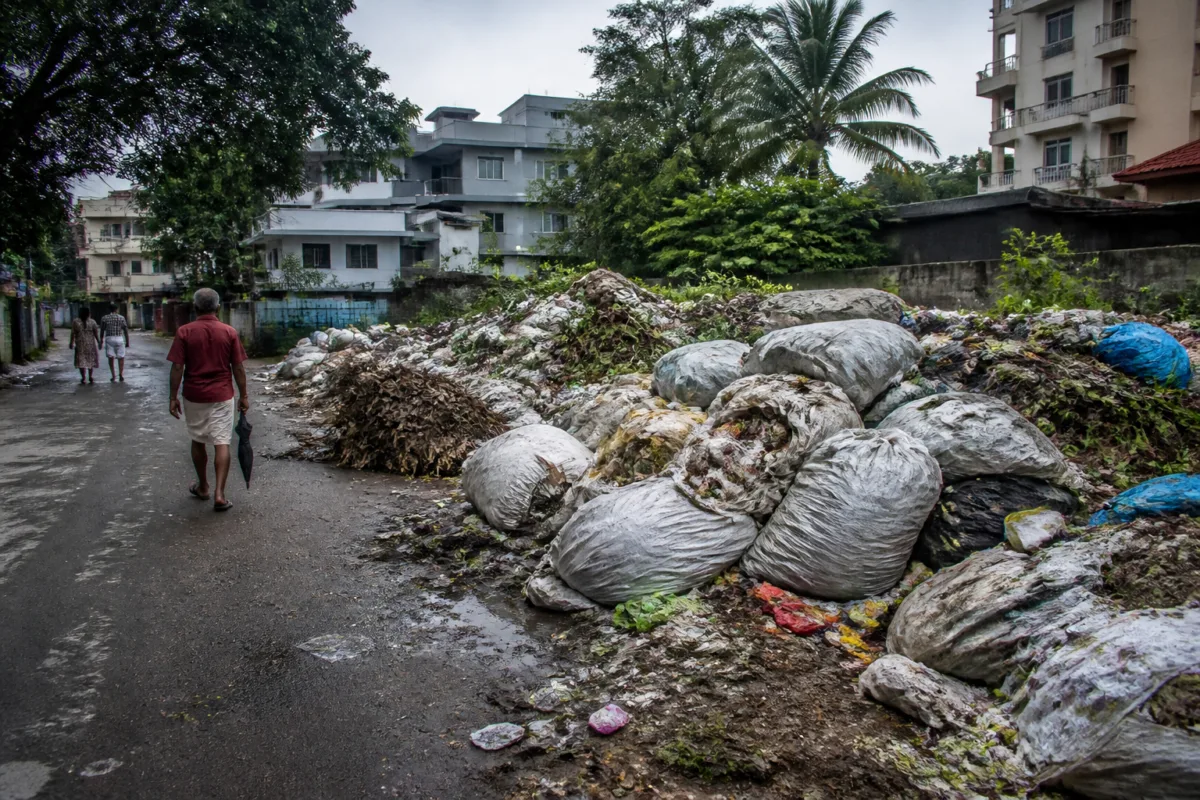
Waste collection disruptions at Thrikkakara municipality’s dumping yard in Kochi have left hundreds of sacks of untreated waste accumulating at the site, prompting residents to raise concerns about foul odour, sanitation and possible public-health risks.
The biodegradable waste has reportedly remained untreated at the yard, creating persistent inconvenience for people living in the surrounding area. Residents fear that prolonged accumulation could contribute to the spread of disease, although the report does not cite any confirmed outbreak linked to the site.
Opposition councillor C P Sajal said the situation had severely affected residents, with the stench from the accumulated waste becoming a continuing problem. He blamed what he described as laxity by the municipality in awarding waste-collection contracts for the delays in disposal.
Sajal also alleged that the municipality had awarded the contract to a firm with close links to people in power, and said the resulting waste-management failures could create a public-health hazard. The allegations were reported by The Times of India and were not independently established in the supplied material.
The disruption highlights the operational risks faced by local bodies when waste collection depends on contracted disposal arrangements without reliable treatment capacity at the municipal level. In Thrikkakara, residents have been demanding a more permanent system, including a scientific waste-treatment facility that can ensure regular disposal rather than relying only on private arrangements.
Paul Mecheril, a Thrikkakara resident and member of the Thrikkakara Paithruka Samrakshana Samiti, said the municipality had failed to establish such a facility despite repeated demands. He said the local body was paying a private firm to dispose of waste even though it could construct its own treatment facility.
Mecheril also questioned why existing infrastructure, including the Brahmapuram solid-waste treatment plant, was not being used. The reference points to a broader coordination issue in Kochi’s waste-management system: collection, transportation, treatment and final disposal must operate as a connected chain, because a failure at any stage can quickly turn neighbourhood waste into a public nuisance.
Residents have long sought a sustainable solution for uninterrupted disposal. Their demands include a scientific treatment facility and a system capable of handling biodegradable waste without allowing it to remain exposed at the dumping yard.
The Times of India said attempts were made to contact Thrikkakara municipality chairperson Rashid Ullampally and vice-chairperson Shereena Shukoor for their response. The supplied report does not include the municipality’s response or details of a revised collection schedule, contract action or a confirmed timeline for clearing the accumulated waste.

