


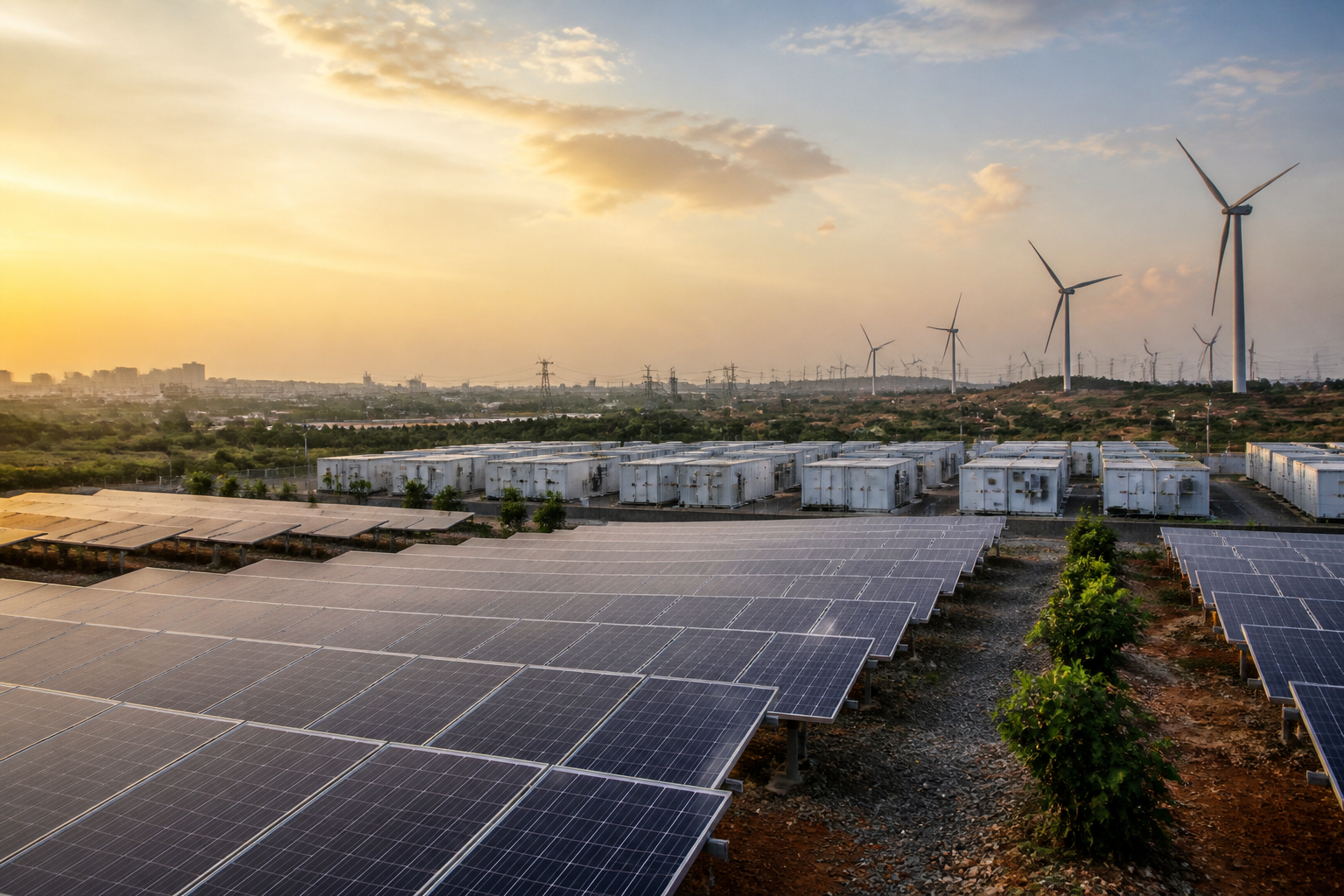
Telangana has launched tenders to procure 5,800 MW of renewable power and large-scale battery storage as the state prepares for rising electricity demand from industrialisation, urbanisation, data centres, electric mobility, irrigation and major infrastructure projects.
The tenders have been issued by the Telangana Renewable Energy Development Corporation Limited (TGREDCO) and Telangana Power Generation Corporation Limited (TGGENCO). The programme includes 3,000 MW of solar power paired with a 6,000 MWh Battery Energy Storage System, 800 MW of wind power and 2,000 MW of Renewable Energy Round-the-Clock (RE-RTC) power.
The state will also procure a separate 2,000 MWh Firm and Dispatchable Renewable Energy (FDRE) battery energy storage system through tariff-based competitive bidding. The FDRE storage project will have a 15-year procurement period, while the solar-plus-storage, wind and RE-RTC contracts will run for 25 years.
The procurement plan comes as Telangana’s peak electricity demand has reached approximately 19,900 MW and is expected to increase further in the coming years. The government said the initiative is intended to strengthen long-term energy security and support a reliable, affordable and sustainable electricity supply.
Under the largest component, the 3,000 MW solar capacity will be integrated with 6,000 MWh of battery storage. The storage system is intended to capture surplus electricity generated during the daytime and supply it during evening and night-time periods, when demand typically rises. The arrangement is also expected to improve the flexibility of the state’s power grid and reduce dependence on expensive short-term electricity purchases.
The 800 MW wind procurement is designed to diversify Telangana’s renewable-energy mix. Wind generation can supplement solar power during periods when solar output is limited, although the tender documents and the supplied report do not specify the proposed project locations or generation schedule.
The 2,000 MW RE-RTC component is intended to combine solar, wind and storage resources to provide a more consistent renewable electricity supply throughout the day. This model is aimed at addressing one of the central operational challenges of renewable power: solar generation is concentrated during daylight hours, while electricity demand continues after sunset.
The separate 2,000 MWh FDRE battery project is also focused on peak-hour requirements. TGGENCO will seek bids for a storage system that can store surplus solar electricity during the day and discharge it when demand is high. The project is expected to help address peak-hour power shortages without relying entirely on conventional generation or short-term market purchases.
The scale of the tenders reflects the growing connection between energy planning and urban and economic expansion in Telangana. New industrial facilities, data centres, electric mobility and infrastructure projects can increase demand not only for total electricity but also for dependable supply at specific times of the day. For cities and urbanising regions, the reliability of that supply affects commercial operations, public services, construction activity and transport systems.
The announced contracts establish the broad procurement volumes and durations, but the supplied information does not specify bid deadlines, selected developers, tariff outcomes, commissioning dates or the locations of the renewable and storage projects. Those details will determine how quickly the planned capacity can contribute to Telangana’s electricity system. The next steps will depend on the tendering, evaluation and award processes conducted by TGREDCO and TGGENCO.

