


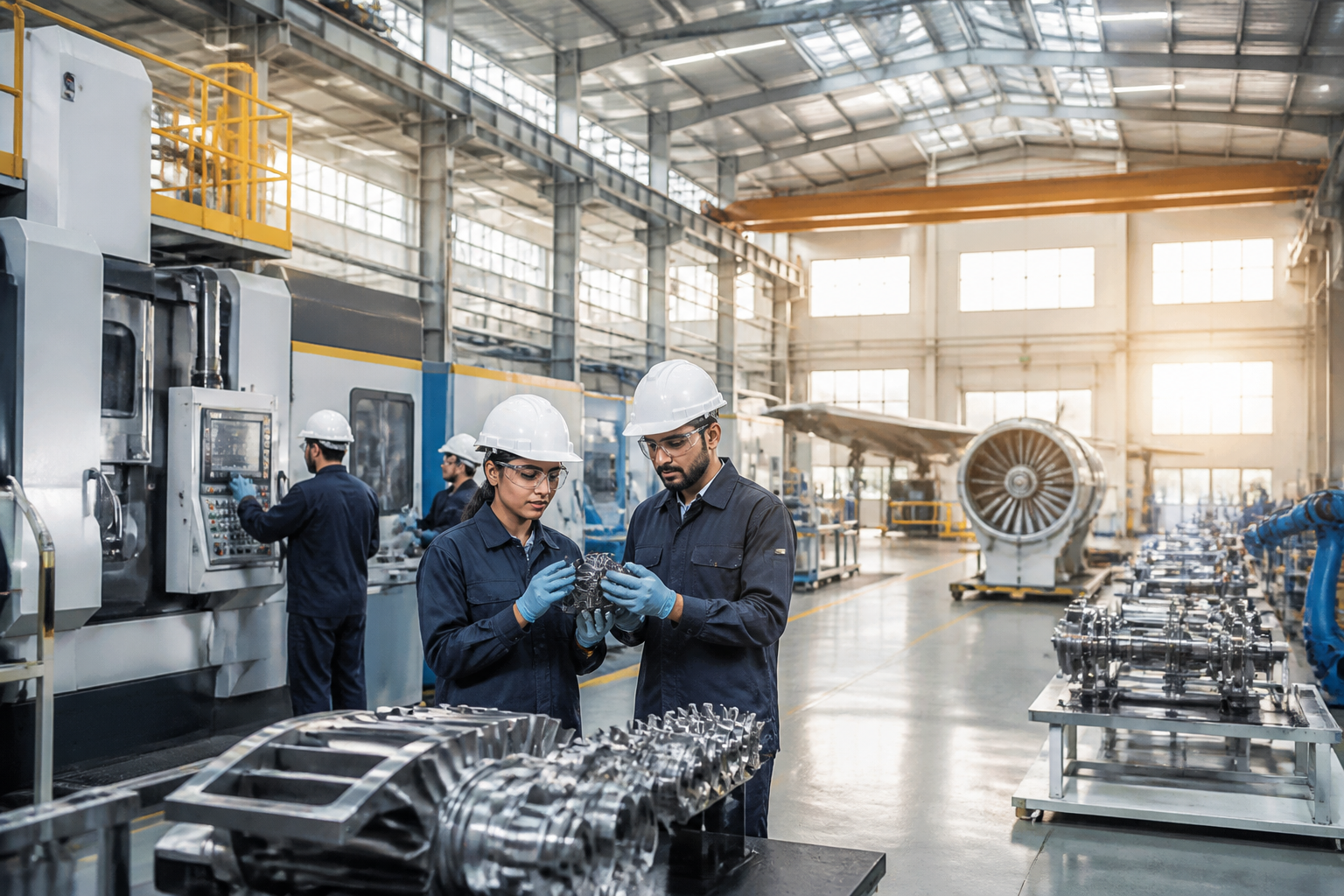
Raghu Vamsi Group has signed a three-year memorandum of understanding with the University of Sheffield’s Advanced Manufacturing Research Centre (AMRC) to develop technological capabilities for a planned Telangana super alloys facility and research and development centre.
The Hyderabad-based group said the proposed facility will support its expansion into aerospace and defence manufacturing. The partnership will focus on advanced manufacturing, super alloys and single crystal castings, with AMRC contributing its research and innovation capabilities.
“The collaboration will help us build the technology foundation for the super alloys sector, with the vision of making Telangana a global leader in super alloys,” Vamsi Vikas Ganesula, managing director of Raghu Vamsi Group, said in a release.
The agreement links the planned industrial facility to a wider effort to build expertise in specialised materials and manufacturing processes. The group said the collaboration would also support its UK operations through digitally enabled manufacturing processes and improvements in supply-chain efficiency.
The two sides will explore ways to improve logistics and inventory management between the UK and India. They will also examine the environmental impact of material movement between the two countries, according to the company.
The partnership is expected to include workforce development through apprenticeships and skills training. The announcement does not specify the proposed facility’s location within Telangana, investment size, production capacity, construction schedule or the number of jobs expected to be created.
Super alloys and single crystal castings require specialised manufacturing knowledge, making the research partnership a significant component of Raghu Vamsi Group’s stated expansion plans. However, the available announcement does not provide details of the specific technologies, products or aerospace and defence programmes that the facility would serve.
The MoU will remain in place for an initial period of three years. During that period, the companies are expected to explore cooperation in advanced manufacturing, digital processes, supply-chain efficiency, logistics, inventory management and skills development. Further project details will depend on the outcomes of that collaboration and the group’s facility plans.

