


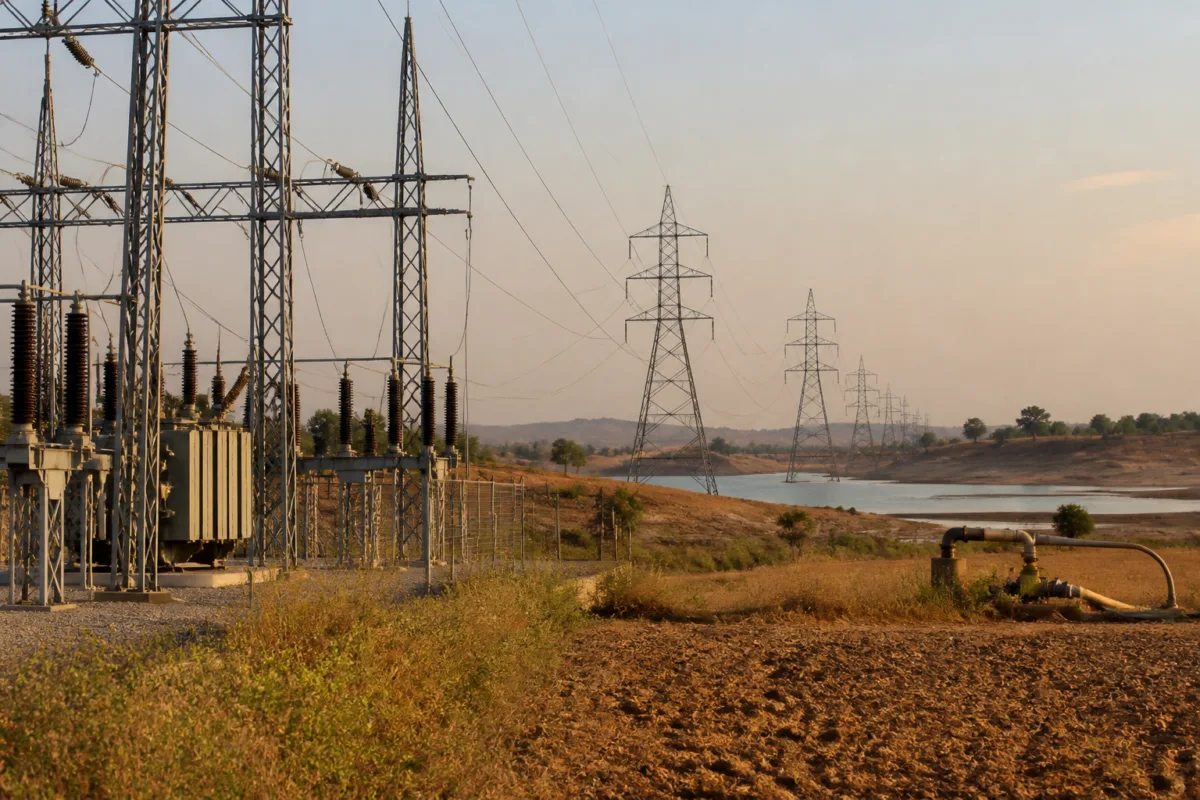
Telangana’s power demand has climbed to a record 20,018 MW as deficient rainfall, falling reservoir levels and rising temperatures put additional pressure on electricity generation and distribution, Deputy Chief Minister Bhatti Vikramarka said on Saturday.
Speaking at a media conference in Kodumuru village in Chintakani mandal of Khammam district, Bhatti urged residents to use electricity and water responsibly. He said declining water availability was affecting agriculture as well as the power sector, while the government was taking steps to manage electricity generation, transmission and distribution.
Bhatti said peak power demand had risen sharply from 6,648 MW at the time of Telangana’s formation in 2014 to the current level of 20,018 MW. Peak demand was 15,497 MW in 2023 and increased to 17,162 MW in 2025, he said. Although electricity demand generally rises by 6–6.5 per cent annually, the increase recorded in October this year was nearly 25 per cent.
Daily electricity consumption also increased from 245.35 million units in October last year to 335.05 million units in October this year, a rise of approximately 37 per cent, according to the Deputy Chief Minister. He attributed part of the increase to higher temperatures, which have raised household electricity use, as well as greater demand from agricultural pump sets and lift irrigation schemes.
The state is expanding its electricity network to meet the higher load. Under the Telangana Southern Power Distribution Company Limited and Telangana Northern Power Distribution Company Limited, approvals have been granted for new substations. Of these, 177 substations have been completed and work on another 267 is in progress, Bhatti said.
The Transmission Corporation of Telangana Limited has received approval for 24 substations, of which 11 have been completed and nine are under construction. The expansion covers transmission infrastructure at the 400/220 kV, 220/132 kV and 132/33 kV levels.
Water stress is also reducing the availability of hydropower. Bhatti said Telangana would normally have around 3,500 MW of hydropower capacity available to meet peak demand during night-time hours, but falling reservoir levels were affecting generation. With additional demand rising by 4,000–5,000 MW, the decline in hydropower availability has created further pressure on the electricity system.
The Deputy Chief Minister said around 1.5 million of Telangana’s three million agricultural pump sets were located in areas facing groundwater shortages. He warned that running motors when borewells had no water could burn out the equipment, increase electrical loads and damage transformers.
Bhatti also referred to the impact of El Niño conditions and appealed to political parties to offer constructive suggestions as the state manages the situation. The government and electricity department officials, he said, were taking steps to maintain an uninterrupted power supply while consumers were asked to use electricity only as required.

