


Telangana’s long-pending local body elections have become more than a political scheduling problem. The delay now carries a measurable institutional cost: the State has already failed to secure about Rs. 600 crore in 15th Finance Commission funds over two years, while another Rs. 300 crore could be at risk if elections are postponed further, according to a report by Telangana Today.
The immediate dilemma concerns elections to the Mandal Parishads Territorial Constituencies, Zilla Parishads Territorial Constituencies, the Greater Hyderabad Municipal Corporation and the municipal corporations of Warangal and Khammam. The ruling Congress government is reportedly weighing the political risks of holding polls amid public dissatisfaction, while also confronting the financial consequences of keeping elected local institutions in limbo.
That tension is central to how urban and rural governance functions. Local bodies are not only electoral units. They are the institutional channels through which public services, local development works and inter-governmental grants are administered. When elections are delayed, the question is not limited to which party may benefit or lose. It also concerns whether local institutions have the mandate, representation and financial access needed to operate within the intended constitutional and funding framework.
The funding exposure gives the election schedule a direct public-administration dimension. Telangana’s 565 Mandal Parishads and 31 Zilla Parishads receive a combined annual allocation of nearly Rs. 300 crore under the 15th Finance Commission, the report said. The State is estimated to have missed around Rs. 600 crore during the past two years because elections were not conducted before March 31. A further delay could put another Rs. 300 crore at risk.
These figures are significant not because they represent the entire budget of Telangana’s local governments, but because they show how election deadlines can affect access to tied or performance-linked public finance. The report does not specify the detailed release conditions, spending heads or project-level consequences of the missed allocations. It does, however, establish the immediate scale of the reported exposure: two years of funds have already been lost or not secured, and the next annual allocation is vulnerable to another delay.
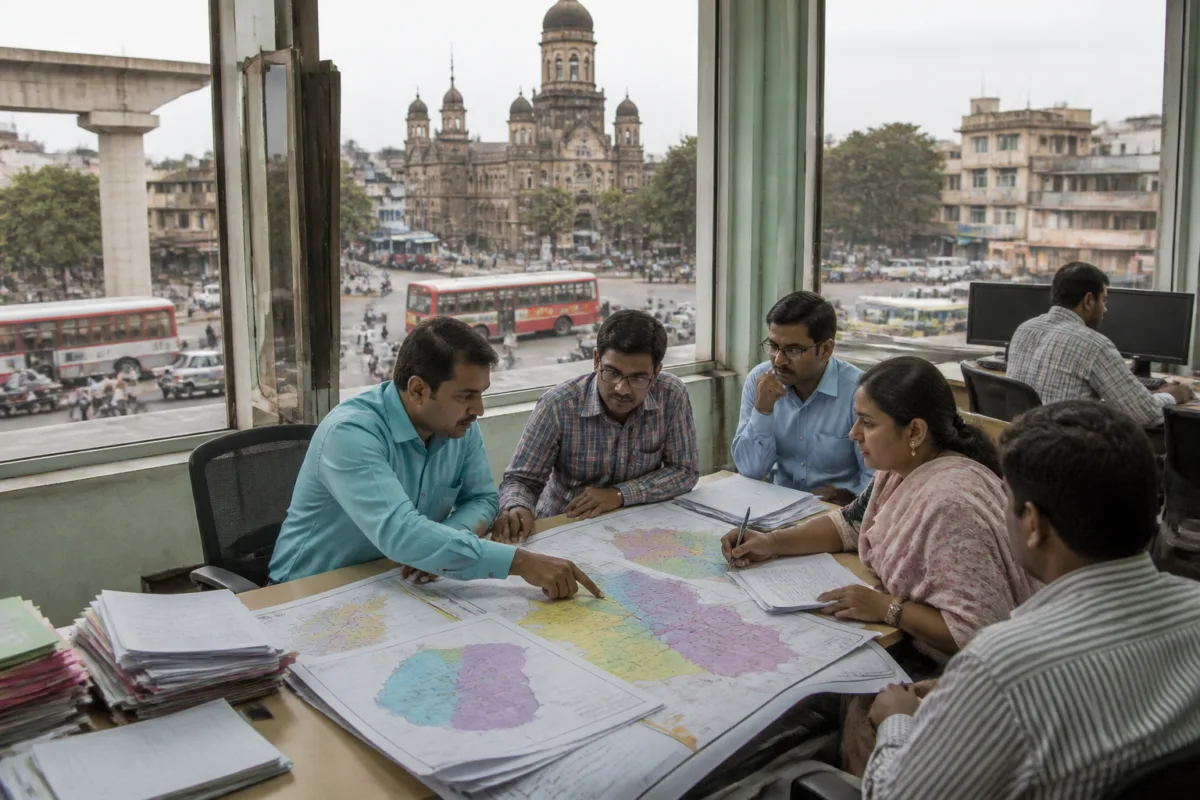
The institutional calendar is moving in parallel. The Special Intensive Revision of electoral rolls is scheduled to be completed by November 5, with final rolls expected on November 9. The State Election Commission has directed officials to map voters ward-wise across Gram Panchayats using the latest electoral roll data supplied by the Election Commission of India on February 5, 2026.
The mapping exercise has been assigned to Zilla Parishad chief executive officers, District Panchayat Officers and Mandal Parishad Development Officers. The SEC has instructed them to complete the work on a war footing. This indicates that the election process is not waiting for a new administrative framework to be created from scratch; at least some of the preparatory work is already being organised around updated voter data and ward-level mapping.
At the same time, the reported schedule remains politically and administratively unsettled. Elections to Gram Panchayats and municipalities have already been completed, while polls to the Mandal and Zilla Parishads remain pending. The report separately identifies the GHMC, Warangal Municipal Corporation and Khammam Municipal Corporation as bodies whose elections are due or whose terms have ended. This creates a layered election problem, with different local institutions operating on different timelines.
The Greater Hyderabad question is particularly consequential because of the scale and restructuring of the metropolitan institution. The five-year term of the GHMC council ended in February this year. The GHMC has since been divided into three corporations, including the Medchal Malkajgiri and Cyberabad municipal corporations. The report does not provide the full administrative details of the reorganisation or explain how the new corporations’ electoral boundaries and institutional arrangements will affect the schedule. It does establish, however, that the city’s previous council term has ended while the municipal structure has changed.
That combination matters for urban governance. Hyderabad’s municipal administration is being discussed in the context of a changed territorial structure, while the elected council associated with the earlier GHMC arrangement is no longer in place. In such a situation, the election process is tied not only to political timing but also to the mechanics of representing newly defined urban jurisdictions. The supplied report does not confirm a final timetable for these municipal polls.
The political hesitation described in the report is linked to several sources of public dissatisfaction. These include the controversy referred to as the “22 A row”, rising prices of essential commodities, unfulfilled electoral promises, water and power crises, and other pressing issues. The report presents these as concerns within the Congress leadership about the possible public response to elections. It does not provide survey data or independent measurements of voter sentiment, so the extent of public dissatisfaction cannot be quantified from the available evidence.
The report also cites recent developments that have added to the ruling party’s concerns. The Congress has suffered a setback in Telangana State Road Transport Corporation union elections. In the Singareni elections, the CPI-affiliated AITUC secured company-level representation, while the Congress-affiliated INTUC won six of the 11 individual divisions. Left parties and the Telangana Jana Samithi are reportedly interested in contesting the upcoming MLC elections.
These developments are political indicators rather than direct evidence of how voters would behave in local body elections. Their relevance lies in the leadership’s assessment that organised labour contests and forthcoming elections may shape the wider political environment. The report does not establish a causal link between those outcomes and likely results in municipal, Mandal Parishad or Zilla Parishad polls. That distinction is important because local elections are conducted across different institutional territories and may be influenced by local candidates, service delivery and ward-level issues.
The most immediate official signal is the possibility of elections in December. A senior leader from Gandhi Bhavan told Telangana Today that polls could be held then, while also warning that further delays could adversely affect the party’s prospects. The statement is not a formal election notification, and December should therefore be understood as a reported possibility rather than a confirmed schedule.
The leader also referred to Chief Minister A Revanth Reddy’s statement that the impact of El Nino would continue for another 10 months, arguing that delaying elections further would not be wise. The report does not provide additional meteorological or administrative details on that statement. Its relevance here is that weather and public-service pressures are being brought into the political calculation surrounding the timing of local polls.
The pending elections therefore expose three overlapping gaps. The first is representative: several local institutions are awaiting elections after the end of their terms or after a prolonged delay. The second is fiscal: Finance Commission allocations linked to local bodies are reportedly being missed or placed at risk. The third is administrative: election authorities are still completing voter-roll revision and ward-level mapping while local jurisdictions, especially around Hyderabad, have undergone structural change.
The State Election Commission’s instructions show that preparatory work is advancing, but they do not amount to a final poll notification. The November 5 and November 9 electoral-roll milestones may clarify the administrative base for the elections, yet the report does not establish when nominations, polling or counting will take place. Nor does it specify whether all pending local bodies will be covered in one phase or through separate schedules.
For citizens, the practical significance is found in the connection between local representation and local finance. An election date determines who receives a mandate, but the funding question determines what institutional resources may be available for development and service-related work. The reported loss of Rs. 600 crore and the potential loss of another Rs. 300 crore make the delay a question of public finance as well as political strategy.
What the evidence confirms is that Telangana’s local body election delay has moved into a consequential phase. The government is balancing concerns about public sentiment against the risk of further Finance Commission losses, while the SEC is preparing electoral rolls and ward-level voter mapping. What remains uncertain is the final schedule, the treatment of the reorganised municipal corporations and the precise conditions governing the release of the reported funds. The next clear milestones are the completion of the Special Intensive Revision on November 5 and publication of the final electoral rolls on November 9.

