


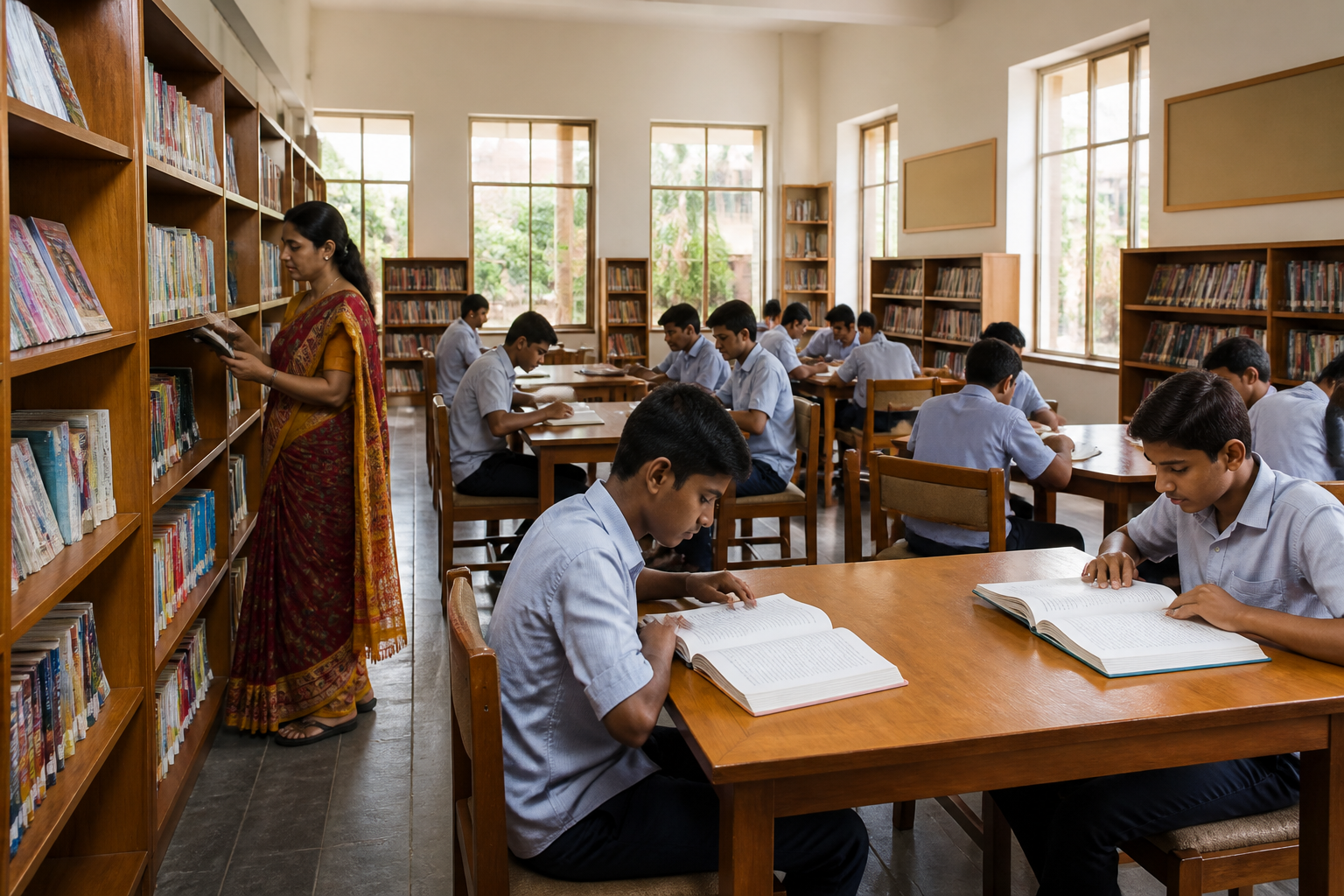
Telangana Gurukul libraries will be strengthened across all 268 institutions, alongside new measures to identify student dropouts and support students falling behind academically, following directions issued by Telangana Social Welfare Residential Educational Institutions Society (TGSWREIS) secretary Ravi Gugulotu on Thursday.
Gugulotu issued the directions during an inspection of the Gowlidoddi Premier Centres of Excellence for boys and girls. The review covered academics, food, staffing, digital classes, sports training and the physical and mental well-being of students. The institutions are part of the state’s residential education system, where academic facilities and student support services operate within the same campus environment.
Officials were asked to equip the libraries with textbooks, competitive examination material, general knowledge books, English-language resources and science magazines. The directions place libraries within the wider academic support system rather than treating them only as book-lending spaces. The supplied report did not specify a budget, procurement schedule or deadline for completing the upgrades.
Gugulotu also directed officials to identify the reasons behind student dropouts and to provide additional support to students who are lagging academically. Students securing lower marks are to receive additional coaching and remedial teaching instead of being discouraged, according to the report. The directions do not specify how dropout reasons will be recorded or which interventions will be used for different student groups.
During his interaction with students, Gugulotu discussed their studies, time management, difficult subjects, examination performance and career plans. He also had lunch with the students and sought their feedback. The interaction took place on his third day after assuming charge as secretary of TGSWREIS.
The secretary reviewed student performance in JEE Main and JEE Advanced and asked officials to identify students with the potential to secure merit positions. Such students are to receive additional training, study material and specialised guidance. The report does not provide student performance figures or details of the number of students who may be selected for this support.
The review also included staff attendance and arrangements for students to communicate with their parents. Together, the directions cover academic resources, remedial support, examination preparation, staffing oversight and student welfare across the residential institution network. Further implementation details, including the timing of library upgrades and the process for monitoring dropout risks, were not provided in the report.
