


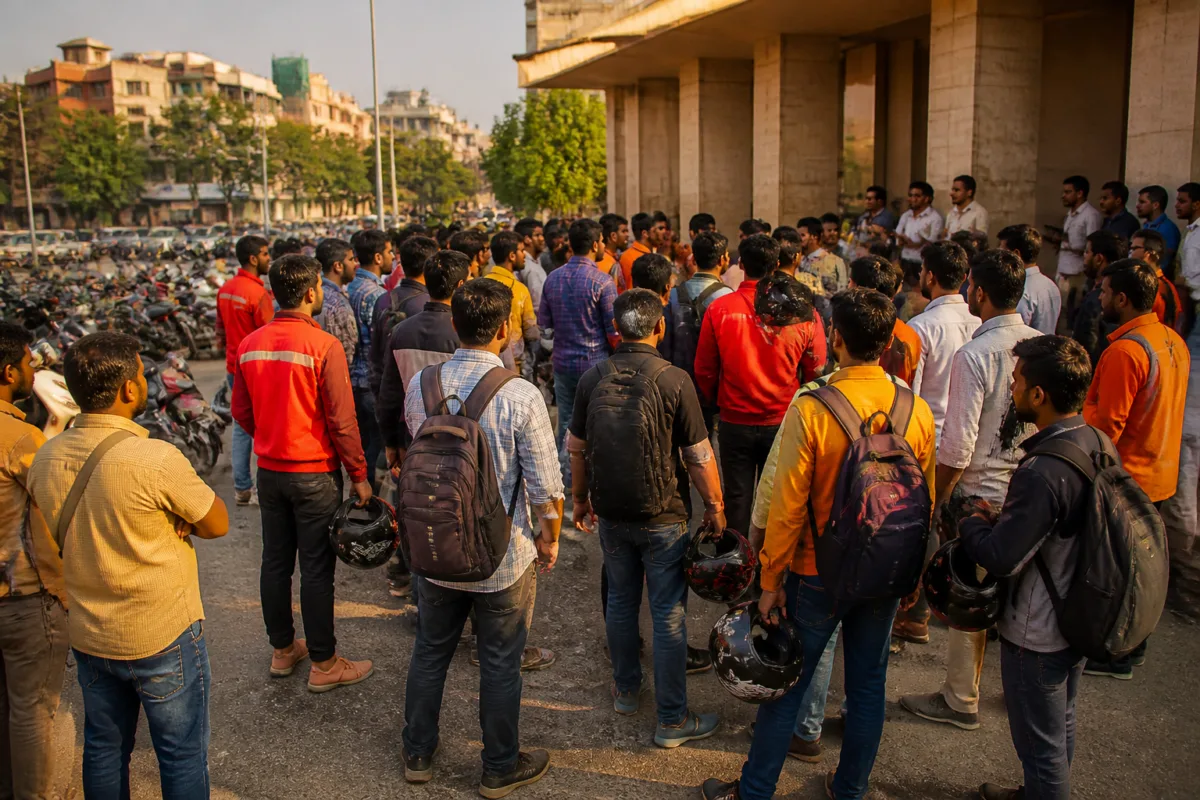
Telangana gig workers have been promised accident and health insurance, financial support linked to transactions and Wi-Fi-enabled rest zones under welfare legislation highlighted by Congress MP Rahul Gandhi at an event in Hyderabad on Saturday.
Gandhi said the Congress would support gig workers’ families with education and healthcare and make workers “partners in progress”. He dedicated the legislation enacted by the Telangana government to gig workers, describing them as a foundation of the economy.
According to the provisions outlined at the event, gig workers will be entitled to Rs.5 lakh in accident insurance and Rs.10 lakh in health insurance. The government will also provide Wi-Fi-enabled rest zones, while insurance coverage and financial support for transactions were presented as measures intended to strengthen social protection for workers operating through the platform economy.
Chief Minister A Revanth Reddy said the State had already established the Gig Workers Board and was extending insurance coverage to the community. He said the promise made by Rahul Gandhi during his Bharat Jodo Yatra in Telangana had been fulfilled.
The announcement places Hyderabad’s expanding gig economy within a broader debate over how urban workers without conventional employer benefits can access insurance, healthcare and family support. Delivery workers, drivers and other platform-linked workers often operate across the city without the workplace facilities and social-security systems associated with formal employment. The measures announced in Telangana are aimed at addressing some of those gaps through a state-backed framework.
Gandhi also criticised the BJP and the Rashtriya Swayamsevak Sangh, alleging that they sought to treat gig workers as bonded labour while favouring large corporate groups. Those political allegations were part of his address and were not independently established in the report.
The legislation and the Gig Workers Board now form the institutional basis for implementing the benefits announced at the event. The statements did not provide details on the number of workers covered, the registration process, the agencies responsible for administering claims, the funding mechanism or the timeline for making the rest zones operational.
The next stage will therefore depend on how the State government translates the announced entitlements into enrolment, insurance access and functioning support facilities for gig workers. The government has stated that the Gig Workers Board has been established and that insurance coverage is being extended to the community.

