


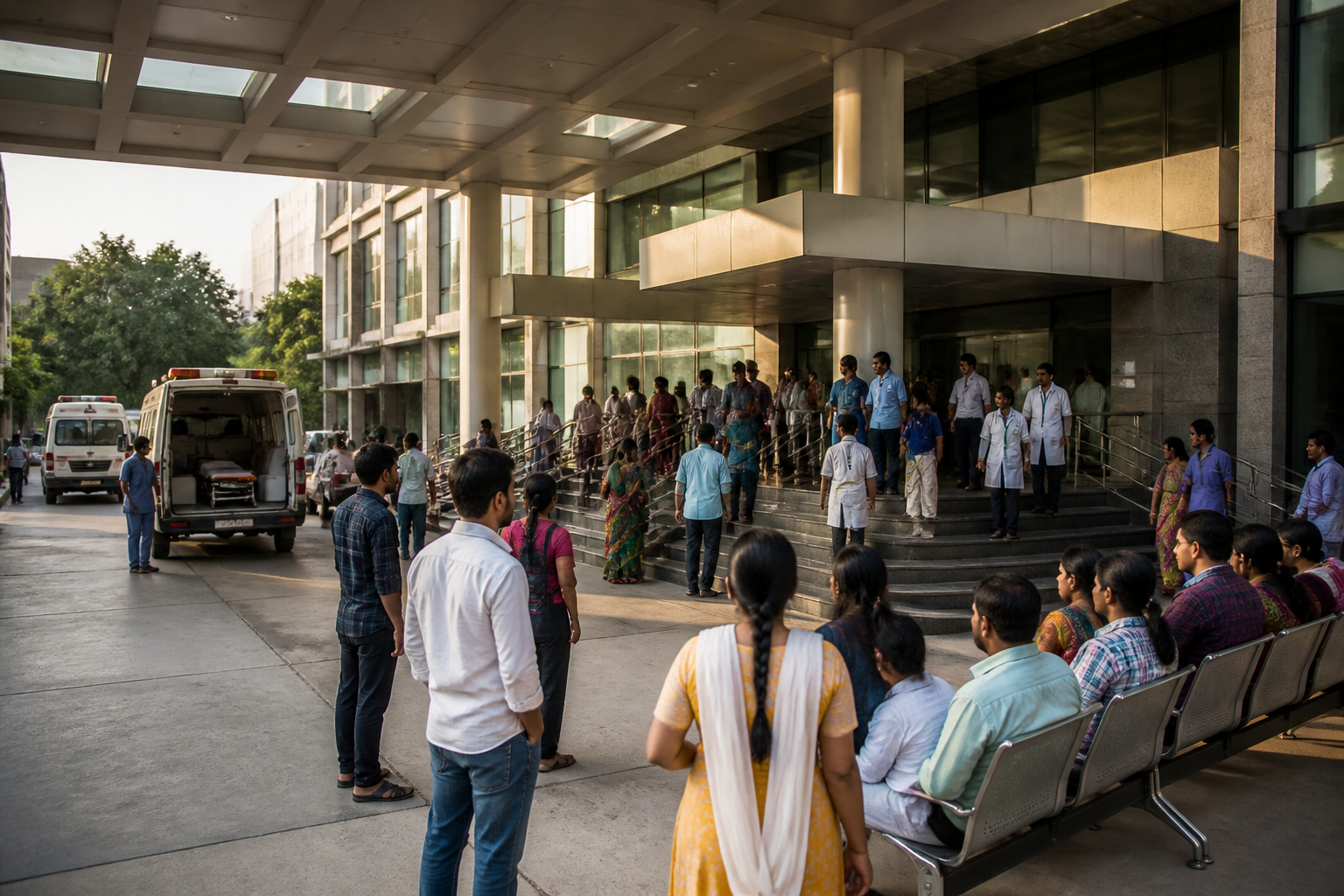
Telangana’s revamped Employee Health Scheme (EHS) is facing objections from a network of more than 350 private hospitals, which has asked the State government to revise treatment rates, include hospitals in policymaking and clear up to Rs 2,500 crore in pending Aarogyasri bills. The Telangana Network Hospitals Association (TANHA) said the new scheme continued to carry flaws that had affected the earlier EHS and could undermine its implementation.
The association made the demands in Hyderabad on Wednesday, urging the government to involve network hospitals in the re-formulation of the EHS policy, future implementation committees and trusts. TANHA said hospitals should have a formal role in decisions affecting treatment packages and the operation of the scheme.
A central concern is the pricing of treatment packages. TANHA said the government should set rates after accounting for actual treatment costs, including human resources, medicines, equipment, infrastructure and other related expenses. According to the association, treatment prices under the present and earlier EHS schemes were fixed without sufficiently considering the nature of diseases and the resources required for different procedures.
Speaking to media persons, TANHA office-bearers, including president Dr Vaddiraju Rakesh, also sought a transparent redressal and appeal mechanism for disputes involving network hospitals and beneficiaries. The association said the absence of such a process created difficulties when hospitals or patients wanted decisions reviewed.
The association further demanded the clearance of Aarogyasri medical bills that it said had remained pending for 14 to 15 months. TANHA estimated the unpaid amount at between Rs 2,000 crore and Rs 2,500 crore. The claim was made by the hospital body during its interaction with the media; the report did not include a response from the State government or an independent confirmation of the amount.
TANHA said the recurring problems were linked to the way the schemes were designed and administered. It alleged that policies were formulated without adequate consultation with network hospitals and without sufficient consideration of disease categories and treatment requirements. The association also criticised what it described as unilateral decision-making by Aarogyasri and EHS authorities.
“The treatment prices are fixed without proper scientific methods, causing difficulties for both beneficiaries and the hospitals. The decisions taken by Aarogyasri and EHS are unilateral because there is no representation for network hospitals in the Trust,” the association said.
The dispute places the operational relationship between the State’s healthcare schemes and private hospitals at the centre of the EHS rollout. For beneficiaries, the availability of network hospitals and continuity of cashless treatment can depend on whether participating facilities consider the package rates and payment timelines workable. The report did not specify the government’s next steps, the revised EHS provisions or a timeline for responding to TANHA’s demands.
