


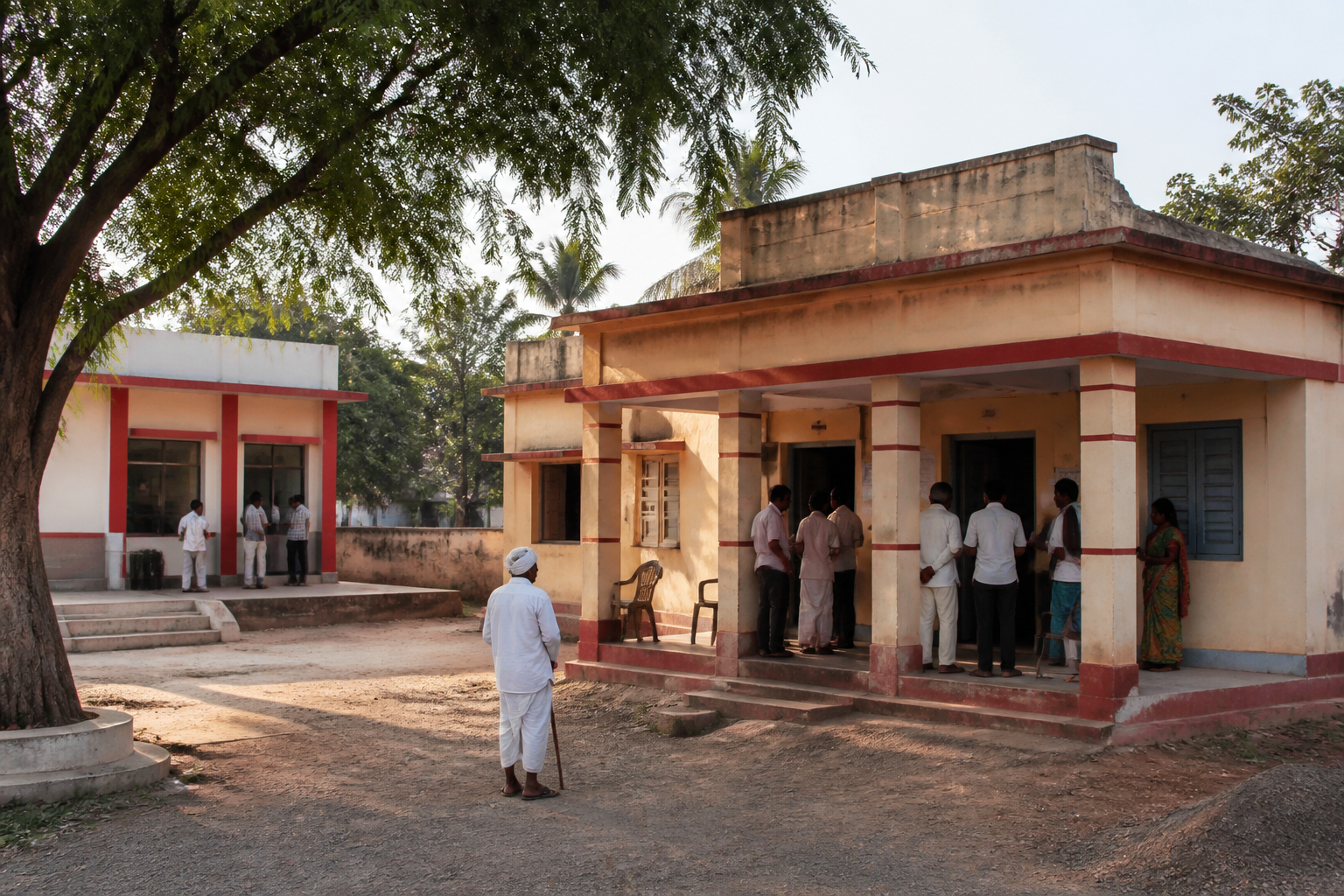
Telangana’s state government introduced a bill in the Legislative Assembly on Wednesday that would allow gram panchayats to keep their locally generated revenue in banks and post offices, rather than depositing it in the state government treasury.
Panchayat raj and rural development minister Seethakka introduced the Telangana Panchayat Raj (Fourth Amendment) Bill, 2026. The proposed legislation seeks to amend Section 70(3) of the Telangana Panchayat Raj Act, 2018.
Under the existing arrangement, revenue collected by gram panchayats is deposited in the state treasury. The government said this system can restrict the panchayats’ immediate access to their own funds, particularly when money has to be used for local works or essential services.
The amendment would permit gram panchayats to maintain these funds in nearby nationalised banks, cooperative banks or post offices. The government said the proposed change would make it easier for panchayat bodies to access revenue in remote rural areas and reduce delays associated with the treasury system.
If enacted, the measure would allow sarpanches and other panchayat bodies to use locally generated revenue for development and essential works through accounts located closer to the villages. The source report did not specify the categories of revenue covered by the proposed change or prescribe a separate operational framework for withdrawals and spending.
The bill follows a decision taken by the state Cabinet on July 17 to change the provisions governing the management of gram panchayat funds. Its introduction in the Assembly begins the legislative process for amending the existing provision.
The proposed shift would alter the financial channel through which gram panchayats hold and access their funds. At present, the treasury arrangement places locally generated revenue within the state government’s financial system. The bill would instead allow the funds to remain with banking or postal institutions closer to the panchayats.
The government’s stated objective is to improve access to funds and enable faster use of local revenue for development and essential works. The report did not provide details of the bill’s further legislative schedule, the implementation date or the oversight arrangements that would apply if the amendment is passed.
The next steps will depend on the Assembly’s consideration of the Telangana Panchayat Raj (Fourth Amendment) Bill, 2026.
