


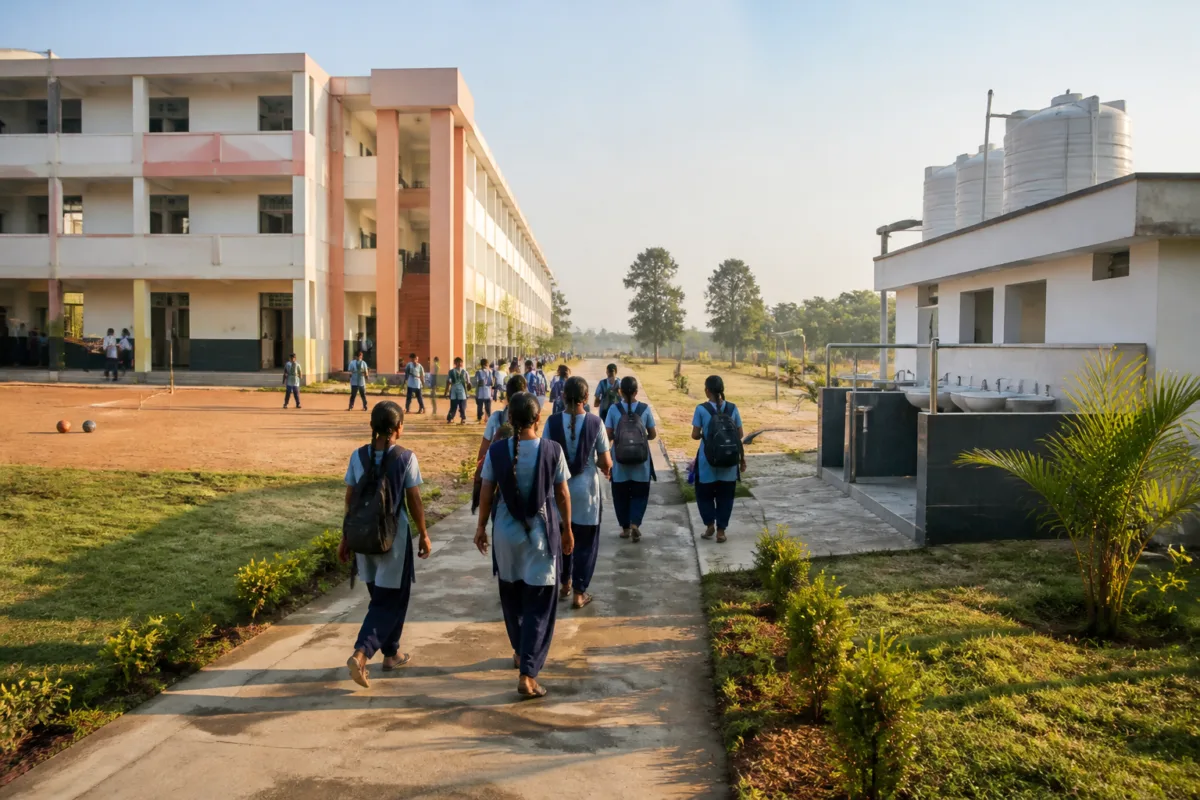
Telangana will introduce the 10+2 education system from the next academic year, placing students from Classes 9 to 12 in the senior secondary stage as part of a restructuring aimed at reducing dropouts after Class 10 and preparing students for specialised education.
Chief Minister A Revanth Reddy directed officials to implement the new structure while ensuring that no student is disadvantaged, Telangana Today reported. Under the proposed classification, nursery to Class 4 will form the primary stage, Classes 5 to 8 will constitute secondary education, and Classes 9 to 12 will be treated as senior secondary education.
The Chief Minister issued the directions during a review meeting at the MCR HRD Institute. He said specialised education would be introduced at the senior secondary level, while students would receive language and information skills before choosing specialised subjects after Class 12.
According to the report, around 40 per cent of students discontinue their education after Class 10. Girls and children from Scheduled Caste, Scheduled Tribe and minority communities account for a large share of those leaving school, the report said. Reddy cited Kendriya Vidyalayas, Navodaya Vidyalayas and Kasturba Gandhi Balika Vidyalayas as examples of institutions following the 10+2 system with relatively low dropout rates.
Eighteen States already follow the 10+2 structure, according to the report. Telangana’s proposed change will therefore require adjustments across school administration, curriculum planning and the transition between secondary and senior secondary education. The supplied report does not specify the detailed implementation schedule, curriculum changes or the number of schools that will be covered in the first phase.
The review also focused on the physical conditions of welfare hostels and residential schools. Reddy directed officials to ensure that these institutions do not operate from rented buildings and ordered action plans for permanent buildings with adequate toilets and water facilities. He assured that funds would be made available for construction.
Officials were also asked to expedite construction of Young India Integrated Residential Schools and maintain quality in interiors, digital and sports equipment, landscaping and kitchen facilities. These directions link the education reform to a wider requirement for functional school infrastructure, particularly for students dependent on residential and welfare institutions.
The Chief Minister further reviewed plans to upgrade polytechnics and recruit assistant, associate and other professors in universities while following prescribed rules. He assured junior college lecturers and non-teaching staff that they would not lose their service or retirement benefits under the new system.
The next steps are the preparation of implementation plans for the new school-stage structure, permanent buildings for welfare hostels and residential schools, and continued construction of Young India Integrated Residential Schools. The report did not provide a detailed deadline for these actions beyond the stated start of the new education system in the next academic year.

