


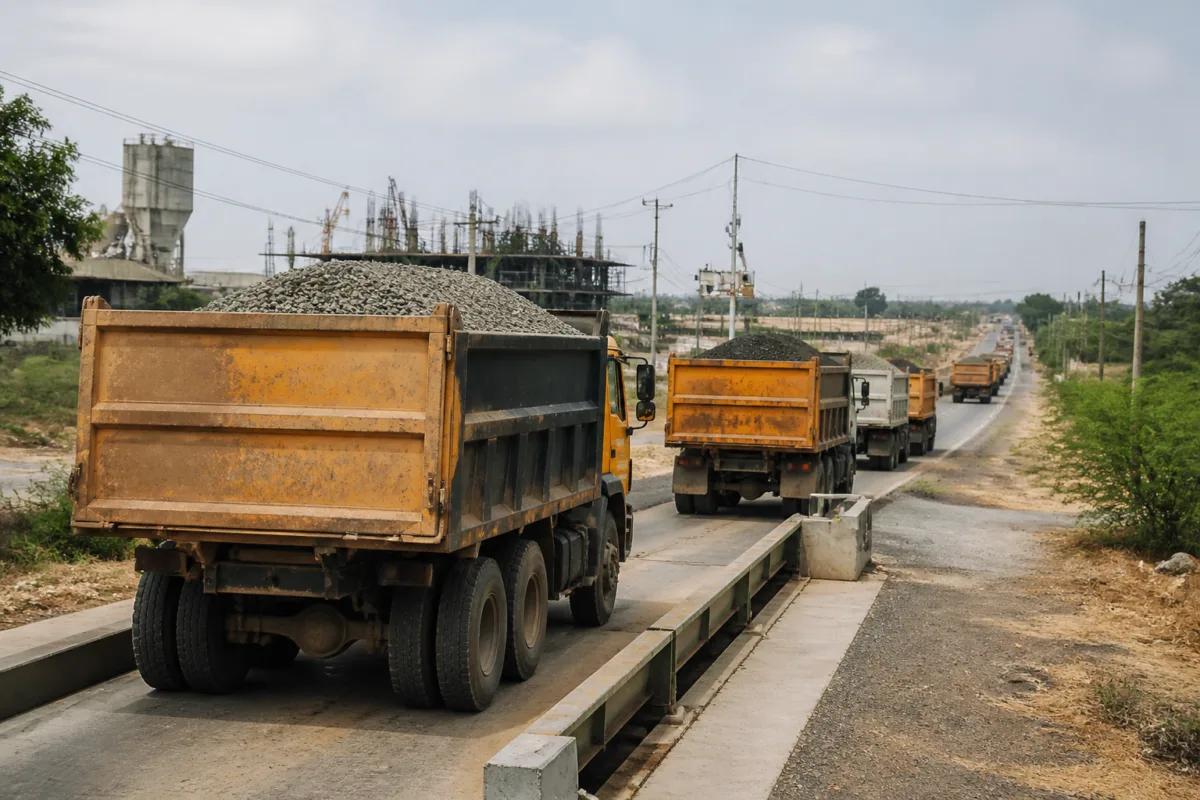
The Chennai High Court has cancelled Tamil Nadu’s three-month ban on transporting construction minerals to other states, holding that the amendments used to impose the restriction were unconstitutional, according to a report by Dinamalar. The ruling removes a major regulatory barrier affecting the movement of materials used in infrastructure and urbanisation projects.
The materials covered by the dispute include rough stone, aggregate and manufactured sand, commonly known as M-sand. These inputs are used in construction and infrastructure works, and the state government had said the regulatory changes were intended to ensure their uninterrupted supply within Tamil Nadu.
The sequence began with an amendment made on July 9 to the Tamil Nadu Prevention of Illegal Mining, Mineral Transportation and Storage Rules. Based on that amendment, the state’s Geology and Mining Department issued an order on July 27 prohibiting the transport of rough stone, aggregate and similar minerals from Tamil Nadu to other states for three months. The restriction did not apply to Karaikal and Puducherry, according to the report.
The order was challenged before the Chennai High Court. The petitioners sought cancellation of the inter-state transport ban and asked the court to declare the amendment to the rules illegal. The challenge placed both the government order and the legal basis for the restriction before the court.
The High Court subsequently cancelled the ban on transporting minerals from Tamil Nadu to other states. The judges also held that the amendments to the rules were contrary to the Constitution, as reported by Dinamalar. The report does not provide the case number, the names of the judges, the detailed reasoning in the order or any directions issued on enforcement following the ruling.
The decision directly concerns the movement of basic construction materials across state borders. Rough stone, aggregate and M-sand are part of the material supply chain for building and infrastructure work. The court’s decision therefore restores the position that existed before the three-month restriction, subject to other applicable mining, transport, storage and environmental requirements. The ruling does not, on the facts available in the report, remove those wider regulatory requirements.
The dispute also highlights the administrative tension between controlling illegal mining and maintaining the movement of construction inputs. Tamil Nadu’s amended rules and subsequent order were presented as measures connected with the regulation of mineral supply and transport. The court’s finding that the amendments were unconstitutional means that the state’s power to impose such a restriction must operate within constitutional limits.
For contractors, material suppliers and public agencies involved in infrastructure or urbanisation work, the immediate significance is the removal of the specific inter-state transport prohibition. The source report does not state whether any projects were delayed, how much material was affected, or whether the state government plans to appeal the ruling. Those details remain to be established from the court order and subsequent government directions.

