


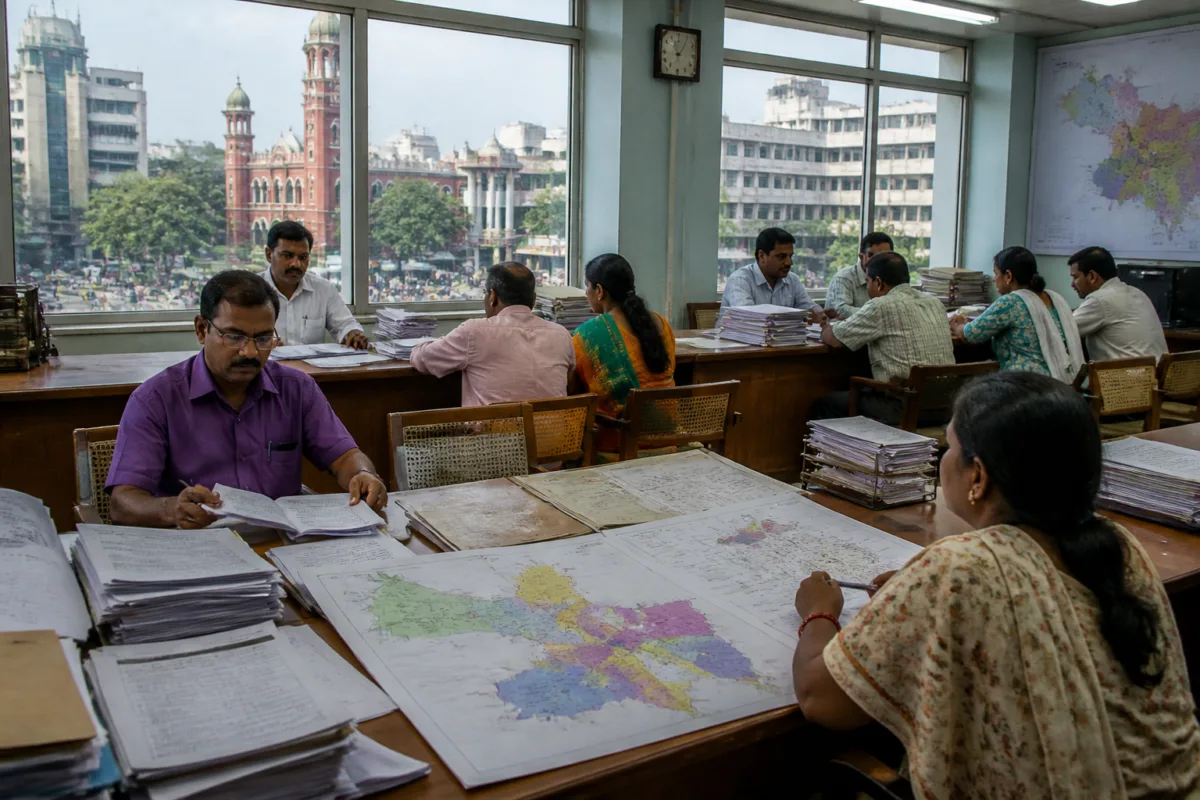
Tamil Nadu has told the Madras High Court that local body elections can be held only after the completion of population census work, ward delimitation and reservation procedures, putting the timing of the state’s civic polls on hold until those processes are finished.
The government made the submission in response to a public interest litigation petition seeking directions to conduct local body elections and challenging the appointment of special officers to administer local bodies. The matter was heard by the Madras High Court on November 11, 2026, according to Dinamalar – Tamil Nadu.
The court had earlier directed the Tamil Nadu government and the State Election Commission to respond to the petition. During the latest hearing, Justice Senthilkumar raised questions with the state government. The government subsequently filed its response explaining why elections could not be conducted immediately.
In its submission, the Tamil Nadu government said population census work was currently under way. It stated that the election process could begin only after the census work was completed, followed by the delimitation of wards and the implementation of reservation procedures.
Ward delimitation determines the territorial boundaries and representation structure of local constituencies. Reservation procedures decide the categories for which seats are reserved. Both processes affect the composition of municipal, town panchayat and other local government wards, making them directly relevant to the conduct of local body elections.
The government’s response therefore links the election schedule to the completion of administrative exercises that determine how local constituencies will be organised. It did not announce a specific election date in the material cited by Dinamalar – Tamil Nadu.
The case also places the role of special officers under judicial examination. The petition challenges their appointment while seeking the restoration of an elected local-government process through elections. The state’s submission addresses the election timeline but, in the available report, does not set out a separate schedule for ending the current administrative arrangement.
For residents, the timing of the elections will determine when elected representatives return to local bodies. Until then, the immediate position before the court is that the government considers the census, ward delimitation and reservation exercises to be necessary steps before polling can take place.
The Madras High Court proceedings will continue with the government’s response and the State Election Commission’s position before the court. No election timetable was specified in the report.

