


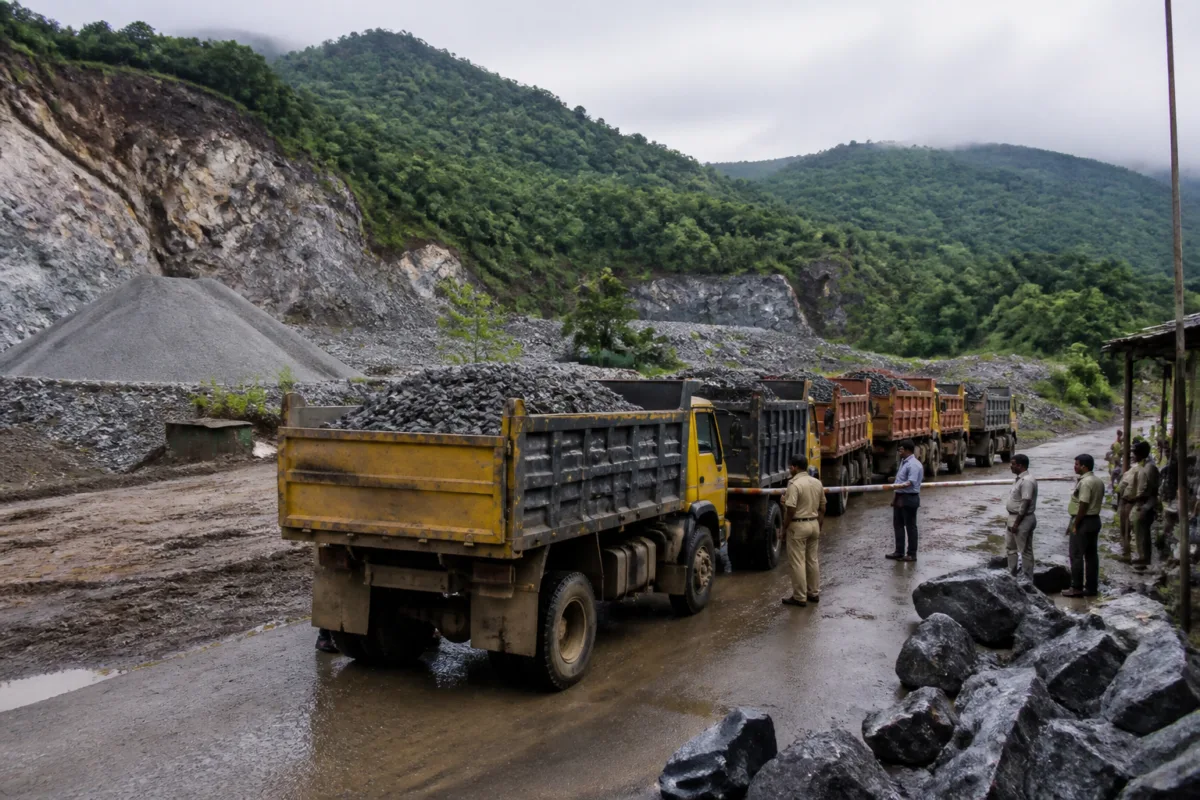
Tamil Nadu has extended its ban on transporting rough stone and construction aggregates to other states by another three months, citing continuing concerns over domestic supply, ecological damage, illegal mining and law-and-order problems in border districts.
The restriction, which takes effect on Tuesday, applies to inter-state movement of rough stone and its aggregates from Tamil Nadu. Transport to Puducherry and Karaikal remains exempt. The extension follows the expiry of an earlier three-month ban imposed on July 27.
An order issued by the state director of geology and mining said the objectives of the original restriction “had not been fully achieved” during the previous period. The state government had introduced the ban to ensure an uninterrupted supply of minerals within Tamil Nadu, protect the environment and ecology, and prevent illegal mining and unauthorised transportation.
A senior government official said rough stone was not a scarce mineral in neighbouring states and that transporting it across Tamil Nadu’s borders had created law-and-order problems. “The decision to extend the ban was taken at a higher level,” the official said.
The deposits covered by the restriction are concentrated mainly in Kanyakumari, Tenkasi, Theni, Coimbatore, Tiruppur and Krishnagiri districts. These districts are located in or near the Western Ghats, increasing the ecological significance of quarrying and mineral transport in the region.
The state government has previously said local production was inadequate to meet rising domestic demand for construction materials. It has argued that large-scale movement of rough stone to neighbouring states was creating an artificial supply-demand imbalance within Tamil Nadu and contributing to higher material prices. The supply gap, according to the government, had also encouraged illegal quarrying in border districts.
The order directs district collectors and superintendents of police in districts bordering neighbouring states to remain vigilant and ensure strict compliance. Violations of the restriction will attract action under existing laws and rules.
The extension places continued responsibility on district administrations and police authorities to monitor quarrying and transport routes, while the state retains the restriction for another three months. The order does not indicate that the government has fully resolved the supply and enforcement concerns cited when the ban was first introduced.

