


Tamil Nadu has recorded 17,000 confirmed dengue cases so far this year, Health Minister Arun Raj said, while urging residents to work with government officials to prevent mosquito breeding and ensure that dengue-related deaths do not occur.
In comments reported by Dinamalar, the minister said dengue transmission was under control in the state and that the number of cases was lower than during the corresponding period last year. He nevertheless called for continued public participation in mosquito-control and monitoring activities.
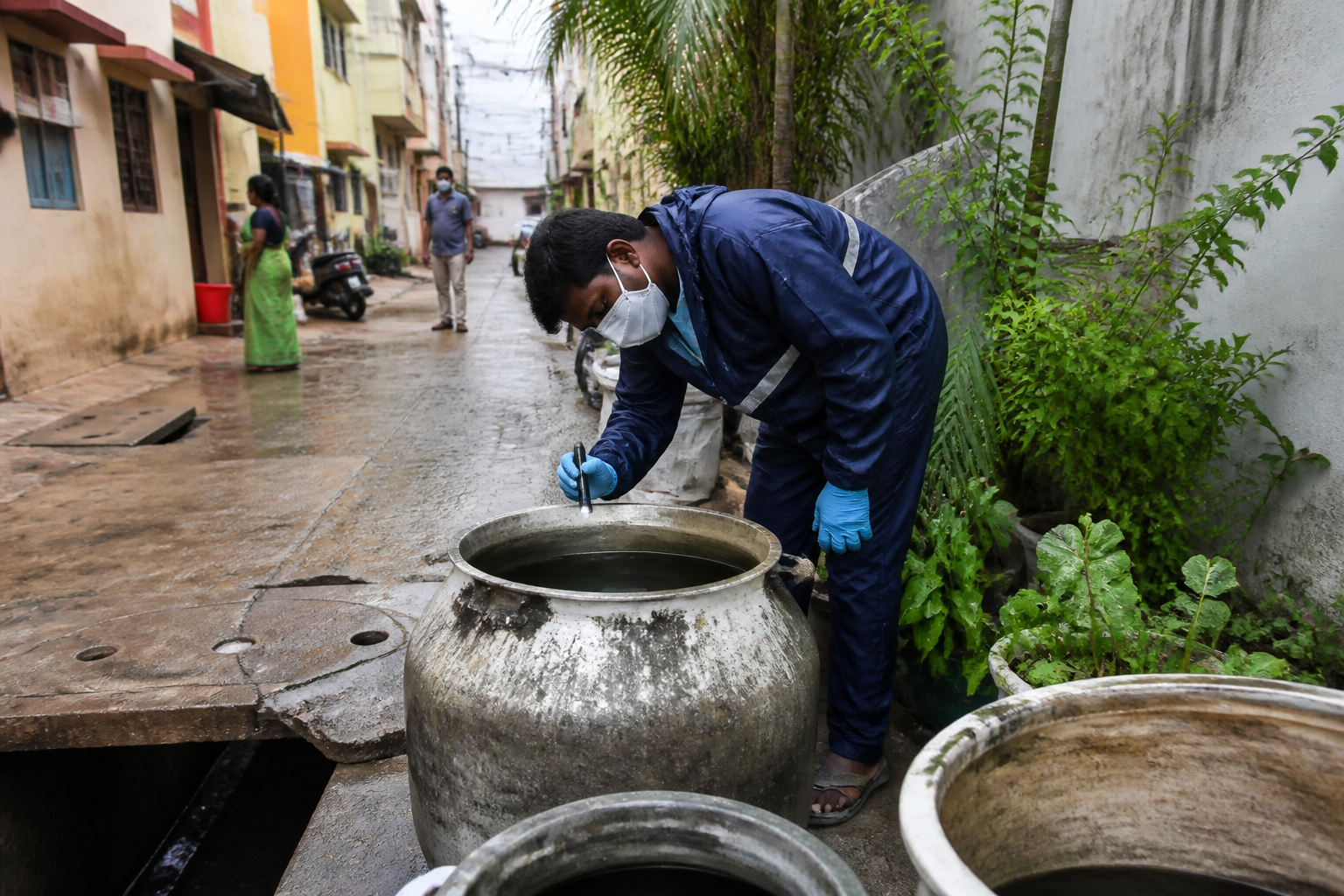
Dengue is spread by Aedes mosquitoes, which breed in clean, stagnant water. The minister said water accumulating during the rainy season can create breeding sites and urged residents to ensure that water does not collect in and around their homes.
The warning comes as the state faces an earlier increase in dengue infections compared with the usual monsoon-linked pattern. The report attributed the change to climate variation, although it did not provide a comparative dataset or a district-wise breakdown of cases.
Arun Raj said the government was determined to prevent deaths from dengue and that residents should cooperate with officials involved in mosquito-control and surveillance work. The appeal places responsibility on both public agencies and households, particularly in areas where water can collect in containers, open spaces or other locations near homes.
The minister also said studies would be conducted on mosquito-control measures. One area under examination is whether mosquito repellents applied to the body provide effective protection. The report did not specify the institutions conducting the studies, their timelines or the methodology that will be used.
Dengue control in urban areas depends partly on routine management of the spaces where water accumulates. Construction sites, residential compounds, vacant plots and roadside areas can become breeding locations when containers or depressions retain water, making inspection and timely removal important during rainy periods. The supplied report, however, does not identify specific cities, municipalities or local bodies facing the highest case burden.
The minister’s statement also indicates that surveillance and mosquito-control operations are continuing alongside public outreach. Tamil Nadu’s reported case count provides the current statewide figure, but the available information does not establish how cases are distributed across districts, whether hospitalisations have increased or how many deaths, if any, have occurred this year.
The next steps mentioned by the minister are further mosquito-control and monitoring work, along with studies into dengue-prevention measures such as topical repellents. Residents have been asked to prevent water stagnation near their homes and cooperate with officials carrying out control operations.
