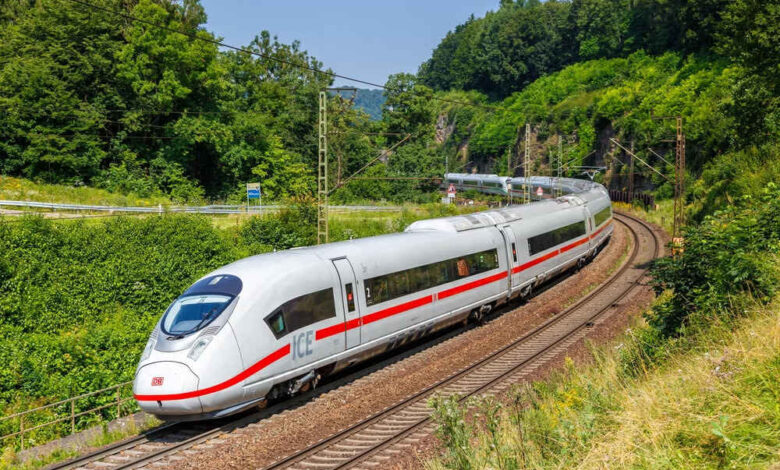
Plans to strengthen operational infrastructure for India’s first high-speed rail corridor are progressing with the proposed development of a rolling stock depot in Surat, a facility expected to support maintenance and operations for bullet train services connecting Mumbai and Ahmedabad.Officials working on the project say the proposed Surat bullet train depot will play a critical role in managing train operations once the high-speed rail network becomes operational. Rolling stock depots are essential components of modern rail systems, providing space for train storage, inspection, maintenance and technical servicing.
The depot is being planned as part of the broader infrastructure required for the Mumbai–Ahmedabad High-Speed Rail project being implemented by National High Speed Rail Corporation Limited. The corridor represents India’s first attempt to introduce high-speed rail technology capable of significantly reducing travel time between major economic centres in western India.Surat has emerged as one of the key nodes along the corridor due to its economic importance and strategic location between Mumbai and Ahmedabad. The city is globally recognised as a major centre for diamond processing and textile manufacturing, generating strong business travel demand.Transport planners say the Surat bullet train depot will enable routine maintenance of high-speed trains operating along the corridor. Such facilities typically include inspection bays, repair workshops, washing plants and advanced monitoring systems used to ensure safety and reliability.High-speed rail systems require specialised maintenance infrastructure because trains operate at speeds exceeding 300 kilometres per hour. Regular inspection and technical servicing are necessary to maintain operational standards and passenger safety.Urban mobility experts note that infrastructure such as depots, signalling systems and control centres often receive less public attention than passenger stations but are equally critical to the functioning of high-speed rail networks.
The development of the Surat bullet train depot also highlights the scale of infrastructure required to support next-generation rail systems. High-speed rail projects typically involve extensive engineering works, including dedicated tracks, elevated corridors, tunnels and advanced operational facilities.For Surat, the project could bring broader urban and economic benefits. Major transport infrastructure investments often stimulate development around stations and associated facilities, attracting commercial projects, hotels and logistics businesses.Urban planners believe that improved intercity connectivity through high-speed rail could strengthen Surat’s integration with major economic hubs such as Mumbai and Ahmedabad.However, experts emphasise that infrastructure planning must also consider environmental sustainability and land-use efficiency. Large rail facilities require significant land and resource management to ensure minimal ecological impact.
As construction progresses along the Mumbai–Ahmedabad corridor, the establishment of the Surat bullet train depot will form part of the operational backbone required to run the high-speed rail network efficiently.Once the bullet train system becomes operational, supporting infrastructure like rolling stock depots will ensure that trains are maintained at the highest technical standards while enabling reliable and safe service for passengers travelling between western India’s major cities.