


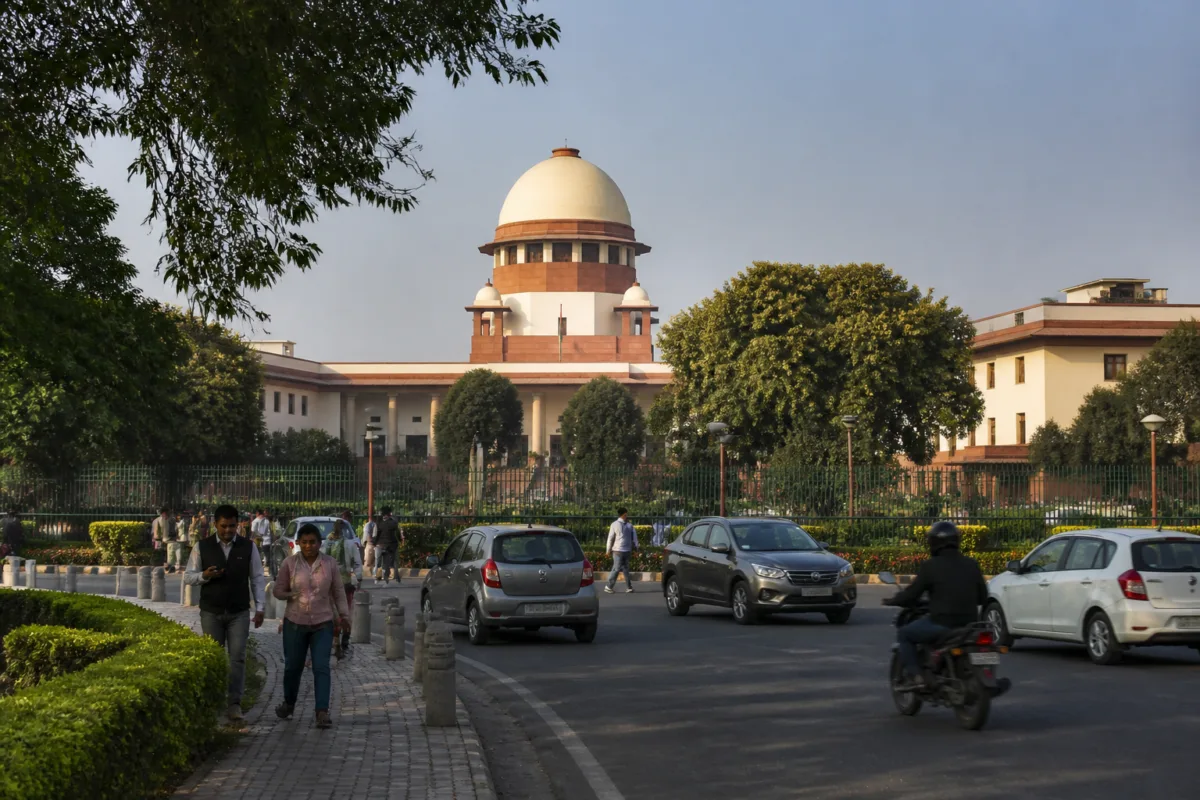
The Supreme Court has questioned how hotels, restaurants, game parlours and large software companies are operating in residential colonies, while seeking concrete proposals from states and Union territories to enforce building regulations and improve municipal accountability, according to a report by Dainik Bhaskar.
A Bench headed by Justice B V Nagarathna raised concerns during a hearing on illegal construction and commercial activity in residential areas. The court reportedly criticised municipal authorities for allowing violations to continue, carrying out what it described as token inspections after buildings were completed, and permitting irregularities through official inaction or collusion.
The observations place local building enforcement within a wider governance question: whether planning rules are being applied consistently to residents, property owners and commercial operators. The report said the court referred to Article 51A of the Constitution, which includes respect for the Constitution, its ideals and institutions, and asked how people obtaining permission for three or four floors could end up constructing eight floors.
The court also questioned the conversion of residential neighbourhoods into locations for intensive commercial activity. Such changes can affect the everyday functioning of a locality by increasing pressure on roads, parking, drainage and traffic. The report linked these concerns to the operation of businesses such as hotels, restaurants, game parlours and large software companies in areas designated for residential use.
The Supreme Court has reportedly asked all state governments and Union territories to file affidavits through municipal commissioners or the relevant secretaries. The affidavits are expected to set out concrete steps for ensuring compliance with building rules. The report said the states and Union territories were given six weeks to respond.
The hearing is expected to address enforcement of building regulations across the country, prevention of illegal construction and the accountability of municipal bodies. According to the report, the court may also consider how action should be taken against violations. It said the court has scheduled the next hearing on these policy and compliance issues for 6 January 2027.
The proceedings also distinguish between national policy questions and individual property disputes. People affected by sealing or demolition may approach the appropriate high court or tribunal for individual relief, while the Supreme Court is examining broader issues concerning building-rule compliance and municipal responsibility, the report said.
For Madhya Pradesh, the report said affected residents, including those in Bhopal’s Arera Colony, could approach the Jabalpur High Court regarding allegedly illegal commercial activity and construction. It also reported that the Madhya Pradesh High Court had disposed of about 150 sealing and demolition matters in October, leaving the municipal corporation free to act according to law. Parties affected by those proceedings may seek further legal advice and pursue their remedies, according to the account.
The case was earlier being heard by a Bench of Justices Ahsanuddin Amanullah and R Mahadevan. The report said the matter was withdrawn from that Bench on 18 November after concerns arose over the roster for hearing public interest litigation, following consultations by Chief Justice Surya Kant with five senior judges. It was subsequently assigned to the Bench headed by Justice Nagarathna, which heard the matter for the first time on Monday.
The report also cited senior advocate Ajit Kumar Sinha, acting as amicus curiae, as telling the court that more than 100 people had died in incidents linked to illegal construction across the country during the period of the proceedings. That figure and the related submissions are attributed to the amicus curiae in the report.
The broader test for municipal administrations will be whether the affidavits lead to transparent permissions, timely inspections and consistent enforcement before unauthorised structures become established. The hearing also raises a practical planning issue: land-use rules cannot be enforced only after construction is complete, particularly where a change from residential to commercial use affects neighbourhood infrastructure and public services.

