


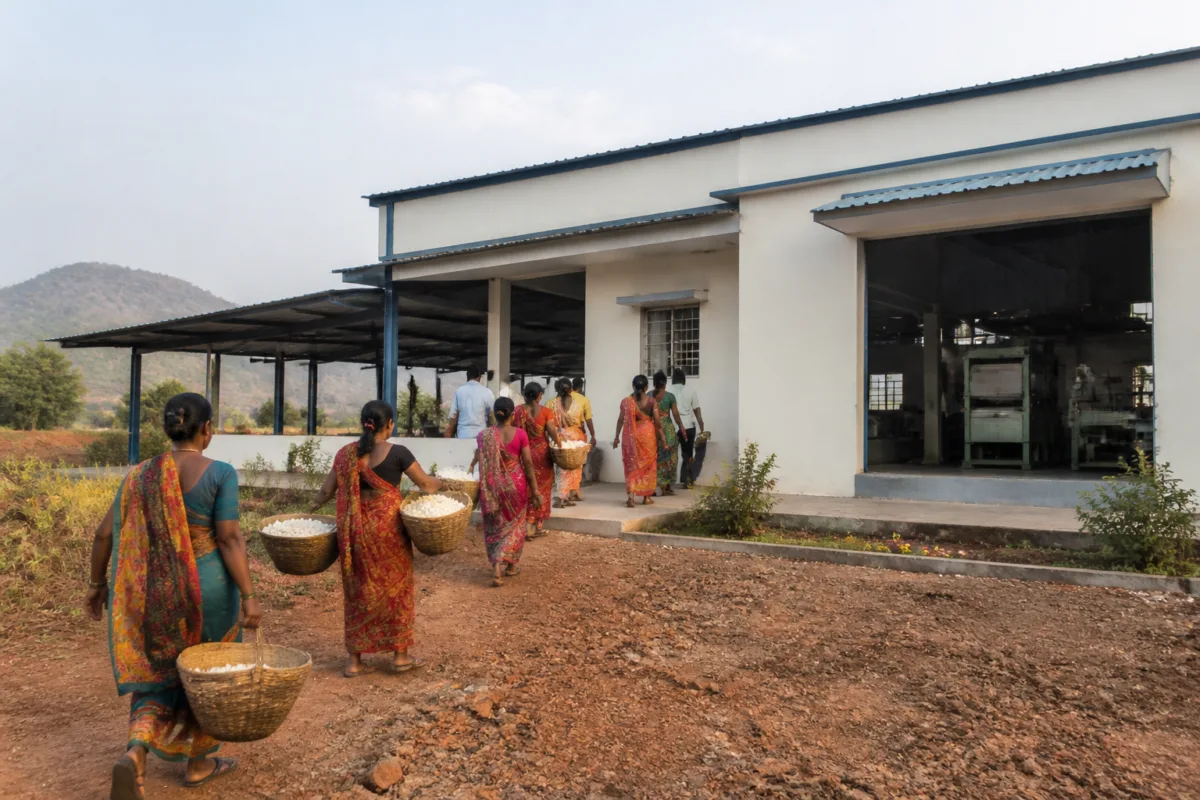
A ₹32.14 crore Tasar Silk Park at Khuntgaon in Odisha’s Sundargarh district is expected to become operational by the end of 2026, after construction and electrification were completed but the facility remained unused for months, according to officials cited by The Times of India.
The four-acre park in Lahunipada block was conceived by the Sundargarh district administration as an integrated production chain covering tasar cocoons, reeling, weaving, design and finished silk products. Its facilities include a nursery, godown, skill centre and design and production centre, with sarees among the products planned at the site.
The District Mineral Foundation funded the project. Construction began on June 12, 2021, and the completion deadline was set for September 16, 2024. The building and electrification were completed by May 2025, but the park had not started operations by the time of the report. The delay has raised concerns about the use and warranty period of machinery installed at the facility.
Assistant director of sericulture Kiranmaya Pradhan said the delay was linked to a shortage of skilled manpower in tasar value addition and the absence of a weaver cluster in the district. He said an experienced agency would be appointed through a request for proposal to operate the park for five years. The tender had been floated and the agency was expected to be onboarded shortly.
The project is intended to serve tasar farmers in Bonai, Koira, Lahunipada, Bisra and Bargaon blocks. According to the report, more than 3,000 farmers in these areas sell cocoons through Tasar Rearers Cooperative Societies. Together, they produce more than 40 lakh cocoons a year, generating business estimated at over ₹2 crore.
By bringing production and processing activities to one location, the park is intended to shift more value addition closer to the communities that produce the raw material. The stated objective is to create a “soil-silk-fabric” ecosystem, linking local cultivation with training, manufacturing and finished products rather than limiting the area’s role to cocoon production.
The initial operating plan also links the facility to the district’s mining-affected areas. Beneficiaries within a 25-km radius of Lahunipada are expected to receive training in reeling and basic weaving, along with stipends and raw materials. Those who become proficient in operating the machinery may subsequently be engaged at the park as production begins.
National Buildings Construction Corporation Limited completed the civil works and machinery installation, Pradhan said. The facility is to be handed over to the sericulture department after inventory verification. That handover, the appointment of an operating agency and the availability of trained workers will determine whether the completed asset can move into production.
The project’s experience highlights the gap between completing a public building and making it operational. In this case, the physical facility was ready before the institutional and workforce arrangements needed to use it. Local residents told the newspaper that the prolonged delay had disappointed farmers who expected the park to begin supporting the five-block production network earlier.
The year-end target therefore represents not only an opening date but also a test of whether the park’s machinery, training programme and operating model can be coordinated. Its public value will depend on sustained production and farmer participation after commissioning, rather than on the completion of the structure alone.

