


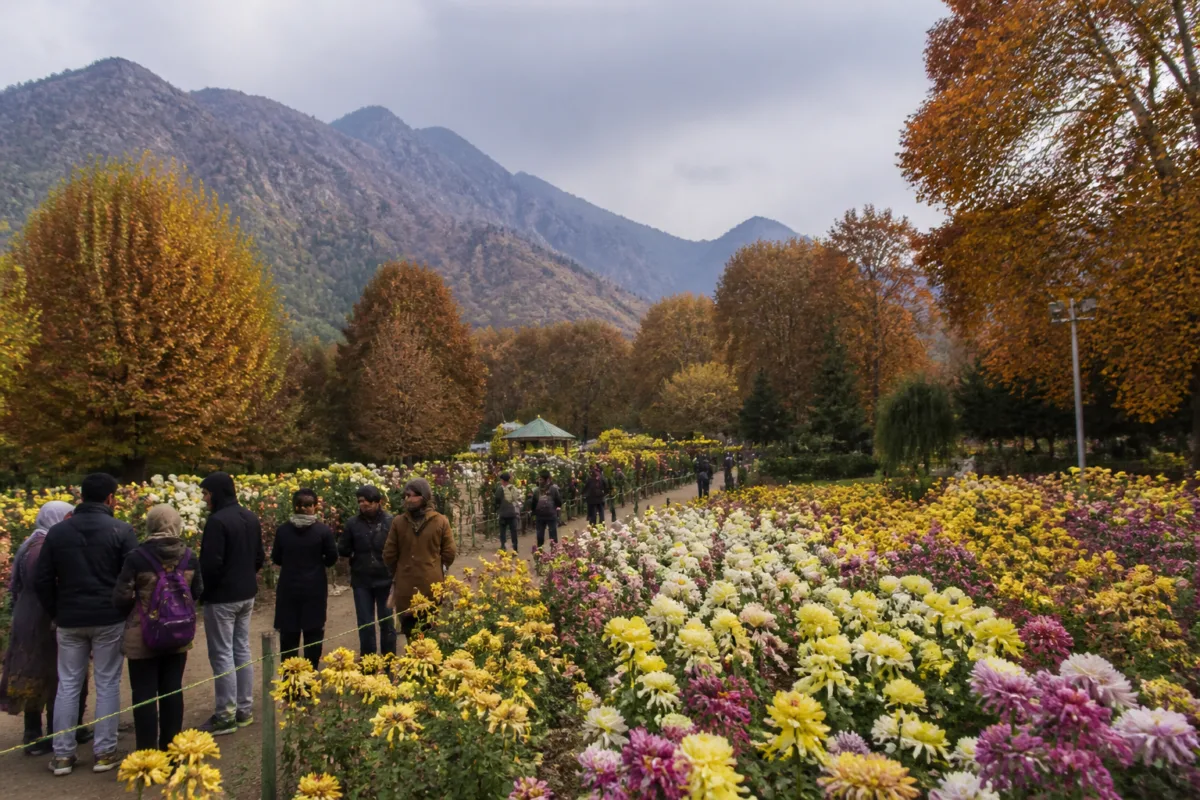
Srinagar’s Chrysanthemum Garden is giving the city a new autumn attraction after more than 1.2 lakh visitors reportedly visited the site since it opened on October 24.
Located within the botanical garden beneath the Zabarwan foothills, the 100-kanal project features 3.5 lakh chrysanthemum plants and an estimated two crore blooms, according to Greater Kashmir. The planting includes spray, standard and multiflora varieties in yellow, white, pink and other colours.
The garden was envisioned by Jammu and Kashmir Chief Minister Omar Abdullah and developed with the scientific expertise of Sher-e-Kashmir University of Agricultural Sciences and Technology (SKUAST) Kashmir, the report said. Javed Masood Dar, the SKUAST-K official in charge of the garden, said the project is intended to create a dedicated autumn theme garden comparable in seasonal appeal to Srinagar’s well-known tulip garden in spring.
The intervention is designed to address a seasonal gap in Srinagar’s visitor economy. The city’s autumn colours are brief, while the conventional tourist season begins to taper as winter approaches. Chrysanthemums have a longer flowering period than tulips, and the garden is using staggered planting to try to keep the display active for more than 50 days.
That approach could give visitors an additional reason to travel to Srinagar later in the year, although the report presents the extension of the tourism season as an expectation rather than a measured outcome. The reported visitor count provides an early indication of demand, but longer-term effects on tourism flows, local businesses and public services are not yet established.
The project has also retained much of the botanical garden’s original form. According to Dar, invasive vegetation was removed to make room for the chrysanthemum planting, while the existing contours were largely preserved. Additional facilities were developed to improve visitor movement and access.
Existing maples, ginkgos and horse chestnuts contribute to the garden’s autumn character. SKUAST plans to add more trees with strong seasonal colour, the report said. This would make the site more than a short-lived floral display by strengthening its role as a landscaped public destination across different seasons.
For Srinagar, the garden demonstrates how existing urban landscapes can be adapted to create new civic and tourism value without substantially altering their original contours. Its success will depend on maintaining the planting, managing visitor access and determining whether the seasonal model can be sustained beyond its first year.

