


The latest controversy over Arunachal Pradesh’s proposed 11,200-MW Siang Upper Multipurpose Project is not only about whether a major dam will be built. It is about which institution speaks for the state when affected communities have been promised that no project will proceed without their consent.
The question became sharper after BJP MP from Arunachal East Tapir Gao said in Tezu that the dam would be built “come what may”. His reported assertion has collided with repeated assurances attributed to Chief Minister Pema Khandu that the project would not proceed without the consent of affected people. For communities in the Siang belt, and for groups opposing the project, the contradiction has transformed a long-running infrastructure dispute into a test of administrative credibility.
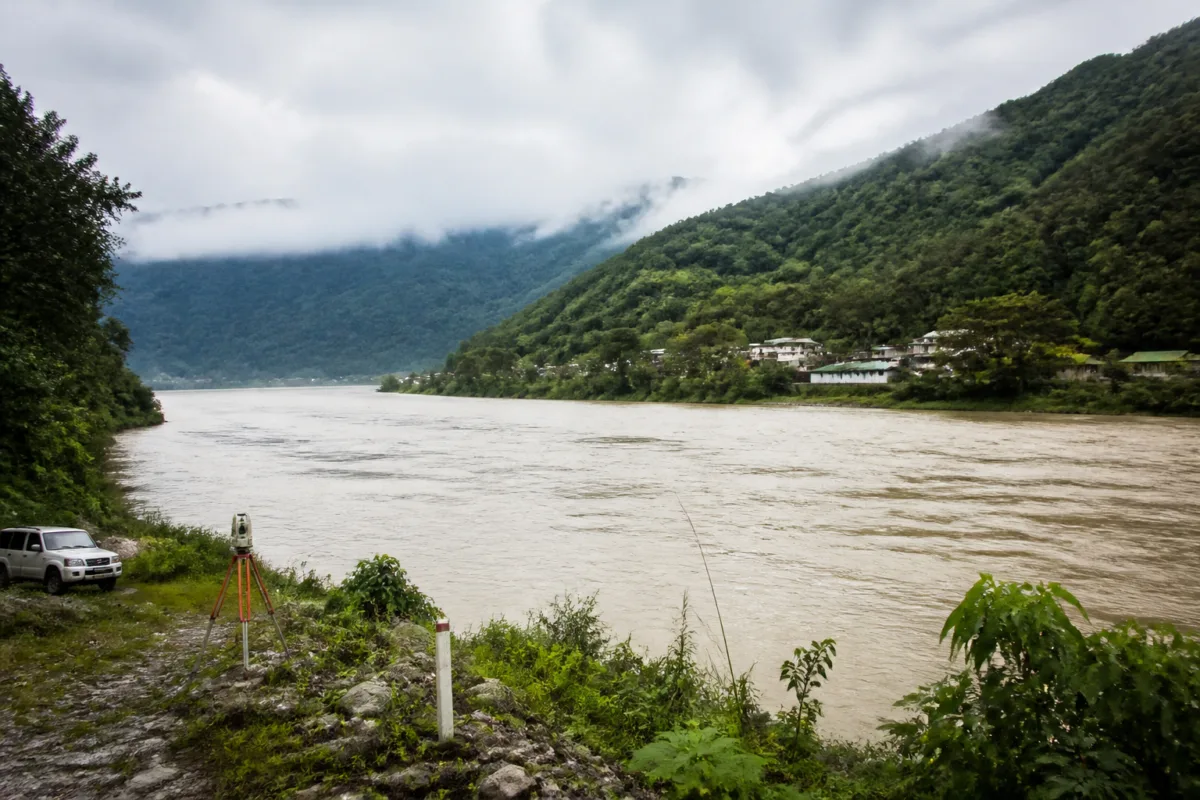
The Siang Upper Multipurpose Project is proposed on the Siang river, which the Adi community reveres as Ane Siang, or Mother Siang. The scale of the proposal places it among the most consequential infrastructure interventions discussed in the region. But the immediate dispute is not centred on engineering capacity, generation targets or construction schedules. It concerns the political and institutional conditions under which a project affecting indigenous communities can move from proposal to implementation.
That distinction matters because public consent is not merely a communication exercise. If the government’s position is that affected communities must agree before the project advances, then public statements by elected representatives become part of the project’s governance environment. A categorical declaration that the dam will be built regardless of opposition can be read by affected residents as evidence that the decision has already been taken, even when the formal administrative position says otherwise.
The Adi Bane Kebang-United, a leading group opposing the dam, made that contradiction the centre of a letter to Amjad Tak, commissioner for the East. The group said it would not participate in further dialogue unless the state government clarified its position. It referred to the chief minister’s repeated assurances and questioned how those assurances could be reconciled with statements attributed to the MP, ministers and MLAs that appeared to support the project without qualification.
ABKU’s question was direct: should the people of the Siang dam-affected area trust the chief minister or the MP, ministers and MLAs? That question reflects a structural weakness in large infrastructure decision-making. Projects of this scale require multiple layers of political and administrative action, but residents experience the state as a single authority. When its representatives communicate different positions, the distinction between an individual political statement and official policy may have little practical meaning on the ground.
The group also alleged that youths facing what it described as “false criminal charges” remained in different jails and that large numbers of Central Armed Police Forces and Rapid Action Force personnel had been deployed against villagers. These are allegations made by ABKU and are not independently established in the supplied report. Their presence in the dispute nevertheless shows how the dam issue has expanded beyond a conventional consultation process. The conflict now includes questions of detention, policing and the conditions under which dialogue is being sought.
The state government’s credibility is therefore tied to more than the eventual fate of the project. It is also tied to whether consultation is seen as a meaningful decision-making process or as a step undertaken after the political outcome has already been settled. ABKU’s threat to withdraw from future talks indicates that the credibility of the dialogue mechanism itself is under strain.
The Congress unit in Arunachal Pradesh used the same contradiction to challenge the government’s position. Party spokesperson Kon Jirjo asked whether the chief minister was misleading people with assurances of consent or whether the BJP MP was revealing the party’s actual determination to push the project despite public opposition. These are political questions, and the source attributes them to the Congress. Their importance lies in identifying the absence of a clearly understood public position on a project with wide social and territorial consequences.
In a large dam project, responsibility is distributed across political representatives, the state administration and the agencies responsible for planning and implementation. The supplied report does not establish which authority has formally approved the Siang project, whether construction has been sanctioned, or what stage of assessment or consultation it has reached. That absence is significant. A statement that a dam “will be built” carries a very different administrative meaning from a proposal under study, but the public cannot distinguish between them unless the government clearly publishes the project’s status, decision points and consent process.
The dispute also illustrates why the language of consent matters. A promise that a project will not proceed without consent creates an expectation that affected communities will be able to influence the outcome. It does not necessarily answer how consent will be defined, which communities will be consulted, what information they will receive, how disagreements will be recorded, or how the state will respond if consent is not forthcoming. The supplied material does not provide those procedural details, leaving the promise vulnerable to competing interpretations.
That uncertainty is intensified by the project’s reported scale. An 11,200-MW multipurpose project would not be a local construction intervention with limited administrative effects. Yet the public dispute, as reported, is being conducted through political remarks, letters, protests, detentions and demands for clarification rather than through a publicly visible account of the project’s formal milestones. Without a common factual record, every new statement risks deepening mistrust instead of resolving it.
The role of the East Siang administration is consequently important. ABKU addressed its letter to the commissioner for the East, while the JNCSU, Pasighat, separately urged the East Siang deputy commissioner to consider the early release of students detained after violence on October 23 over the dam issue, subject to applicable legal procedures. The students’ union said the detention could affect preparations for semester examinations scheduled in December and damage the students’ academic progress.
The students’ memorandum brings a different dimension to the same conflict. It shows that the project dispute is affecting educational continuity and the relationship between local administration and young residents. The union did not ask for detention to be ignored; it asked that the matter be considered within applicable legal procedures. That qualification is important because it places the demand in the space between public order and the protection of students’ academic futures.
Taken together, the statements reported by the Times of India describe a dispute moving across several institutional arenas: political leadership, district administration, community organisations, opposition parties, policing and educational institutions. The project’s future may depend not only on technical or financial decisions but also on whether these institutions can operate around a consistent and publicly understood process.
The immediate requirement emerging from the controversy is clarity. The government needs to distinguish between an individual MP’s political position, the ruling party’s position and the state’s formal administrative position on the project. It also needs to explain what its assurance regarding affected communities’ consent means in practice. Until those positions are separated and documented, public dialogue is likely to remain vulnerable to the same contradiction.
The supplied report does not establish that the Siang project has received final approval or that construction is imminent. It establishes that the project has become the subject of conflicting public claims, that an anti-dam group has threatened to withdraw from further talks, that the Congress has questioned the government’s position, and that students detained after earlier violence are seeking consideration of their academic circumstances. Those facts make the present dispute a governance story as much as an infrastructure story.
The next developments to watch are the state government’s clarification of its position, ABKU’s response to that clarification, the status of the detained students and any further official steps on the Siang project. Until then, the central question remains unresolved: whether consent is a binding condition shaping the project’s future, or an assurance operating alongside a political commitment to build the dam regardless of opposition.

