


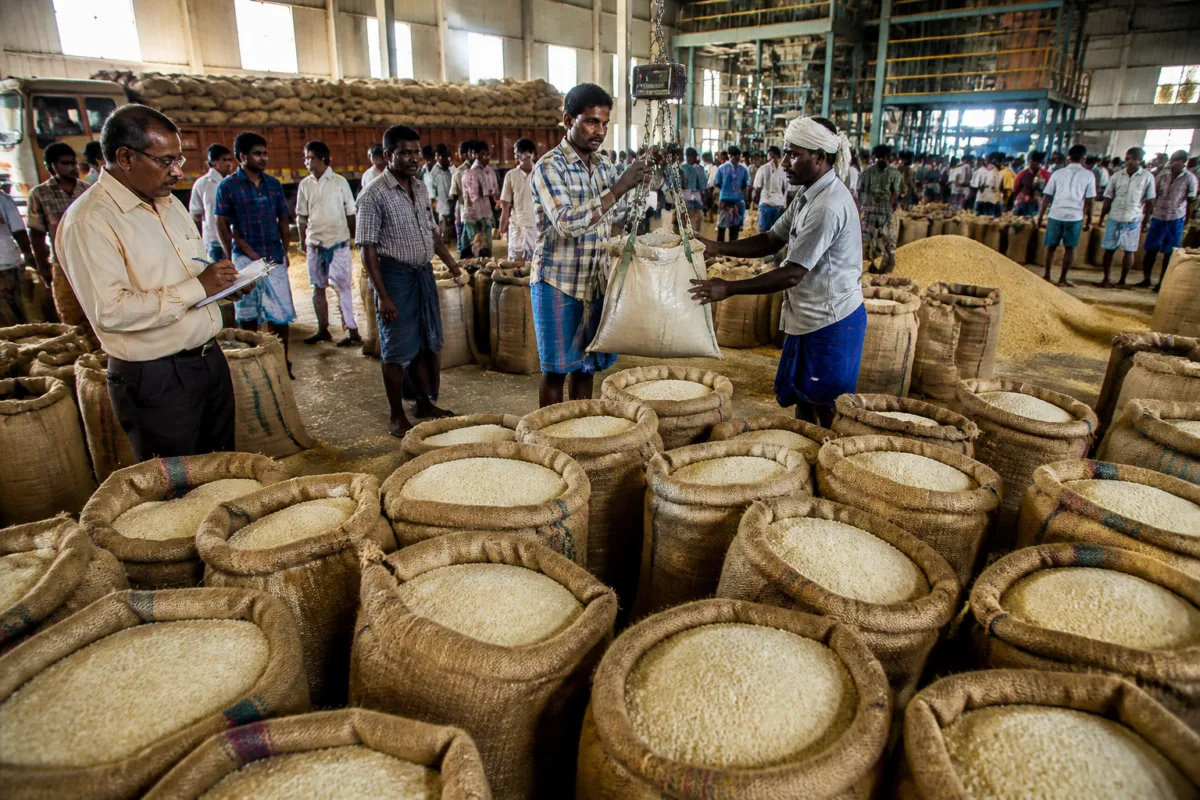
The Centre has authorised Andhra Pradesh, Karnataka, Kerala, Tamil Nadu and Telangana to impose stock limits on rice and paddy until January 31, 2027, while making weekly stock disclosures mandatory for traders, retailers, wholesalers, processors and millers across India. The measures are aimed at preventing hoarding, improving market availability and containing rising rice prices.
Under the order issued on November 6, covered businesses must report their holdings every Friday on the Food Stock Portal. Stock declarations will have to be made separately for basmati rice, non-basmati premium rice, non-basmati rice, parboiled rice, broken rice and paddy.
Businesses that fail to register on the portal or violate prescribed stock limits may face action under Sections 6 and 7 of the Essential Commodities Act, 1955. The Centre has conveyed its concurrence to the five southern states to impose stock limits through appropriate control orders wherever their governments consider them necessary.
The intervention comes as retail rice inflation increased to 8.25% year-on-year in September, up from 5.89% in August. The average retail price was around Rs 48.23 per kg, approximately 12% higher than a year earlier. Premium varieties in southern markets have recorded sharper increases, with wholesale Sona Masoori prices quoted at Rs 65-70 per kg, compared with about Rs 50 a month earlier, according to sources cited in the report.
Trade and industry experts attributed part of the pressure to deficient and uneven rainfall, which has affected paddy acreage and market supplies. Kharif paddy acreage for 2026-27 declined by around 4% to 42.68 million hectares. Trade estimates place rice production for the season at about 147 million tonnes, compared with a record 154 million tonnes in 2025-26.
The government has also approved additional allocations of Bharat Rice to NAFED, NCCF and Kendriya Bhandar. The agencies have been asked to explore different distribution channels to expand access to the subsidised rice, particularly in southern states where premium varieties have seen stronger price increases.
In a separate supply measure, the Centre has doubled the rice sale target under the Open Market Sale Scheme (Domestic) for 2026-27 from 25 lakh metric tonnes to 50 lakh metric tonnes. The government said 25 lakh metric tonnes had already been sold to private parties through OMSS (D) e-auctions up to October 31, 2026, compared with 11 lakh metric tonnes during the corresponding period of the previous financial year.
Experts cited in the report said the available evidence did not point to a nationwide rice supply crisis. Instead, price pressure appeared concentrated in particular regions and varieties where supplies were tighter. The weekly disclosure requirement and possible state-level stock limits will now form the Centre’s immediate mechanism for monitoring holdings and responding to localised market pressures.

