


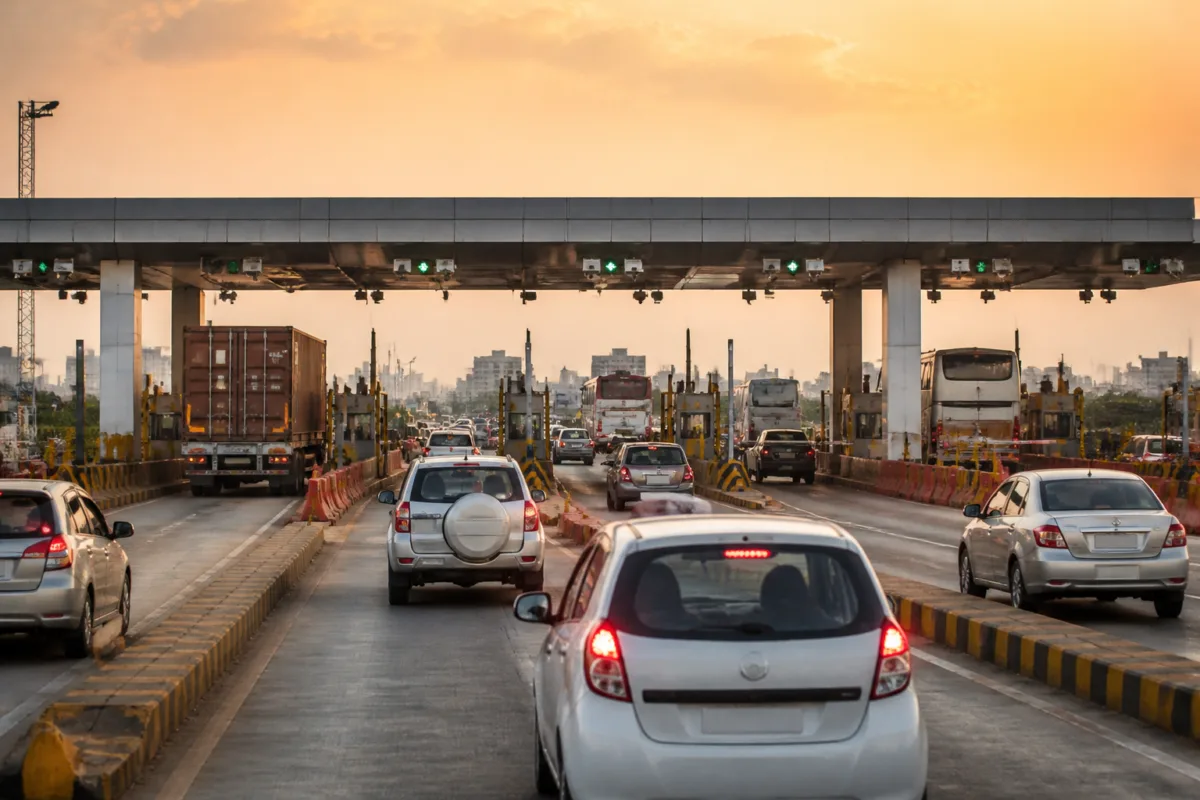
National highway toll collection reached a record around Rs 6,640 crore in October, while cash payments fell sharply and UPI use expanded. Together, the figures point to two changes taking place across India’s road network: more vehicles are moving through tolled highways and expressways, and the payment system at those facilities is becoming almost entirely electronic.
The toll figure was around 16% higher than the Rs 5,715 crore collected in October 2025, according to the Times of India report. It also exceeded the previous monthly record of Rs 6,185 crore, collected in May this year. Officials cited in the report said total toll collection could reach around Rs 74,000 crore based on the trend.
The numbers do not provide a complete account of why collections increased. The report links the record to stronger economic activity and increased movement of vehicles across the national highway network. Toll receipts can rise when more vehicles use tolled roads, when traffic patterns change, or when the road network and payment systems capture a larger share of transactions. The supplied information establishes the increase, but does not separately quantify the contribution of traffic growth, toll-rate changes, route shifts or new tolled facilities.
That limitation is important because toll revenue is not the same as a direct measure of economic output. It is an infrastructure-use indicator. A higher collection suggests greater value is being processed through the national highway and expressway system, but the available figures do not identify the types of vehicles responsible for the increase, the routes recording the highest growth or the precise relationship between toll traffic and wider economic activity.
Even with those qualifications, the monthly comparison establishes a clear trend. October’s collection rose by about Rs 925 crore over the same month a year earlier. It was also roughly Rs 455 crore above the earlier record set in May. The increase therefore was not simply a return to a previous peak; the October figure marked a new high in the monthly toll series cited in the report.
The more consequential change may be visible in the payment data. Cash collections fell to barely Rs 4 crore in October from Rs 84 crore in the corresponding month last year. Over the same period, payments through the Unified Payments Interface rose to around Rs 100 crore from no recorded UPI collection a year earlier.
The shift does not mean that UPI has replaced the entire toll-payment system. FASTag remains central to electronic toll collection, while UPI is described as an expanding digital option. The figures instead show a broader transition away from cash at toll plazas, combining an established electronic toll mechanism with a newer payment channel for highway users.
The scale of the cash decline is striking. On the figures reported, cash collections dropped by about Rs 80 crore year on year, while UPI accounted for around Rs 100 crore in October. This changes the operational character of a toll plaza. A system that once had to handle substantial physical cash increasingly depends on tags, digital transaction records, account-linked payments and monitoring of exceptions.
Government directions are driving that transition. The report says authorities instructed highway users to rely on FASTag or UPI as the default modes for paying user charges. Officials are also carrying out stricter monitoring to ensure that cash is completely phased out. This makes the payment change more than a matter of consumer preference; it is an administrative reform intended to standardise collection and reduce manual handling.
One official quoted in the report said ending cash transactions would eliminate the scope for malpractices. Another official said more people were opting for FASTag Annual Passes, describing that adoption as a positive development. These statements indicate the institutional objectives behind digitisation: improving traceability, reducing opportunities for improper handling and encouraging regular users to adopt a formal electronic payment arrangement.
The transition also changes what can be observed about the highway system. Cash transactions are difficult to audit at the same level of detail as electronically recorded payments. Digital payments can create a transaction trail linked to a time, location and payment channel, although the supplied report does not provide details of the monitoring architecture or the safeguards governing that data. The immediate evidence supports a more trackable collection system, not a conclusion that all operational problems have been resolved.
FASTag and UPI also serve different functions within the toll ecosystem. FASTag is designed for repeated, largely automatic toll payments, allowing vehicles to pass through plazas without a conventional cash exchange. UPI provides a digital payment route for users who may not rely on a tag or who need another way to complete the transaction. The rise in UPI payments therefore suggests that digital access at toll points is widening beyond a single technology, even as the report does not specify the user categories behind the increase.
The reference to FASTag Annual Passes adds another layer to the change. Regular highway users may find a pass more convenient than paying individual charges, while authorities gain a mechanism that keeps frequent users within the electronic system. The report does not state how many annual passes were issued or how they affected collections, so their precise financial impact cannot be assessed from the available evidence. Their growing adoption is nevertheless presented by officials as part of the movement towards cashless tolling.
The record collection and payment transition should also be read together rather than as separate developments. Higher toll revenue indicates that more money is being collected through the highway network. The collapse in cash payments indicates that the collection process is becoming more digital at the same time. This combination gives the national highway system a more measurable financial interface: road use generates a larger flow of receipts, and a greater share of that flow is recorded electronically.
For road users, the practical effect is a changing set of expectations at toll plazas. Drivers are being directed towards FASTag, UPI and other electronic modes rather than cash. That can reduce the need for physical queues and manual exchanges, although the supplied material does not report changes in waiting times, transaction failures or congestion at plazas. It also does not establish whether every highway user has equal access to the required digital tools, bank accounts, mobile connectivity or payment support.
That missing information is central to understanding the social side of the transition. A cashless toll system may be administratively efficient, but its performance depends on the reliability of tags, payment networks and user accounts. The article reports the policy direction and the payment outcomes, but contains no data on failed transactions, disputed deductions, account errors or how authorities handle users who cannot complete a digital payment. Those issues remain outside what the October collection figures can show.
The institutional responsibility is similarly clear in broad terms but not fully detailed in the available report. Government directions are shaping payment policy, while officials are monitoring compliance and the elimination of cash. The report does not identify the specific ministry, highway agency or operating contractors responsible for each stage of the system. It also does not explain how toll revenues are allocated, whether the record collection reflects changes in the number of tolled roads or how the projected Rs 74,000 crore annual figure compares with formal budget expectations.
Those gaps matter because toll collection is connected to the wider economics of road infrastructure. A higher receipt total can provide evidence of stronger use of tolled assets, but it does not by itself reveal whether roads are financially self-sustaining, whether users are receiving improved service or whether costs are rising alongside collections. The supplied figures support a story about scale and digitisation, not a full assessment of highway performance or value for money.
The October data does, however, establish a significant operational signal. India’s national highways and expressways are processing a record monthly toll value while the payment mix is moving rapidly away from cash. The year-on-year comparison shows that this is not merely a one-month technology shift: cash fell from Rs 84 crore to Rs 4 crore, while UPI moved from no recorded collection to around Rs 100 crore.
The larger urban and infrastructure question is how far digital tolling can improve the management of a road network that serves both cities and the spaces between them. Highways connect metropolitan regions, industrial centres and smaller towns, while toll plazas are the points where that movement becomes a measurable transaction. As the system becomes more electronic, the quality of its records and monitoring will influence how authorities understand traffic, revenue and user behaviour.
What the evidence confirms is a dual trend: record toll receipts and a sharp reduction in cash use. What it does not yet establish is how much of the revenue increase came from stronger economic activity, higher traffic, changes in tolling or other factors, nor whether the digital transition has reduced delays or disputes for road users. The next developments to watch are the reported move towards completely cashless toll payments, the spread of FASTag Annual Passes and whether the projected total collection reaches around Rs 74,000 crore.

