


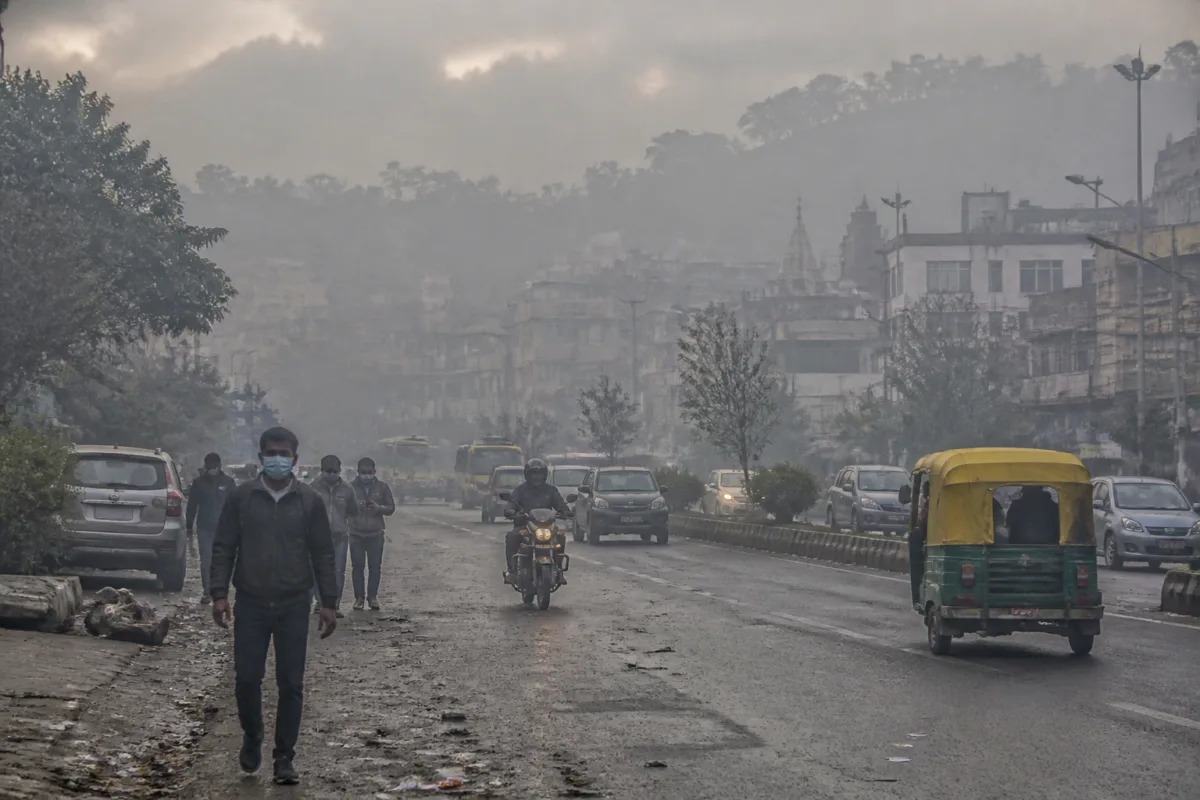
Ranchi air quality deteriorated to hazardous levels after widespread Diwali fireworks, with PM10 concentrations reaching 989.24 micrograms per cubic metre and the city’s air quality index touching 780, before rain and light winds helped reduce pollution.
Data from the Continuous Ambient Air Quality Monitoring Station at Van Bhavan showed that PM10 peaked between 1 am and 2 am on Monday. Another sharp spike of 837.17 micrograms per cubic metre was recorded between 9.30 pm and 10 pm on Sunday, following hours of firecracker use across the state capital.
The monitoring station recorded the lowest PM10 concentration of 167.34 micrograms per cubic metre at 3.30 pm on Sunday. This was still substantially higher than the levels recorded during the preceding week, when PM10 remained below 200 micrograms per cubic metre and the lowest valid concentration was 67.55 micrograms per cubic metre on November 4.
Sanjay Srivastava, officer on special duty at the Jharkhand State Pollution Control Board, attributed the post-midnight concentration of smoke to temperature inversion. Under this condition, warmer air settles above cooler air near the ground, preventing pollutants from dispersing vertically. The denser cold air remains closer to the surface, allowing smoke and particulate matter to accumulate where people breathe.
The open-source air quality monitoring platform AQI.in reported that Ranchi’s air quality index rose to 780 around 11 pm on Sunday. The reading falls in the severe range and indicates an episode of intense particulate pollution, although the report did not provide a separate health advisory or details of restrictions imposed by local authorities.
Pollution levels began to fall after rainfall and improved air movement. PM10 had declined to 129.94 micrograms per cubic metre by 10.30 am on Monday as rain brought temporary relief to residents. The change indicates how quickly weather conditions can alter the concentration of pollutants in the city’s air, but it does not remove the underlying emissions generated during the fireworks period.
Environmental researcher Nitish Priyadarshi said Ranchi’s elevation, open spaces and greenery help disperse pollution more quickly than in heavily congested metropolitan areas. He said even a mild breeze can flush out accumulated pollutants because the city does not have the same level of urban congestion as cities such as Delhi.
The episode nevertheless highlights the role of local weather, built form and festival-related emissions in shaping short-term air quality. The monitoring data showed a rapid escalation from the comparatively lower concentrations recorded earlier in the week to extreme levels after the fireworks, followed by a decline once rain and breeze improved dispersion.

