


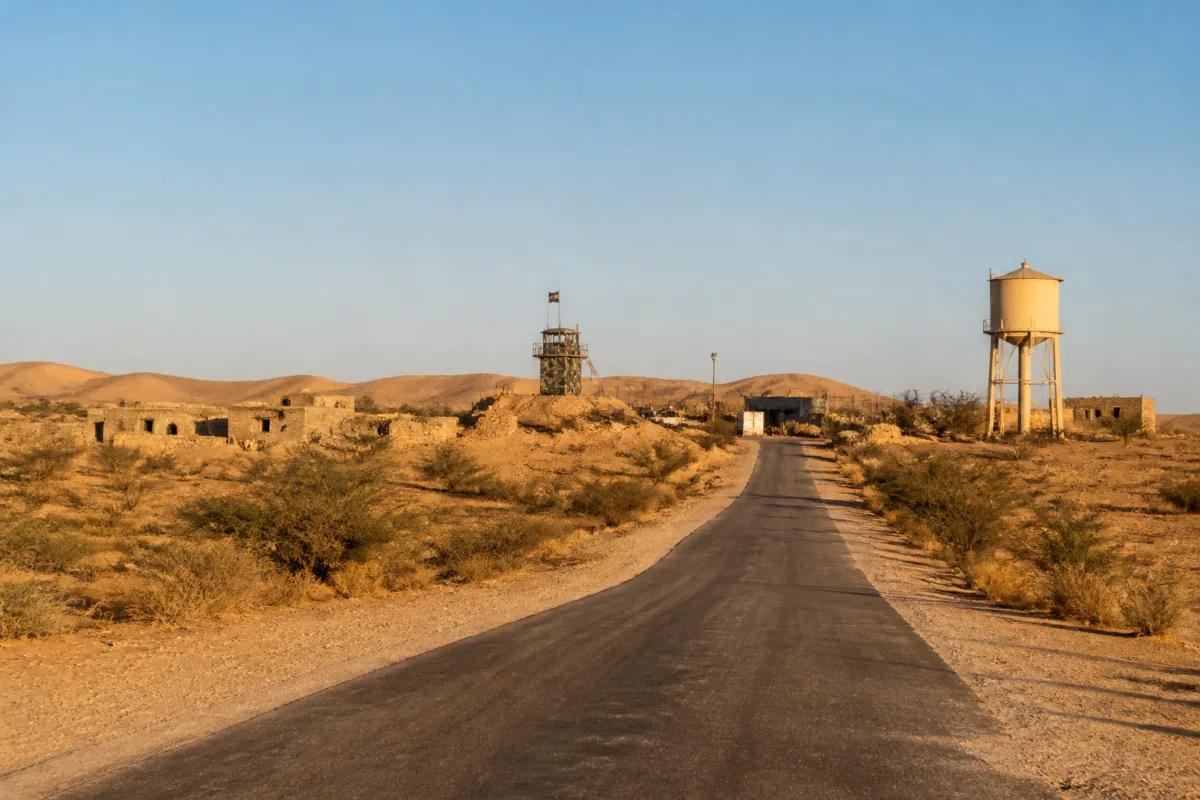
Rajasthan Chief Minister Bhajan Lal Sharma said the Centre had increased budgetary allocations for infrastructure development along India’s borders by 400%, while outlining measures to strengthen security, water access and village economies in the state’s border districts.
Sharma made the remarks during a Bhai Dooj programme with women personnel of the Border Security Force at the Tanot Mata Temple complex in Jaisalmer. He said infiltration was altering the demography of border areas and that a stronger mechanism was being developed to make the country infiltration-free.
According to the chief minister, the Centre was pursuing what he described as permanent solutions to infiltration and was strengthening border security through improved infrastructure, coordination and modernisation under the Smart Border vision. The remarks placed physical infrastructure and village development alongside security measures in the government’s approach to border management.
Sharma said the Rajasthan government was working to ensure the security, dignity, facilities and welfare of BSF personnel. He also said funds were being provided to address water shortages in border areas, an issue that directly affects settlements and the ability of residents to continue living in remote locations.
The chief minister linked the government’s Vibrant Villages Programme to efforts to check migration from border settlements. He said the programme aimed to turn the country’s “last villages” into “first villages” by creating jobs, improving access to welfare schemes and supporting local populations.
Under Vibrant Villages Programme-II, 184 border villages in Bikaner, Jaisalmer, Barmer and Sri Ganganagar have been selected for development, Sharma said. The four districts cover a large part of Rajasthan’s western and northern border belt, where access to water, public services and economic opportunities is a recurring administrative challenge.
The announcement did not provide a project-wise breakdown of the 400% increase in border infrastructure allocations, nor did it specify the individual works, implementation timelines or funding shares for the selected villages. The chief minister’s remarks also did not identify the baseline year against which the increase was calculated.
Sharma said the state was placing emphasis on infrastructure, coordination and modernisation, while also highlighting the role of BSF personnel in guarding the border in difficult weather conditions. He tied a traditional raksha sutra on women BSF personnel and paid tribute to soldiers at Vijay Stambh after offering prayers at Tanot Mata Temple.
The programme was attended by MLA Chhotu Singh Bhati, BSF Rajasthan Frontier Inspector General Vikas Pathak, Deputy Inspector General Jatinder Singh Binji, public representatives, BSF officers and women personnel. Sharma also reiterated Rajasthan’s commitment to a drug-free India by 2029, citing the creation of an Anti-Narcotics Task Force and Nayi Kiran de-addiction centres in more than 350 colleges.
The next stage for the border infrastructure announcement will be the identification, funding and execution of works in the 184 selected villages, alongside measures to address water shortages and deliver government schemes to eligible residents.

