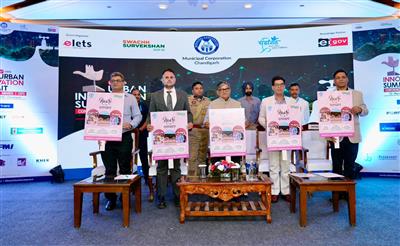
Punjab Urban Innovation Push Focuses On Citizen Services
A renewed push for citizen-centred urban governance is emerging in Punjab after the state’s constitutional head urged administrators and municipal authorities to focus on innovation that directly improves everyday urban life, particularly in cities such as Chandigarh and Mohali.
The call came during the recent Urban Innovation Summit hosted in Chandigarh, where policymakers, city administrators, and technology experts gathered to discuss future-ready urban infrastructure and digital governance. The event, organised in collaboration with the municipal corporation, focused on practical solutions for mobility, waste management, public services, and climate-resilient infrastructure.
At the summit, officials emphasised that urban innovation must shift from large infrastructure announcements to improving service delivery for citizens. The message is particularly relevant for fast-growing cities in north India, where population growth, migration, and expanding real-estate development are putting pressure on transport, water supply, and civic services. A recent report on the same event also highlighted calls for administrative reforms that prioritise faster service delivery and better coordination between departments. Urban planners say the emphasis on citizen-centric urban innovation reflects a broader shift in how state governments are approaching city development. Instead of focusing only on physical infrastructure, policymakers are now paying greater attention to how efficiently services are delivered — from public transport to digital approvals and grievance systems. This shift is visible in recent initiatives such as unified citizen-service portals and digital-governance programmes designed to bring hundreds of government services onto a single platform.
The timing is also significant. Cities in Punjab are trying to position themselves as investment and technology hubs while maintaining liveability. Recent policy initiatives have focused on strengthening power infrastructure in Mohali, expanding digital-governance services, and promoting start-up ecosystems — all of which depend heavily on efficient urban administration. Experts say citizen-centric urban innovation is becoming essential as cities face more complex challenges linked to climate change and population growth. Efficient public transport, reliable electricity, and well-planned waste-management systems are increasingly being seen as critical economic assets rather than basic civic services. Cities that succeed in improving these areas tend to attract more investment, create better employment opportunities, and offer higher quality of life for residents.
Another important aspect highlighted at the summit was the need for behavioural change within public institutions. Urban governance specialists say technology alone cannot transform cities unless administrative processes become more transparent and responsive. Faster approvals, better inter-department coordination, and improved citizen feedback systems are now being viewed as key indicators of modern urban governance. For Chandigarh and neighbouring cities, the renewed focus on citizen-centric urban innovation could shape how urban development evolves over the next decade. If the ideas discussed at the summit translate into practical reforms, the region could move closer to building cities that are not only economically competitive but also more inclusive, environmentally sustainable, and easier for residents to navigate.
The next step will be how quickly these policy ideas turn into measurable improvements in daily urban services — something that will ultimately determine whether innovation in governance leads to real improvements on the ground.