


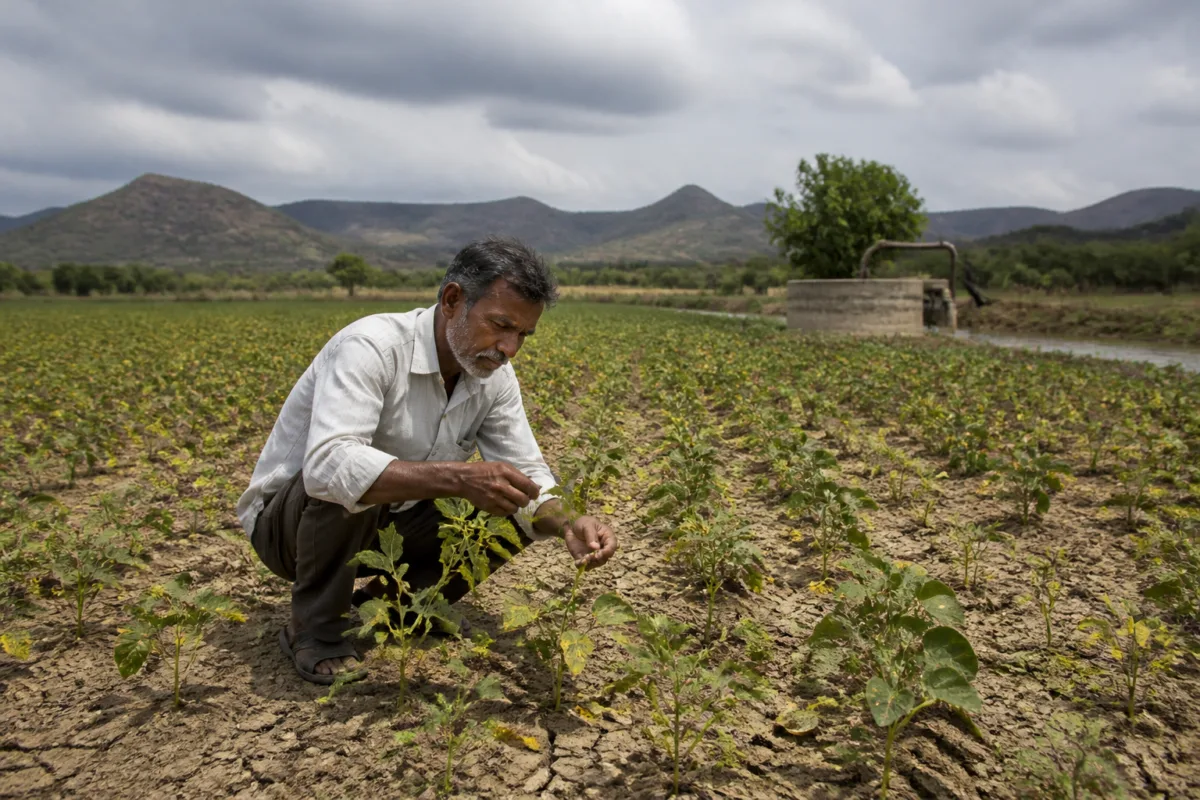
Pune’s crop insurance system is now facing a significant test after crop-cutting experiments recorded a 20-22% decline in soybean productivity and a 15% fall in maize production during a drought-affected kharif season. The immediate losses are agricultural, but the larger issue is institutional: whether yield assessments, insurance thresholds and government coordination can convert a weather shock into timely financial protection for farmers.
The district agriculture office has linked the decline to erratic rainfall and prolonged dry spells across agricultural pockets in 13 tehsils. The state government has already declared drought in 11 tehsils of Pune district, while the agriculture department has recorded damage to kharif crops over more than 3 lakh hectares. These figures place the current season beyond the level of isolated field-level distress and point to a district-wide problem involving production, water availability and household income.
Soybean is particularly important in this assessment because the crop covers close to 44,000 hectares in the district and contributes to farmers’ seasonal earnings. District agriculture officer Vaibhav Tambe said irregular rainfall and prolonged dry spells during critical crop-growth stages had reduced productivity even as farmers continued to spend on seeds, fertilisers, pesticides and other operations. The financial exposure therefore includes both lower output and unrecovered cultivation costs.
The evidence from the crop-cutting experiments also shows why a drought declaration alone does not determine the final financial support available to farmers. Crop-cutting experiments are used to estimate actual productivity. These estimates are compared with prescribed threshold productivity levels to establish whether farmers qualify for compensation under the crop insurance scheme. The final amount depends on the outcome of this assessment process rather than simply on the presence of adverse weather.
That distinction makes the measurement system central to the relief process. A farmer may experience a severe loss in a particular field, while compensation is calculated through an assessment framework that uses crop productivity and prescribed thresholds. The credibility, coverage and timing of the experiments therefore affect whether the insurance mechanism reflects conditions on the ground. In the current season, the district agriculture office has already found lower productivity in soybean, maize, moong and urad. Paddy assessments are still under way, with officials anticipating a significant decline. Tur and onion are also reported to have suffered losses, although the supplied assessment does not establish their final compensation position.
The scale of exposure varies by crop. Paddy is cultivated across about 60,000 hectares, making it the district’s largest crop by area in the report. Soybean covers approximately 44,000 hectares. The impact on paddy could therefore materially change the overall picture once crop-cutting experiments are completed. The available evidence does not yet provide a final paddy yield estimate, which means the full extent of the season’s loss remains unsettled.
Farmers’ accounts indicate how weather variability is translating into financial stress. Soybean grower Prashant Kute from Khed said inconsistent rainfall during a critical crop stage had resulted in almost 50% less yield than the previous year. Sandeh Jadhav from Junnar reported that inadequate rainfall contributed to crop diseases and additional spending on pesticides and fertilisers. These accounts are not substitutes for district-wide measurement, but they show how lower productivity can combine with higher input costs to deepen the impact on farm households.
The crop insurance mechanism has already produced a large difference between premiums paid and compensation received in the previous kharif season. According to district agriculture officials, farmers collectively paid around Rs 71 lakh in premiums and received approximately Rs 14.20 crore in compensation. That experience explains the department’s effort to encourage enrolment for the ongoing rabi season. It also shows why insurance is being positioned as a financial protection mechanism rather than merely a post-disaster payment.
The rabi season introduces a second water-risk question. Wheat is cultivated across nearly 40,000 hectares, while maize and gram each account for approximately 25,000 hectares. Onion and summer moong are also important rabi crops. The agriculture department said some farmers sow using residual soil moisture, while others depend on wells or canal irrigation. However, the availability of water during later crop-growth stages remains uncertain. In this setting, sowing decisions are connected not only to seasonal rainfall but also to the reliability of local irrigation sources.
The department has advised farmers to obtain insurance at the beginning of the season and said premiums for crops such as jowar, wheat, gram and onion are approximately Rs 60-70 per hectare. This low entry cost is intended to make coverage accessible, but enrolment alone does not guarantee payment. Eligibility and compensation still depend on the prescribed assessment process, crop-specific productivity and the applicable insurance terms.
The institutional structure involves multiple actors. A private insurance company has been appointed to implement the Pradhan Mantri Fasal Bima Yojana for the current year. The Agriculture Insurance Company of India will handle the fruit crop insurance scheme. District offices and taluka-level representatives are expected to support registration and provide information, while the agriculture department, banks and insurance companies must coordinate delivery.
This arrangement creates a governance requirement that extends beyond announcing a scheme. District agriculture officer Vaibhav Tambe has directed taluka agriculture officers to monitor whether insurance representatives provide accurate information, help farmers register and conduct awareness campaigns. The direction recognises that access can fail at the last mile even when a formal insurance product exists. Farmers must know the scheme, enrol within the relevant period and understand the process for reporting damage and seeking assessment.
Fruit growers face a related but separate insurance issue. The fruit crop insurance scheme calculates compensation using weather parameters such as temperature, wind speed and humidity recorded through automatic weather stations at revenue-circle level. Hailstorm damage requires an additional cover, which farmers must specifically choose. In the event of hail damage, farmers have been instructed to inform the taluka agriculture office, agriculture assistant or insurance company immediately. Individual inspections are then conducted by agriculture department personnel and insurance company representatives.
The distinction between weather-indexed protection and additional cover is important because different risks require different forms of documentation and eligibility. A grower covered for the main fruit crop risks may not automatically receive protection for hailstorm damage unless the add-on has been selected. The department’s appeal therefore concerns both enrolment and the precise form of cover purchased.
The Pune case also illustrates the limits of treating drought as only a water-supply problem. The reported losses arise from the interaction of rainfall timing, dry spells, crop disease, input costs, irrigation uncertainty and the rules used to calculate compensation. A crop can receive some rainfall during a season and still suffer if moisture is absent during critical growth stages. The agriculture department’s crop-cutting results capture the productivity outcome, while farmers’ accounts reveal the costs incurred before that outcome becomes visible.
What remains uncertain is the final district-wide loss and the amount of compensation that eligible farmers will receive. Paddy crop-cutting experiments are still in progress, and the final assessment for several crops has not been reported. The available material also does not establish when payments will be released or how many individual farmers will qualify. Those details will determine whether the insurance system provides timely relief or functions mainly as a delayed financial backstop.
The immediate milestones are the completion of crop-cutting experiments, the comparison of yields with prescribed thresholds and the processing of eligible insurance claims. At the same time, the district’s rabi enrolment campaign will test whether farmers exposed to uncertain water availability take up coverage. For Pune’s agricultural economy, the season’s significance will be measured not only by the size of the yield decline but also by how effectively the institutions responsible for assessment, enrolment and payment respond to it.

