


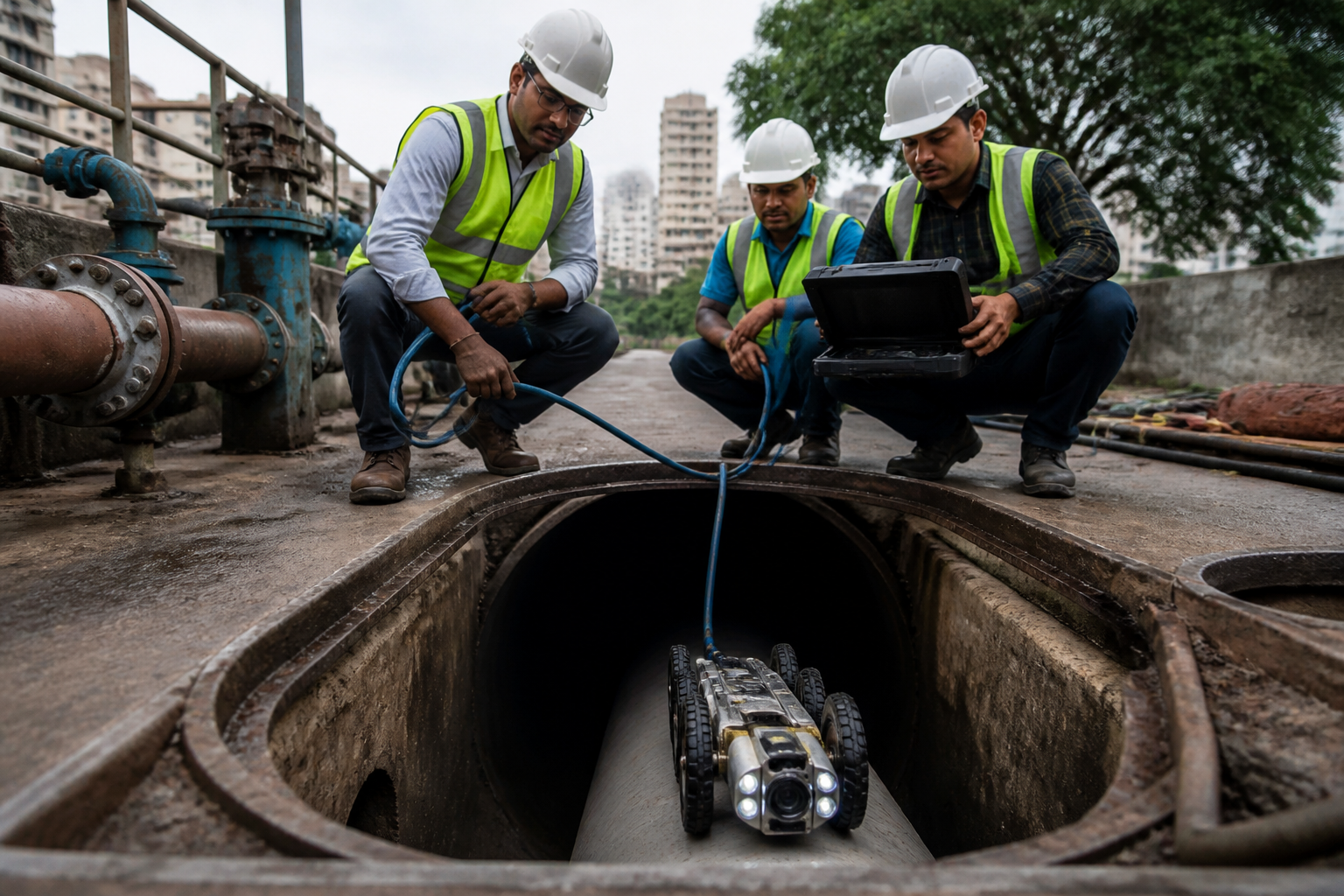
Pune Municipal Corporation’s robotic camera inspections have identified 84 blockages, 67 contamination spots, four leaks and four unauthorised connections across the city’s water distribution network, highlighting the scale of losses in a system where nearly 32% of supplied water is estimated to leak.
The PMC water supply department inspected pipelines at 322 locations between April 6 and July 23, 2026. The inspections covered pipelines ranging from 75mm to 1,200mm in diameter and used robotic cameras to examine their internal condition without relying only on surface-level checks.
According to the civic body, corrective measures taken after the inspections have helped save 742,365 litres of water daily. The PMC said action was taken against all four unauthorised connections detected during the exercise. Three of those connections were on 100mm-diameter pipelines and one was on a 150mm pipeline. The department estimated that action against these connections resulted in daily savings of about 202,365 litres.
The inspections also led to repairs at four locations where leaks were detected. Two leaks were found on 300mm-diameter pipelines, while one each was identified on 150mm and 450mm pipelines. Deposits had accumulated along the inner surfaces of pipelines at six locations, while blockages were recorded at 84 locations.
The PMC said the immediate corrective measures were intended to reduce water losses and improve the quality of water supplied through the network. The identification of contamination at 67 locations places the condition of ageing or poorly maintained distribution infrastructure alongside leakage as a key operational concern for the civic body.
The findings come as Pune faces increasing pressure on its available water resources. The PMC said the city has an approved water allocation of 16.36 thousand million cubic feet, or TMC. This includes 11.6 TMC from the Khadakwasla project, 0.34 TMC from the Pavana river basin, 2.67 TMC from the Bhama Askhed project and 1.75 TMC for newly merged villages.
At the same time, the population covered by the civic administration, including the newly merged areas, has increased from 44.42 lakh in 2017 to 77.76 lakh in 2025-26, according to figures cited by the PMC. The expansion of the municipal boundary has therefore increased the area and population that the distribution network must serve.
The civic body also cited Maharashtra Water Resources Regulatory Authority norms under which the city requires at least 135 litres of water per person per day. The PMC estimates that about 32% of its total water supply is lost through leakage, equivalent to nearly 6 TMC annually.
The robotic inspection programme is part of the civic body’s effort to identify losses within the distribution network rather than address only visible failures on roads or at consumer premises. The next operational step is the continued repair and correction of the locations identified during the inspections, as the PMC seeks to reduce daily losses and improve the reliability and quality of supply.

