


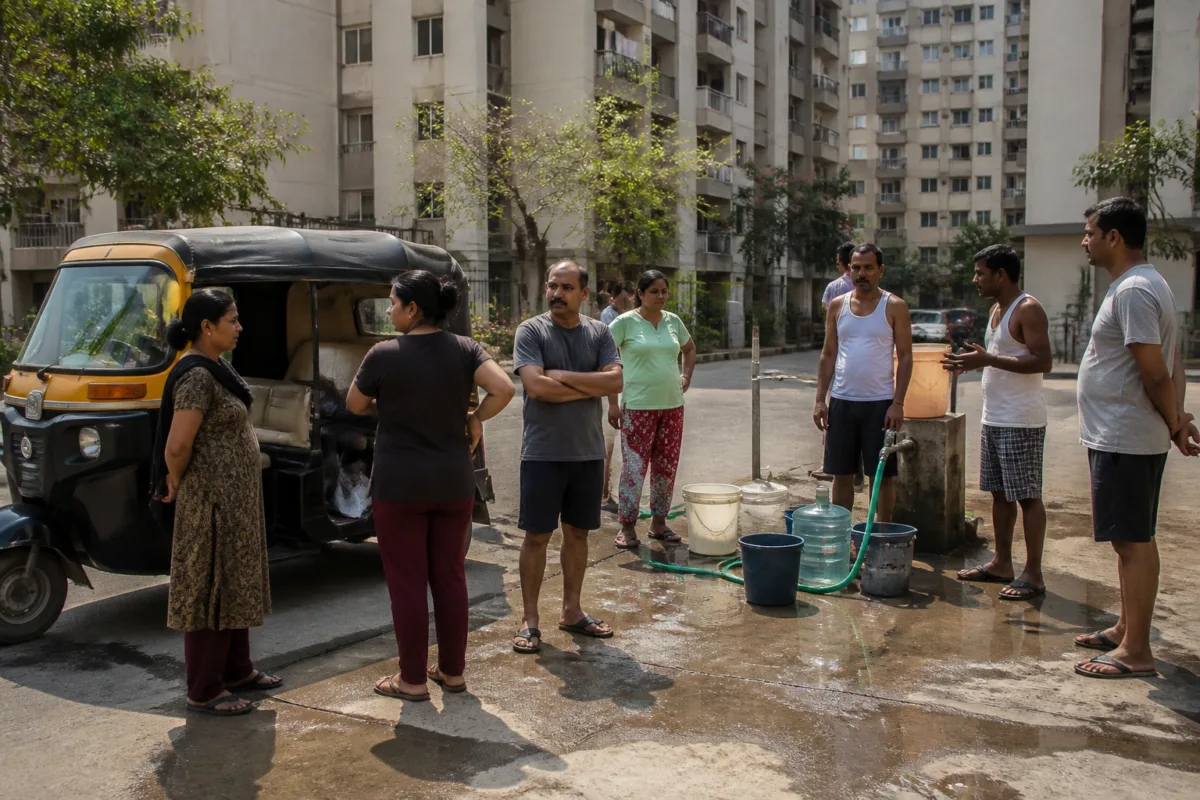
A dispute over washing an autorickshaw during ongoing water cuts escalated into a clash between two families at a housing society in Charholi, Pune, leaving seven people injured and prompting Alandi police to register cross-complaints on October 22.
The incident took place at around 10.30am after a housing society member objected to a 46-year-old autorickshaw driver washing his vehicle with a pipe connected to the society’s common borewell, according to a report by Punekar News. Police have registered cases under Sections 118, 189, 190 and 191 of the Bharatiya Nyaya Sanhita, including provisions related to rioting.
Sub-inspector Ajit Kakade said the society member asked the driver to use a bucket instead of a pipe. The objection was made against the backdrop of ongoing water cuts, which have heightened sensitivity around the use of shared water sources in the housing society.
In his complaint, the 33-year-old private company employee alleged that the autorickshaw driver and members of his family abused him and assaulted other residents after he raised the objection. The complaint identifies the disagreement over water use as the trigger for the confrontation.
The autorickshaw driver gave a different account in his cross-complaint. He alleged that he had been washing his vehicle with a bucket when five society members abused and assaulted him, his wife and their two sons using a bucket. The two complainants have accused each other of assault, and police have recorded both versions.
The case highlights how water shortages can turn routine disputes over shared resources into conflicts inside housing societies, where residents depend on common borewells and community-level rules for access and use. In this incident, the disagreement concerned whether water from a common borewell was being used through a pipe or a bucket to wash a vehicle.
The police cases cover both sides of the dispute, with the investigation proceeding on the basis of the two complaints. The supplied report does not provide details on the nature of the injuries, whether any arrests have been made, or the society’s water-management arrangements beyond the reference to the common borewell and ongoing cuts.

