


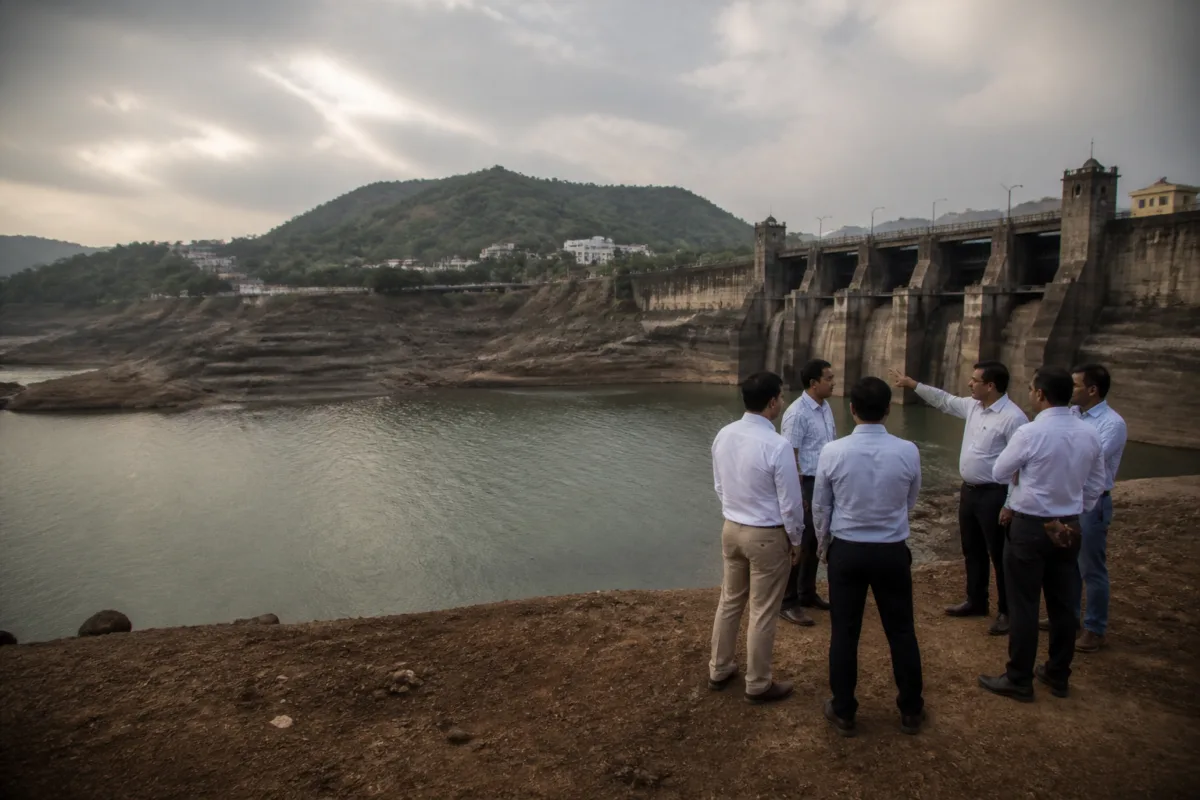
The Maharashtra Water Resources Department has directed 38 government, local-government and private entities in Pune district to reduce water consumption by 20% after storage in the Khadakwasla dam chain fell to about 25 TMC, roughly 12% below last year’s level.
The instructions have been issued to Pune and Pimpri-Chinchwad municipal corporations, industrial areas operated by the Maharashtra Industrial Development Corporation at Chinchwad and Hinjewadi, gram panchayats, a municipal council, a cantonment board, factories, educational institutions, private townships and other establishments. The department said the measures are intended to conserve available water and maintain drinking-water supplies until 31 August 2027.
Of the 38 entities listed, 19 are government or local-government-related institutions and 19 are private institutions or consumers, according to the report. The department has asked users to prevent leakage, wastage and unauthorised consumption. Where possible, treated water is to be used for gardens, construction activity and industrial processes instead of drinking-water supplies.
Kiran Deshmukh, executive engineer with the Water Resources Department, said the names of institutions that do not implement the 20% reduction would be submitted to the district collector. The department is also planning joint action with the revenue administration, MSEDCL, the police and water-resources officials to stop unauthorised extraction.
Under the enforcement plan, pumps and motors used for unauthorised water extraction may be seized. Electricity connections could also be disconnected where water theft is detected, according to the instructions. Responsibility for controlling leakage, wastage and unauthorised use has been assigned to the concerned institutions.
The directive also affects irrigation planning. A meeting chaired by Pune district collector Jitendra Dudi concluded that water would be released for the rabi irrigation cycle after considering available storage. However, the report said there was unlikely to be sufficient water for a summer irrigation cycle after supplies across the projects are planned. Drinking water has been given priority in planning supplies through 31 August 2027.
The decision places Pune’s municipal and industrial water systems within the same conservation framework as rural and agricultural users. The listed institutions include 11 gram panchayats, while the wider set of users covers urban local bodies, industrial establishments, a cooperative sugar factory, educational institutions and private townships. The department will determine irrigation releases by weighing current storage against the requirement for drinking water in the period ahead.
The instructions come as Pune and Pimpri-Chinchwad continue to depend on the Khadakwasla dam system for a substantial part of their municipal water planning. The immediate administrative focus is to reduce consumption among large users, prevent unauthorised withdrawals and preserve the available reservoir stock for drinking-water needs. The Water Resources Department is expected to monitor compliance and report violations to the district administration.

