


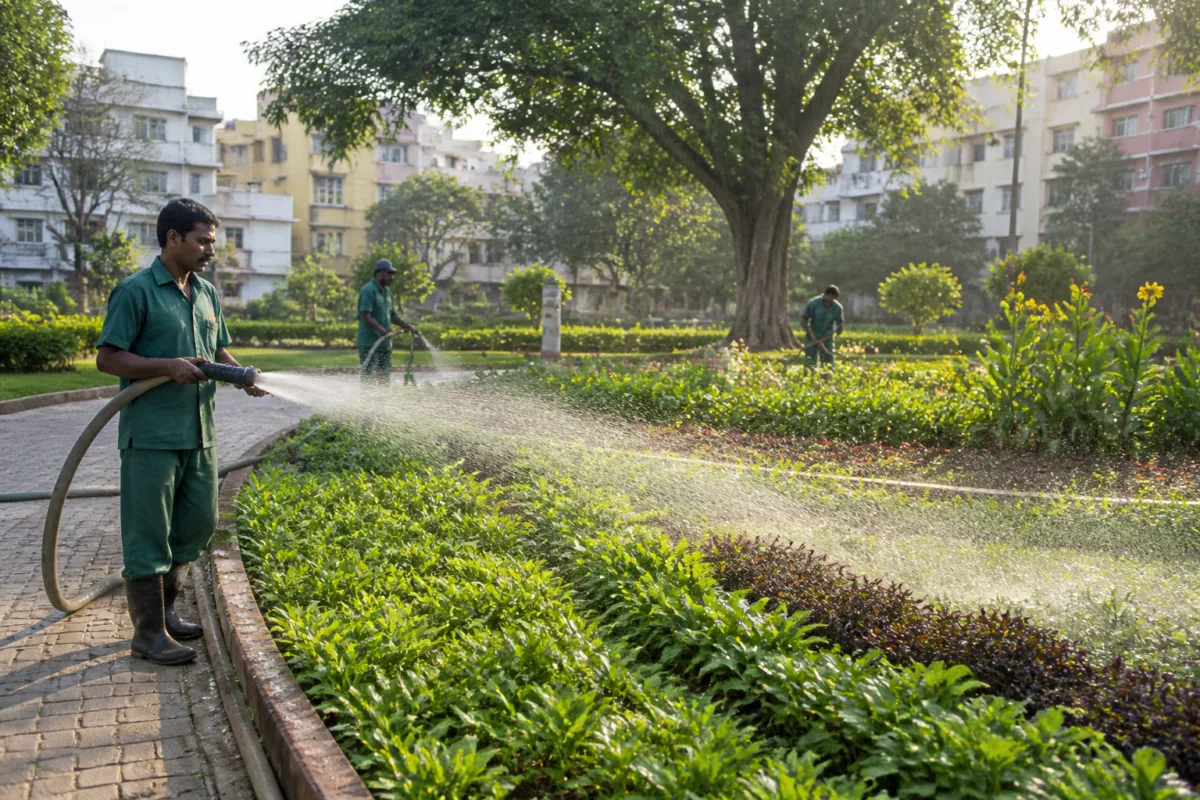
Pune civic authorities are moving to use treated wastewater for irrigation across all 144 municipal gardens as the city manages reduced water availability and a weekly water-supply shutdown.
More than 40 of the gardens currently use potable water, while some others depend on borewells. The administration has begun arranging alternatives so that potable water use for garden maintenance can be stopped, according to Additional Commissioner Pavneet Kaur.
The city’s water allocation from the Water Resources Department has been reduced amid lower rainfall. Pune is currently observing one day without water supply each week as the civic administration plans how to manage available stocks.
The administration is also preparing a separate policy to restart sewage treatment plants in large housing projects where the facilities are not operating. Housing projects with more than 100 apartments are required to have sewage treatment plants, and 772 such projects have been recorded in the city. Most of these plants are reportedly closed because of technical issues.
The civic administration intends to work towards bringing the plants back into operation and formulate a specific policy for the purpose. It has also proposed rules under which people who waste water could face penalties. The stated focus is to discourage unnecessary use of potable water and increase reuse of treated wastewater.
A meeting on Pune’s water situation is scheduled for the following week, according to the report. A meeting of political party leaders on water-quota planning had been proposed for the previous month but had not yet taken place, the report said.
The proposed shift in garden irrigation would separate non-potable municipal uses from drinking-water supplies, while the planned housing-project policy would address treatment capacity that is currently not being used. The report does not provide a completion timeline for the conversion of all gardens or the reopening of the housing-project treatment plants.

