Pune Shastrinagar Project Targets Key Traffic Bottleneck
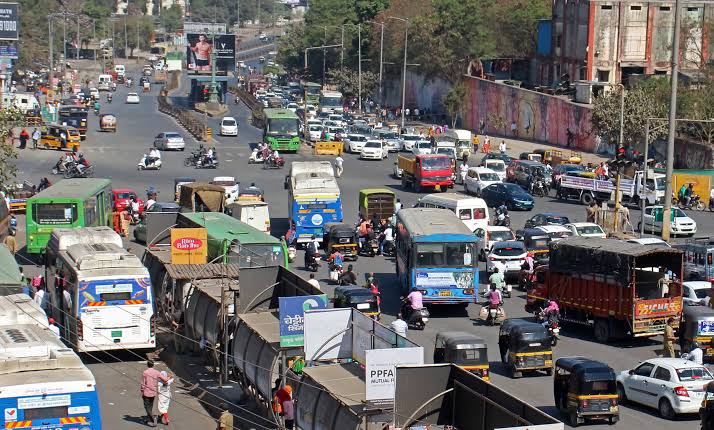
Pune’s eastern transport corridor is set for a major junction redesign, with the civic administration targeting March 2027 for completion of a proposed grade separator and flyover at Shastrinagar Chowk. The project is intended to reduce delays on the Pune–Ahilyanagar route, where traffic converges towards Kalyaninagar, Gunjan Chowk, Golf Chowk and Mumbai. Its success, however, will depend on keeping traffic moving safely while construction continues.
The Pune Shastrinagar project comprises two separate structures designed to handle different traffic movements. A six-lane grade separator stretching about 750 metres is planned between the Aga Khan Palace side and Gunjan Chowk. A four-lane flyover of roughly 700 metres will connect the Aga Khan Palace side towards Golf Chowk. The civic administration has set an accelerated schedule for the grade separator, with instructions for that component to be completed within four months. The broader Pune Shastrinagar project is expected to be ready by the end of March 2027. The junction currently carries traffic bound for several major destinations, making it a pressure point in Pune’s eastern road network. Vehicles travelling towards Nagar Road, Kalyaninagar and Gunjan Chowk compete for road space with traffic moving towards Golf Chowk and the Mumbai corridor. Urban transport planners note that grade separation can reduce conflict between through traffic and turning movements, but it does not automatically solve congestion across an entire corridor.
That distinction matters for Pune. Faster movement through one junction can shift queues to the next bottleneck if adjoining roads, intersections and public transport access are not upgraded at the same pace. The project will therefore need to be assessed as part of a wider network rather than simply as a standalone flyover. The construction phase presents another challenge. The corridor is already heavily used, and partial road closures or lane restrictions could create temporary delays for commuters, commercial vehicles and local residents. The civic administration has asked traffic police and other departments to coordinate during execution, making construction-stage traffic management a key part of the project.
There is also a broader urban question. Road capacity projects can improve journey reliability, but long-term congestion cannot be addressed through road expansion alone. Better pedestrian crossings, safer junction design, public transport integration and efficient last-mile connections can help ensure that improved traffic flow benefits people living and working around the corridor. For now, the March 2027 deadline places pressure on project execution, inter-agency coordination and traffic safety. The real test will come after construction: whether the Pune Shastrinagar project delivers sustained travel-time improvements without simply moving congestion further along the eastern corridor.