


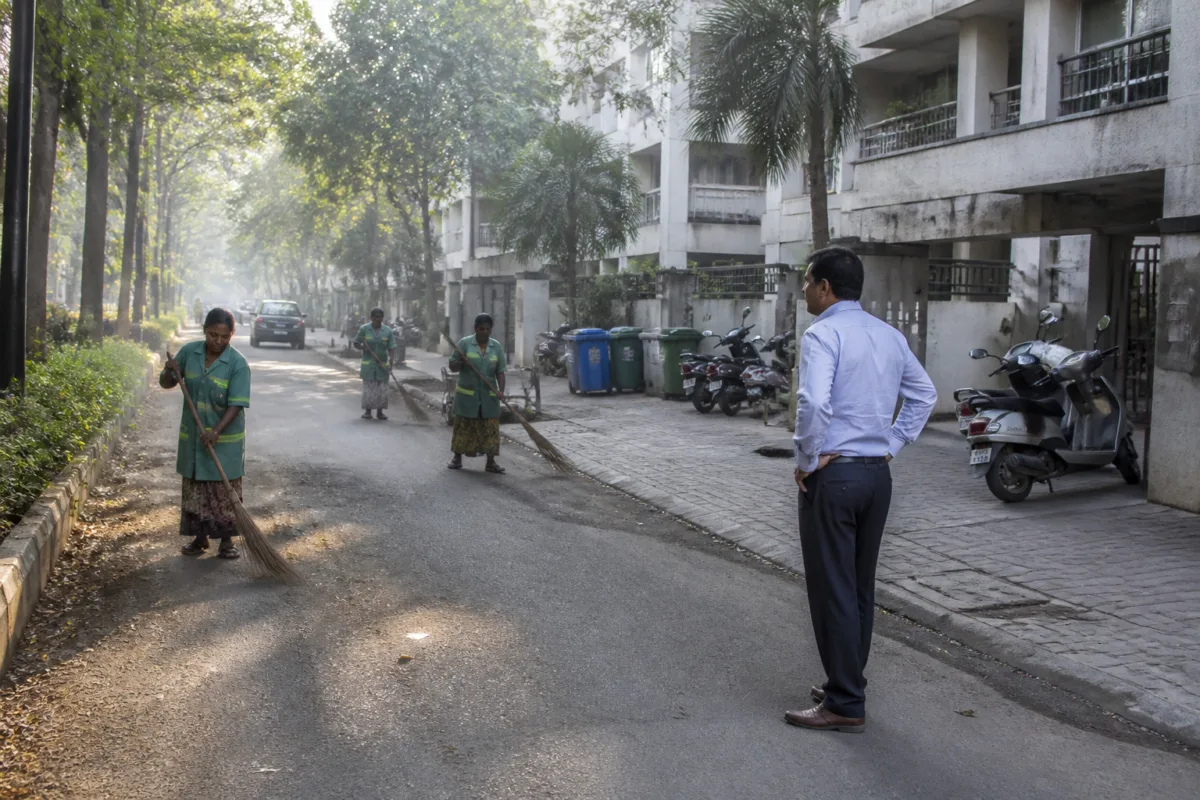
Pune Municipal Corporation is reviewing whether to extend its experimental performance-based road sweeping initiative after a three-month trial revealed flaws in the mapping of sweeping zones and the inclusion of private housing society roads within designated areas. The civic body’s standing committee has asked the administration to submit a performance report by October 30 before deciding on the initiative’s continuation.
The programme was launched by the PMC’s solid waste management department as a three-month experiment to make contractors responsible for maintaining cleanliness on assigned road stretches. Contractors could face penalties when surprise inspections found garbage or unclean conditions in their designated areas.
The PMC has collected around Rs 6.5 lakh in fines from contractors during the trial, according to the report. The penalty was set at Rs 1,000 per worker for each instance in which the assigned area was found unclean. The enforcement model was intended to link contractor payments and performance more directly with visible road conditions.
The initiative also increased the number of sweeping workers deployed across the city from around 4,500 to 9,000. Manpower allocation was planned according to designated road stretches of 700 metres each. This structure was meant to define responsibility for specific areas and provide the administration with a basis for monitoring performance.
However, the exercise exposed shortcomings in the PMC’s preparation of the sweeping zones. The administration did not accurately measure and classify roads before finalising the boundaries, resulting in internal roads within private housing societies being included alongside public roads. The report did not specify how many such roads were included or whether the boundaries would be redrawn before any extension of the programme.
The mapping issue is significant for a performance-based system because the area assigned to a contractor determines the workforce required, the roads subject to inspection and the conditions against which penalties are imposed. The report did not state whether contractors had challenged the inclusion of private roads or whether responsibility for maintaining those roads had been formally clarified.
Despite the shortcomings, civic officials told a meeting that the pilot had improved public cleanliness. The standing committee will assess that claim through the three-month performance report, along with the enforcement record and the operational problems identified during implementation.
Standing committee chairman Shrinath Bhimale said the administration had been asked to submit the report by October 30. “The administration has been asked to submit a status report on the initiative’s performance over the past three months by October 30. The standing committee will review the report and then decide whether to extend the initiative,” he said.
The next formal step is therefore the submission and review of the status report. The PMC’s decision on extending the road sweeping initiative will follow that review.

