


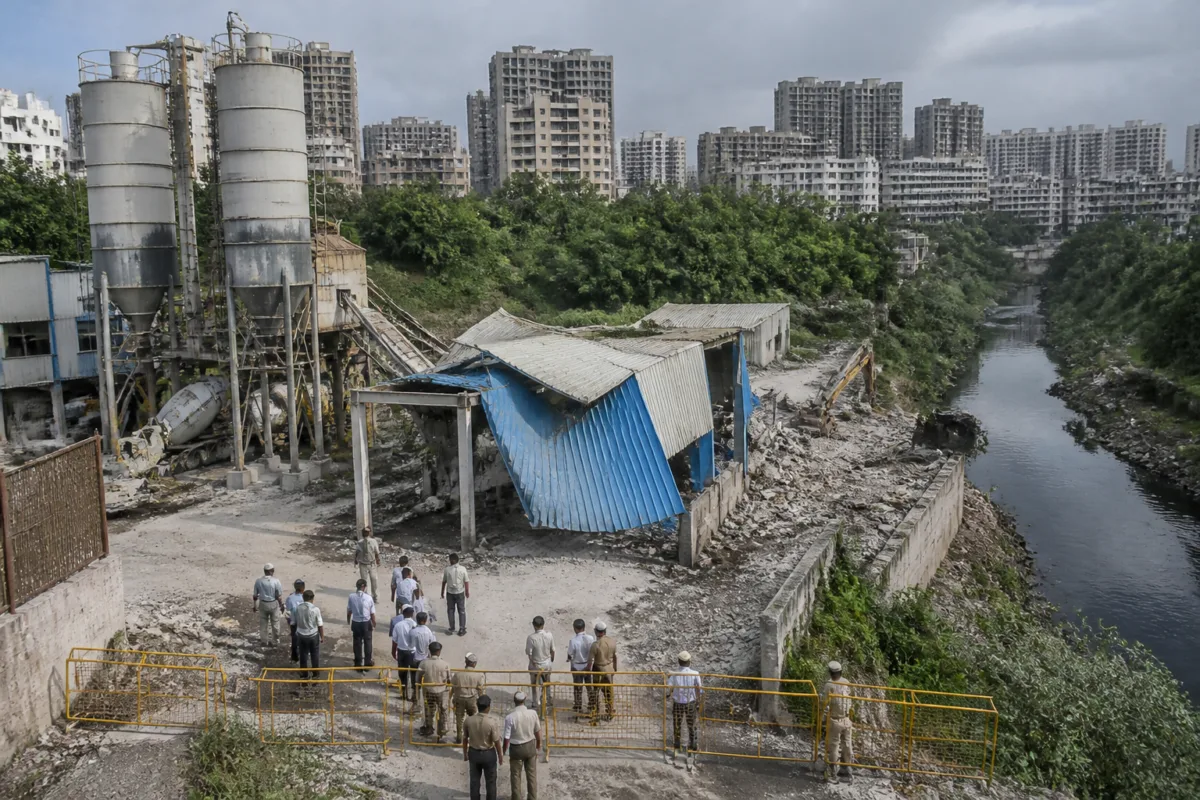
Pune Municipal Corporation reportedly acted against six ready-mix concrete plants near a canal in Dhayari, but the operation stopped short of dismantling their main machinery and structures, raising questions about whether enforcement against polluting and allegedly unauthorised plants is being applied consistently across the city.
A report by Lokmat – Pune said municipal officials demolished only the sheet-metal sheds at the Dhayari plants and sealed their silos during the action. The main equipment and structural components were left in place. The report did not include an official municipal explanation for the limited nature of the operation or clarify whether the plants had valid permissions for continued activity.
The reported action comes amid continuing concern over dust and pollution from ready-mix concrete plants in Pune. The report said the city has approximately 100 to 125 RMC plants. Such facilities handle cement, aggregates and concrete close to residential areas and construction sites, making regulatory oversight relevant to air quality, road conditions and the daily exposure of nearby residents. The supplied report did not provide air-quality readings, emissions data or health assessments linked specifically to the Dhayari plants.
Lokmat said the Pune civic administration had previously acted against seven unauthorised RMC plants in the Khandve Nagar area of Lohegaon and five plants in Bavdhan Budruk. It also reported that action against plants near the canal in Dhayari and along the riverbank in Vadgaon Khurd had been planned repeatedly but was cancelled at the last moment.
The report further carried allegations that political pressure had affected enforcement in Vadgaon Khurd, where plants were allegedly linked to the son of an elected representative and a former corporator. These claims were not independently confirmed in the supplied material. The names of the alleged plant owners and representatives were not provided, and no response from them was included.
According to the report, the civic administration had planned an early-morning operation against a Vadgaon Khurd plant the previous week and had sought police protection. Officials cited by Lokmat said the action was later cancelled following political pressure and a request made by one plant owner to the municipal commissioner. The report did not publish the request or identify the officials who confirmed the sequence.
The most serious allegation concerns the Dhayari operation itself. Lokmat reported that a plant operator allegedly stopped the vehicle of municipal encroachment department deputy commissioner Somnath Bankar and handed him a phone after calling an unnamed minister. Sources reportedly said the minister instructed the civic official to halt the action. However, the minister’s identity, the contents of the conversation and the precise impact of the alleged call were not officially confirmed in the report.
That distinction is important. The municipal action against six plants and the limited demolition described at the site are reported events. The alleged ministerial intervention remains an unverified claim. The supplied report did not contain a statement from the minister, the Pune Municipal Corporation, the Maharashtra Pollution Control Board or the concerned plant operators addressing the allegation.
The episode has also raised questions about the difference between sealing part of a facility and stopping its operations. If a plant’s core machinery remains intact, the practical effect of demolishing sheds and sealing silos depends on whether the seal is enforceable, whether production can resume through another part of the installation and whether follow-up inspections are conducted. The report did not establish whether the six Dhayari plants were fully closed, whether penalties were imposed or what compliance conditions were communicated to their operators.
The enforcement question extends beyond Dhayari. A city with an estimated 100 to 125 RMC plants requires a system that can identify unauthorised facilities, verify land-use and environmental permissions, control dust emissions and monitor compliance after action is taken. The supplied report indicates that the civic administration has conducted operations in Lohegaon and Bavdhan, while alleged cancellations in Dhayari and Vadgaon Khurd have fuelled claims of unequal treatment. It does not, however, provide a citywide enforcement register or comparative details on the permissions held by individual plants.
Residents’ concerns have become organised through an action committee formed by people from Prayेजa City and nearby housing societies, according to the report. The committee has questioned the identity of the minister allegedly involved and asked whether the interests of plant operators were being prioritised over residents’ health. These are residents’ questions and should not be treated as established findings without official investigation or documentary evidence.
The report also described an incident involving a Lokmat representative who visited the site after learning about the municipal action. It said a plant operator took the reporter’s mobile phone while the representative was leaving and deleted photographs taken at the location. The operator reportedly said he possessed permission documents and urged the newspaper to publish his side of the story. The report did not include the operator’s name or the documents he referred to.
The immediate public-interest issue is therefore twofold: whether the six Dhayari plants were placed under effective and lawful enforcement, and whether the allegations of political intervention and selective action are supported by records. Establishing the second question would require the municipal action order, inspection notes, sealing documentation, permission records, any police deployment request, communications with the commissioner and statements from the named or unnamed officials involved.
Until those records or official responses are available, the reported phone intervention and claims of politically selective enforcement remain allegations. The confirmed information in the supplied report is that Pune’s civic administration carried out an action against six Dhayari RMC plants, demolished sheet-metal sheds and sealed silos, while leaving the main machinery and structures in place. Further clarity depends on the Pune Municipal Corporation and the Maharashtra Pollution Control Board stating the legal basis, scope and follow-up plan for the action.

