


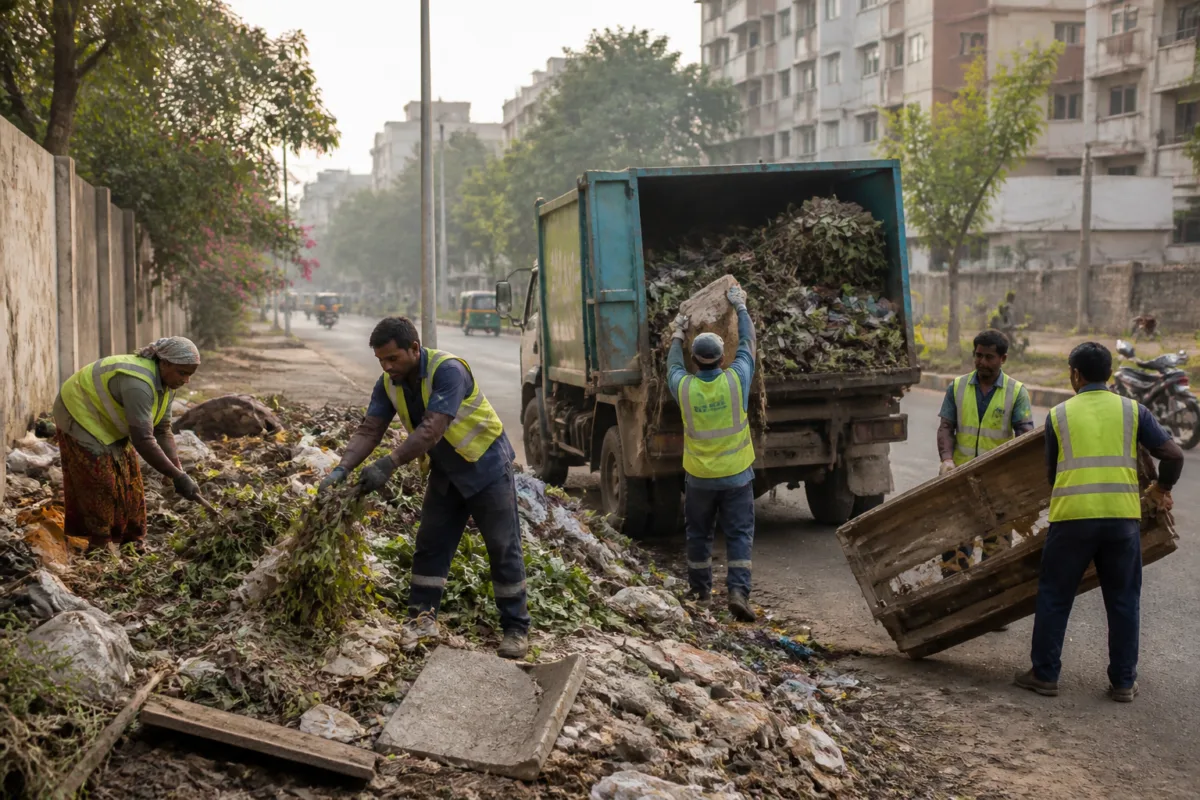
The Pune Municipal Corporation (PMC) has assigned direct responsibility to civic officials for clearing chronic garbage spots and several categories of waste across the city, with disciplinary action proposed in cases of negligence.
The decision was outlined in an office circular issued by deputy municipal commissioner Santosh Warule on 25 November. It follows concerns over recurring garbage accumulation in neighbourhoods and the presence of garden waste, construction debris, discarded furniture and other bulky waste on roadsides and open spaces.
Under the circular, assistant municipal commissioners, senior health inspectors, health inspectors and mukadams have been given 100% responsibility for the clearance of chronic garbage spots, garden waste, construction debris and discarded furniture in their respective jurisdictions. They are also expected to monitor these areas regularly and prevent waste from accumulating.
The PMC has separately assigned daily road sweeping and cleaning to contractors working in the respective zones. However, the circular makes clear that these contractors will not be responsible for collecting garbage dumped along roads or removing the other specified categories of waste. That responsibility will remain with the concerned PMC officials and staff.
The arrangement changes the focus from issuing general cleanliness directions to assigning responsibility for specific waste-clearance duties. Officials and employees responsible for sanitation may face disciplinary action if they fail to carry out those duties, according to the report.
The measure covers waste streams that often fall between routine sweeping and regular household garbage collection, including construction debris, garden waste and bulky discarded items. Its effectiveness will depend on how consistently officials monitor identified dumping locations, coordinate clearance and act when waste reappears.
The PMC’s decision comes as several areas continue to experience chronic garbage spots. The civic administration’s implementation of the circular will determine whether the new assignment of responsibility produces more consistent clearance across the city.

