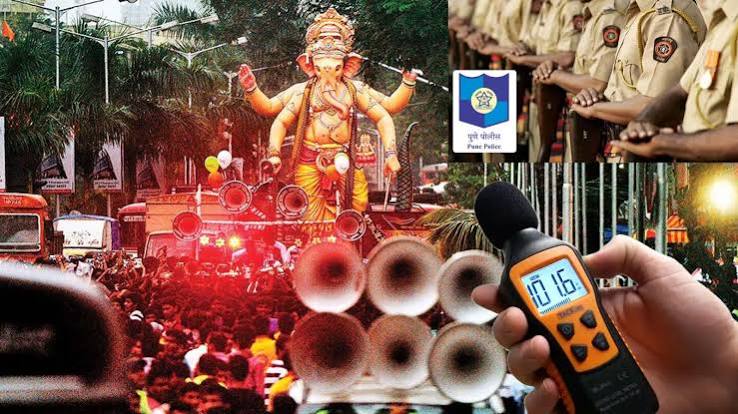
PUNE, August 29, 2026: Enforcement of noise-control regulations in Pune has come under renewed legal scrutiny, with a group of city-based organisations approaching the Bombay High Court over alleged non-compliance with directions concerning excessive sound. The case places the spotlight on how effectively existing rules are being applied during festivals, public gatherings and commercial activity in a rapidly urbanising city.
The contempt petition names the Pune police commissioner and alleges that statutory responsibilities and earlier court directions have not been adequately implemented. The petitioners argue that the issue extends beyond isolated violations and reflects weaknesses in sustained enforcement. The challenge comes against the backdrop of repeated concerns about amplified music, public events and commercial establishments operating close to residential neighbourhoods. Areas with a mix of housing, nightlife and commercial activity face particular pressure because residents and businesses often have competing expectations over how urban spaces should function. Under the Noise Pollution (Regulation and Control) Rules, 2000, residential areas have prescribed limits of 55 decibels during daytime and 45 decibels at night. Silence zones around institutions such as hospitals, educational facilities and courts carry stricter requirements. The rules are intended to protect public health and residential amenity rather than restrict any particular cultural or community activity.
For Pune, the challenge is increasingly one of enforcement capacity. A city can have regulations, monitoring equipment and complaint mechanisms, but these have limited value if violations are not consistently detected and acted upon. Urban planners say predictable enforcement is particularly important in densely developed neighbourhoods, where residential buildings may sit alongside restaurants, entertainment venues, roads and event spaces. The petition also raises a wider question about accountability. Noise is often treated as a temporary inconvenience, yet prolonged exposure can affect sleep, concentration and general wellbeing. For older residents, children and people living close to busy commercial corridors, the cumulative impact can be considerably greater than an occasional disturbance.
A more effective urban response would require clear responsibility between police, civic authorities and pollution-control agencies, alongside reliable measurement and publicly accessible records. Technology can help identify recurring hotspots, but enforcement decisions still need transparent procedures and consistent follow-through. The legal proceedings could therefore become a test of whether Pune’s noise regulations operate as enforceable civic standards or remain largely dependent on complaints and periodic drives. As the city enters another busy festival and event cycle, the focus will be on whether authorities can balance cultural and commercial activity with residents’ right to a safer and more liveable urban environment.