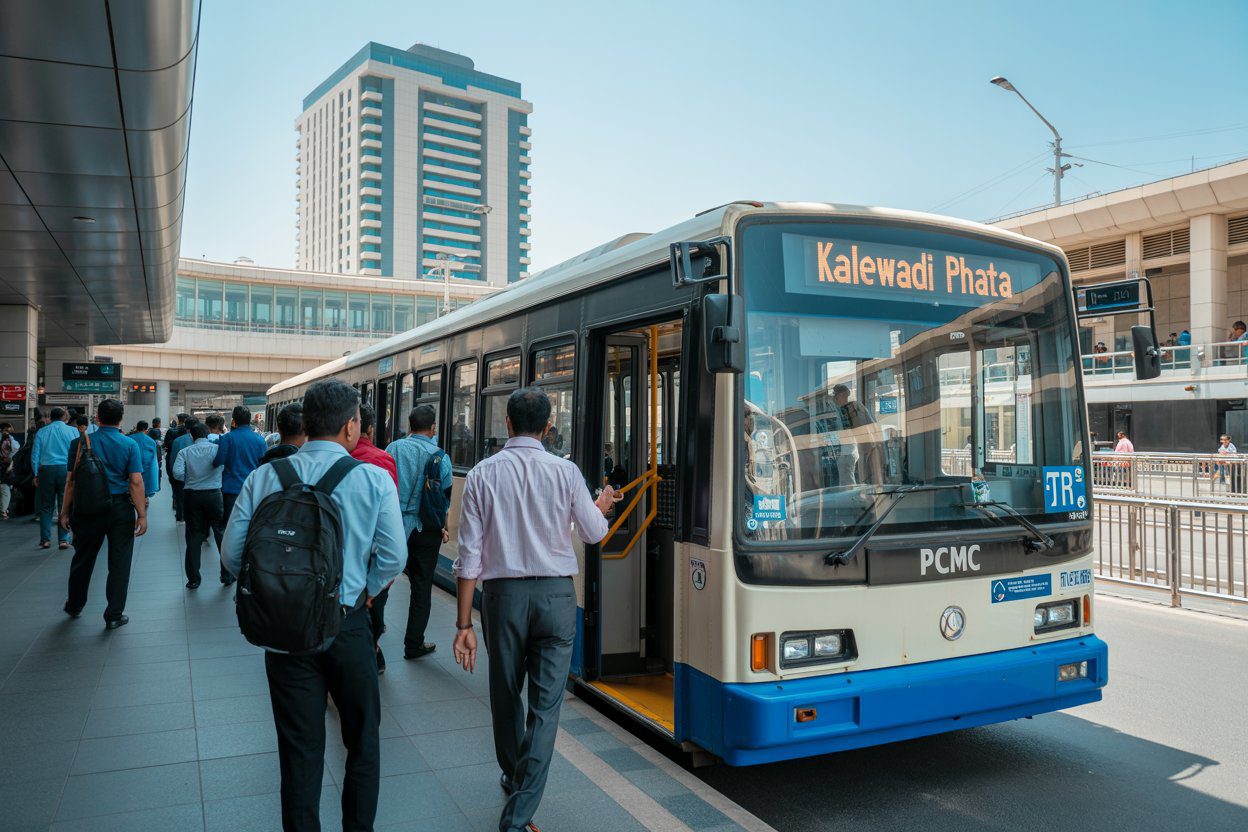
A new feeder bus service has been rolled out from the PCMC Metro station, extending last-mile connectivity to 11 stations across 23 routes in the city. But within days of launch, regular commuters are reporting a familiar problem: buses that do not run on time, frequencies that test patience, and a service that remains unreliable even as the network expands. The feeder service, operated jointly by Maha Metro and the city’s public bus utility, now covers major stations including PCMC, SNDT, Swargate, Shivajinagar, Ramwadi, Yerawada, and Kalyaninagar. At locations where bus parking or halting space is constrained, officials are planning to introduce dedicated autorickshaw services. The stated goal is to ensure at least one feeder option at every Metro station for commuting to nearby areas and back.
A senior official confirmed that surveys are underway at more stations to identify additional feeder routes, with improvements expected over the next few months. Private firms have also partnered with Maha Metro to strengthen the network, particularly along the IT park belt on Nagar Road and at the SNDT station. But for daily users, the gap between announcement and execution remains wide. The airport feeder service from Yerawada Metro station has drawn sharp criticism. A frequent traveller noted that buses often fail to run on schedule, forcing passengers to wait 30 to 40 minutes — an unacceptable delay for anyone catching a flight. The airport is a time-sensitive destination, yet the feeder service treats it like any other stop. Urban mobility experts point out that inconsistent last-mile connectivity undermines the entire Metro investment. A commuter who cannot rely on the feeder bus will simply return to private vehicles or app-based cabs, defeating the purpose of public transit.
The newly introduced PCMC feeder buses will serve areas up to Kalewadi Phata. That is a start. But commuters are demanding a frequency of at least one bus every 10 minutes on high-demand routes like the airport corridor. Without that, the feeder network risks becoming infrastructure theatre — present on paper, unreliable in practice. Maha Metro has shown it can build world-class rail systems. The harder task — ensuring that the last mile is as dependable as the first — remains unfinished. Surveys and partnerships are useful. But until a commuter can walk out of a Metro station and find a bus waiting, not just scheduled, the promise of seamless public transit will remain unfulfilled.
Pune Metro Feeder Buses Expand But Commuters Demand Reliability