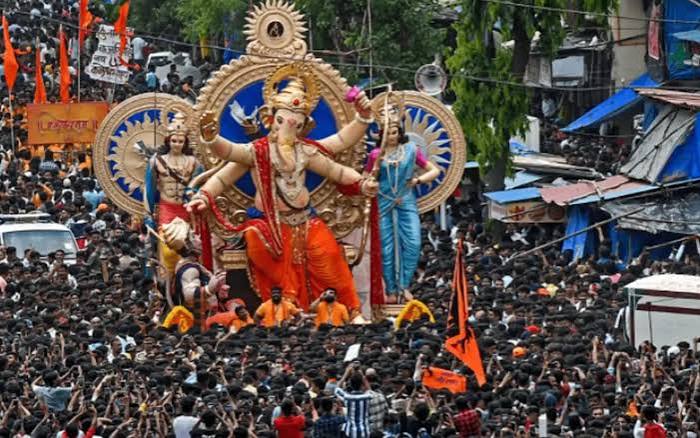
Pune: Ahead of Ganeshotsav, Pune’s district administration has tightened controls on high-intensity lighting during immersion processions, while police authorities are enforcing existing sound limits for DJs and loudspeakers. The measures come as residents increasingly raise concerns about excessive noise and public safety, putting festival management under pressure to balance cultural celebrations with the health, mobility and everyday needs of a dense urban population.
The district administration has ordered restrictions on laser lights during Ganesh immersion processions from September 14 to 25, including Anant Chaturdashi. The order covers public processions in the district and allows legal action against violations. The lighting restrictions add another layer to this year’s festival management. Rural police authorities have separately restricted laser and plasma-light systems and said DJs can operate only within prescribed sound limits. The focus is on preventing potentially harmful light exposure while keeping amplified sound within existing regulatory standards. For Pune, however, the bigger civic question is whether enforcement can keep pace with the scale of the celebrations. Large processions bring temporary road closures, pedestrian crowding, traffic diversions and prolonged exposure to amplified sound. Students, older residents, patients and people living close to procession routes can experience the effects well beyond the immediate celebration area. Recent citizen demonstrations over high-volume sound have underlined the growing public demand for more predictable festival management.
The sound restrictions are not a new regulatory concept. Maharashtra Pollution Control Board maintains the Noise Pollution (Regulation and Control) Rules, 2000, along with monitoring records from previous Ganesh festivals. More importantly, the National Green Tribunal has previously directed authorities in Pune to strengthen real-time noise monitoring around pandals and during immersion processions, including public display of measured noise levels. That history makes implementation more important than announcing another set of instructions. A senior civic official said advance coordination with mandals, police teams and enforcement agencies can reduce disputes during the festival itself. Clear information on permitted sound levels, procession routes and restricted equipment can also make compliance easier for organisers and citizens. There is an economic dimension as well. Pune’s festival ecosystem supports sound, lighting, transport, temporary infrastructure and small businesses. Regulation therefore needs to distinguish between responsible commercial activity and equipment or practices that create avoidable public-health risks. A predictable framework can give businesses clearer operating conditions while protecting residents.
The immediate test will be enforcement across both city and rural areas. If monitoring is transparent and rules are applied consistently, Pune can reduce conflict without treating public safety and cultural participation as competing objectives. The longer-term opportunity is to make festival planning part of the city’s wider approach to cleaner, safer and more liveable public spaces.