


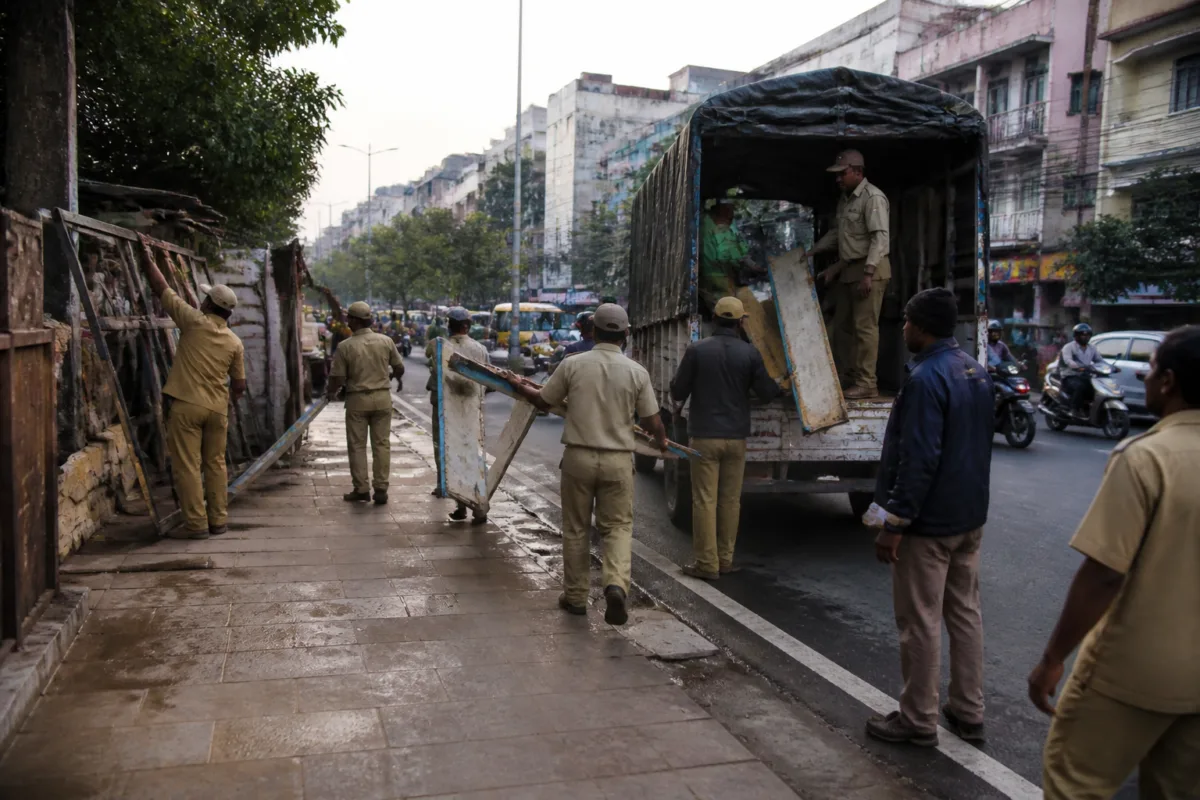

The Pune encroachment drive has removed 18,84,641 square feet of alleged encroachments in 13 days, but the civic campaign is facing a basic implementation test: whether cleared public spaces remain free of renewed commercial activity.
The Pune Municipal Corporation’s action has covered roads, footpaths, front margins, side margins and parking areas across neighbourhoods including Shivajinagar, Deccan, Sunday Peth, Narayan Peth, New Peth, Baner, Balewadi, Warje, Karvenagar, Kothrud, Hadapsar, Kharadi, Wagholi, Katraj, Kondhwa, Bibwewadi and Swargate, according to a report by Sakal.
Clearance and repeat encroachments
The report said its inspection found that shops and other commercial activities had returned at several locations within hours of the municipal action. It did not provide a location-wise breakdown of the repeat encroachments, nor did it cite a municipal document independently confirming the full area cleared.
The immediate urban impact is the loss of space intended for movement and access. Encroachments on footpaths can push pedestrians into traffic, while activity on road edges, front margins and side margins can reduce usable carriageway and affect parking and loading conditions. The report also linked such activity with traffic congestion and unclean surroundings.
The issue forms part of wider questions around civic infrastructure and urban governance. Related reporting is available in Urban Acres’ Infrastructure coverage and Analysis section.
Why enforcement continuity matters
Municipal Commissioner Naval Kishore Ram began the intensified action after concerns over encroachments, including those on Namdar Gopal Krishna Gokhale Road, were raised in the civic general body, the report said. The commissioner reportedly warned that shops returning to front margins, side margins and parking spaces could be sealed and that cases could be filed against those responsible.
However, Sakal reported that no concrete action involving shop sealing or criminal cases had been seen at several locations during the week before publication, despite encroachments reportedly returning. The report also said the commissioner had announced that the drive would continue for two months.
This places the focus on enforcement continuity rather than a single clearance operation. The Pune encroachment drive will depend on whether the civic body can maintain action after the initial removal of structures.
Staffing and monitoring gaps
The report said the civic encroachment and construction departments lacked sufficient personnel, vehicles and dedicated teams to cover the scale of the problem. It identified regular patrolling of cleared locations as necessary to prevent a repeat occupation.
The corporation also cancelled the contract of a parking operator responsible for storing seized material and reportedly warned that the names of people interfering in the action would be made public. These steps indicate an attempt to strengthen operational control, although the report did not provide details of the contract decision or subsequent enforcement outcomes.
Residents quoted in the report called for uniform action against encroachments outside ordinary shops as well as those linked to political office-bearers or corporators. These claims remain allegations reported by Sakal and are not independently established in the available material.
Complaints and accountability
The report further referred to citizen allegations of financial links between some enforcement staff, private individuals and local businesses. It said a previous policy of transferring assistant encroachment inspectors every three months had been introduced under former commissioner Rajendra Bhosale but was later discontinued.
The material does not establish that any official committed wrongdoing or confirm that an independent inquiry has been ordered. The allegations therefore remain source-attributed complaints rather than established findings.
For Pune’s streets, the unresolved question is whether the municipal corporation can pair removal with sustained monitoring, adequate staffing and consistent enforcement. Without those measures, the reported clearances may provide temporary relief while leaving the underlying cycle of occupation and removal unchanged.

