


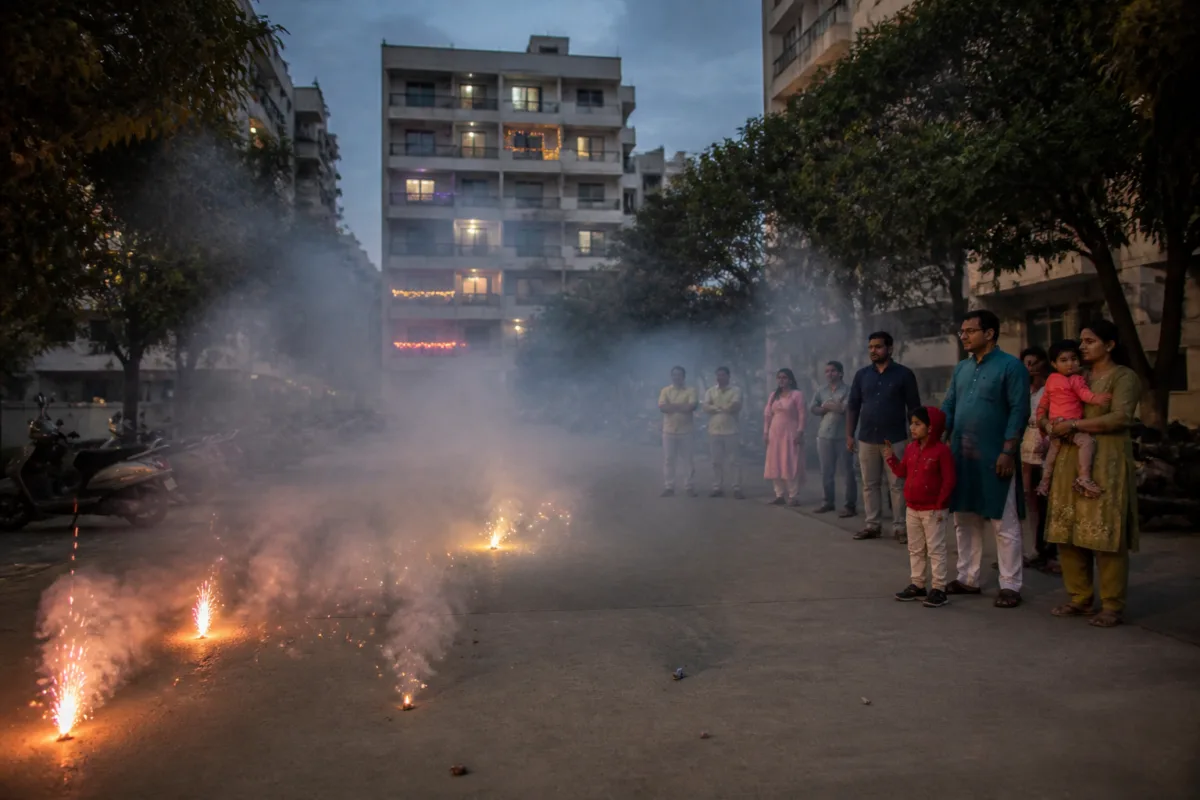
Firecracker smoke and loud noise during Diwali can worsen respiratory problems and place additional strain on people with heart conditions, while explosions close to the ears may cause temporary hearing problems, doctors cited by Lokmat – Pune have warned.
Children, senior citizens and people living with asthma, allergies, chronic obstructive pulmonary disease, bronchitis, heart disease, high blood pressure or irregular heart rhythms face higher risks from exposure, according to the report. The warning comes as high-noise crackers and smoke-emitting products are being sold in Pune for the festival season.
After crackers are ignited, fine particles, smoke and chemical compounds enter the air. Breathing this polluted air can cause eye irritation, throat discomfort, coughing, breathing difficulty and chest tightness. Children may be more vulnerable because their respiratory systems are still developing, while older people and patients with existing respiratory illnesses may experience a worsening of symptoms.
Dr Rahul Telang, an ear, nose and throat specialist at Sassoon Hospital, said fine particles and chemical components in cracker smoke can irritate the respiratory tract and aggravate coughing, throat irritation, breathlessness and asthma. He also warned that crackers exploding close to the ear can injure the eardrum and affect hearing.
The report also identifies loud noise as a separate health risk. Explosions near the ear may cause ringing, ear pain, reduced hearing or temporary hearing loss. Sudden loud sounds can also cause fright, fear and mental stress. Children should be kept away from high-noise crackers and people should maintain a safe distance from explosions.
For people with heart disease, air pollution and sudden noise may create additional stress. Dr Rahul Sawant, a cardiologist, said patients with heart disease, high blood pressure or irregular heartbeats should stay away from smoke and loud noise as far as possible. Chest pain, increased palpitations, severe breathlessness or sudden discomfort require immediate medical attention.
The doctors advised residents to choose crackers that produce less smoke and noise, use open spaces and keep children, senior citizens and ill people away from firing areas. People with asthma or other respiratory conditions should avoid smoke exposure and keep prescribed medicines or inhalers nearby. If smoke levels rise, residents can remain indoors with doors and windows closed. The advice also includes avoiding explosions near the ears and seeking urgent medical care when serious symptoms appear.

