


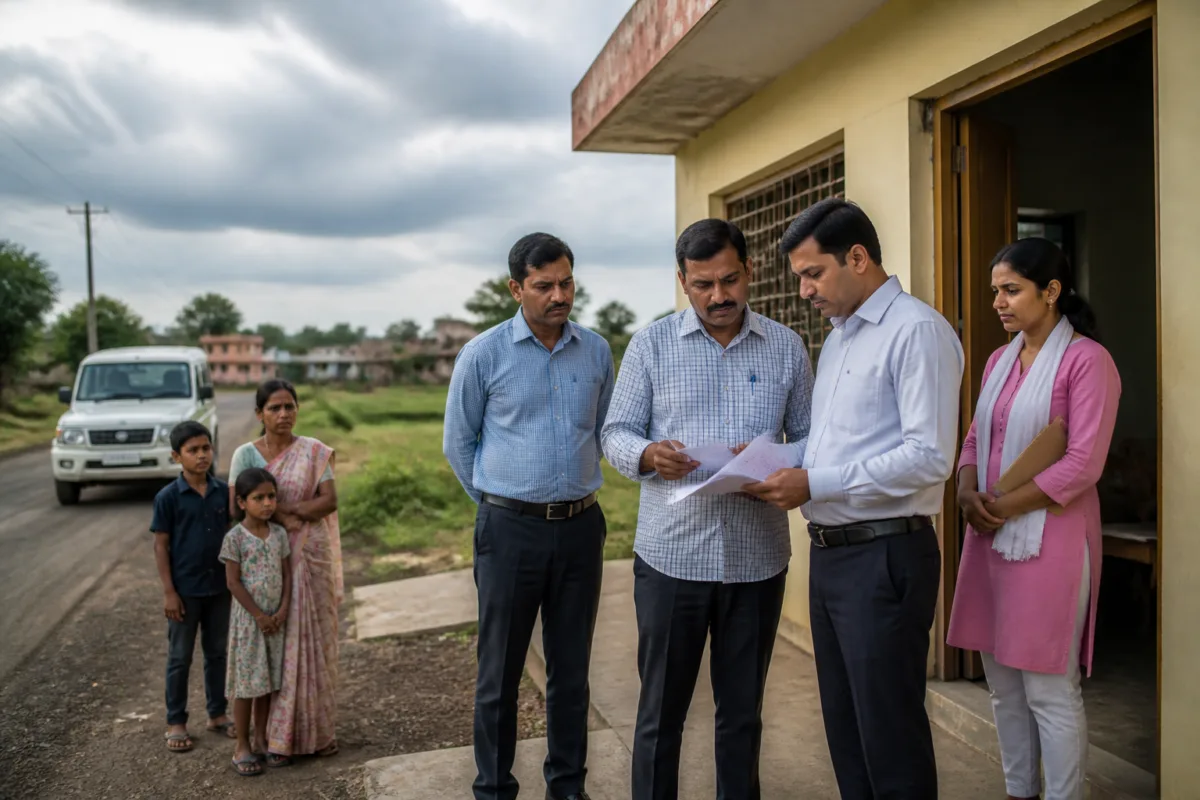
Pune district’s child gender ratio has fallen well below the natural birth pattern, with the rural figure reaching 844 girls for every 1,000 boys by the end of October, according to health department data reported by Pudhari. The district-wide ratio was 895 in 2025 and stood at 882 during the current year up to October, raising questions about social attitudes, prenatal sex determination and the effectiveness of enforcement mechanisms.
The figures are significant because the imbalance is not only a demographic statistic. It is an indicator of how families, health facilities and local administrations interact around pregnancy, reproductive choice and the expectation of a male child. The sharper decline in rural areas also places attention on the reach of regulatory surveillance and counselling beyond the formal network of registered medical establishments.
The health department has identified several possible pressures behind the trend, including family and social expectations for a boy, discrimination between sons and daughters and the possibility of illegal prenatal sex determination. The department has not stated that every case reflected in the ratio is the result of illegal testing. However, the gap between the reported figures and the natural birth pattern has intensified concern over whether existing safeguards are detecting and preventing violations effectively.
The source report states that, naturally, around 105 boys are expected to be born for every 100 girls. Expressed against a base of 1,000 boys, that would indicate a substantially higher number of girls than the 844 recorded in rural Pune. The comparison does not by itself establish the cause of the decline, but it shows the scale of the deviation that public authorities are being asked to examine.
The problem therefore sits at the intersection of social behaviour and administrative capacity. A district may have rules governing diagnostic facilities, inspection teams and complaint channels, but those systems are useful only when they can identify violations that are deliberately concealed. Monitoring a registered sonography centre is a different task from detecting a diagnostic service operating through a vehicle, an informal network or an unauthorised location.
Pune’s health department has said that action is being taken not only to strengthen supervision of sonography centres but also to examine suspected prenatal sex determination in vehicles and unauthorised places. This distinction is important. A compliance model focused solely on licensed facilities may leave gaps if illegal services move outside the locations that inspectors routinely monitor.
The department has also called for confidential information about suspicious transactions and stronger action against those found responsible. The use of confidential reporting indicates that enforcement cannot depend only on routine inspections. It requires information from people who may know how services are being offered, where patients are being directed and how payments or referrals are being handled. The supplied report does not provide details of the number of complaints received, inspections conducted, prosecutions filed or convictions secured, so the operational effectiveness of this mechanism cannot yet be assessed.
The areas of Shirur, Uruli Kanchan and Daund have emerged in connection with cases that the department is examining. Officials have said that investigations are underway to determine where else similar incidents may be occurring. The report does not establish that the entire rural district is affected equally, nor does it identify a district-wide network. What it does show is that specific cases have prompted officials to widen their inquiry beyond the locations already known to them.
This is where the data needs to be read alongside the institutional response. A declining birth ratio may reflect social preference, access to illegal testing, reporting patterns or a combination of factors. Without a public breakdown by taluka, facility, case type and enforcement outcome, the available figures cannot show which explanation is dominant. They do, however, establish that the district’s existing response requires closer scrutiny.
The Pre-Conception and Pre-Natal Diagnostic Techniques framework, referred to in the report as the PCPNDT law, is the central regulatory instrument identified by the health department. Its relevance in Pune is not limited to the technical act of testing. Implementation involves supervising diagnostic facilities, preventing disclosure of foetal sex, identifying suspicious conduct and taking action when violations are found. The department’s own emphasis on both centre-based surveillance and unauthorised operations points to the breadth of this administrative responsibility.
Enforcement also has a preventive dimension. The source report records the view that families in rural areas require counselling. Counselling cannot substitute for investigation or legal action where a violation has occurred, but it addresses the social demand that creates a market for illegal services. The pressure placed on women to produce a son, and the unequal value assigned to sons and daughters, are described as factors that increase the seriousness of the issue.
That pressure changes the way the problem is experienced at ground level. The decision around a pregnancy may not be made by the woman alone. Family expectations, fear of discrimination and the belief that a son carries greater social or economic value can influence what happens before birth. The supplied material does not provide interviews with affected women or families, but it identifies the social environment in which the reported ratio has declined.
The rural-urban difference is the clearest data signal currently available. The district-wide ratio was 895 girls per 1,000 boys in 2025, while the rural ratio fell to 844 by the end of October in the current year. The figures are not directly comparable in time because the first is an annual figure and the second is an October year-to-date figure. Even with that limitation, the rural number is sufficiently low to warrant location-specific investigation rather than a uniform district-wide response.
The data also shows why headline-level enforcement announcements are not enough to judge progress. A stronger system would need to connect the birth data with inspections, complaints, investigations and outcomes. The source does not state how many sonography centres operate in the district, how often they are inspected, how many mobile or unauthorised operations have been detected, or how many cases from Shirur, Uruli Kanchan and Daund have reached prosecution. These missing details are important because they would show whether the decline reflects enforcement failure, delayed detection or a broader social pattern.
The administrative challenge is consequently twofold. First, authorities must ensure that diagnostic facilities operating within the formal health system comply with the law. Second, they must identify activity outside that system, where conventional registration and inspection mechanisms may have limited visibility. The department’s reference to vehicles and unauthorised locations suggests that officials recognise this second challenge, although the report does not provide the scale of such operations or the resources assigned to detect them.
The issue also tests coordination. Health officials are responsible for monitoring and enforcement under the relevant legal framework, while local-level engagement is needed for counselling and community outreach. The report does not detail the roles of specific local bodies, medical associations, police authorities or elected institutions. That absence itself points to the need for clearer public information about who receives complaints, who investigates them and what happens after a suspected violation is identified.
Pune’s case demonstrates how demographic indicators can expose weaknesses that are otherwise difficult to see. A sonography centre may appear compliant during a routine visit, while social pressure can continue to shape decisions in homes and communities. Conversely, a low ratio should not be used to accuse particular facilities or communities without case-level evidence. The public value of the data lies in directing scrutiny and improving accountability, not in replacing investigation with assumption.
The immediate evidence confirms three points: the district’s reported birth sex ratio has declined, the rural figure is markedly lower, and the health department is examining both registered centres and possible unauthorised operations. It does not yet establish the exact contribution of illegal prenatal sex determination, social preference, reporting variation or other factors. Those questions require more detailed district and taluka-level data, along with transparent information on inspections and enforcement outcomes.
The next stage will depend on the investigations in Shirur, Uruli Kanchan and Daund, the department’s efforts to identify other locations and the effectiveness of confidential reporting and counselling. Until those details are available, Pune’s figures remain a serious warning about the distance between a legal prohibition and its enforcement in everyday healthcare settings.

