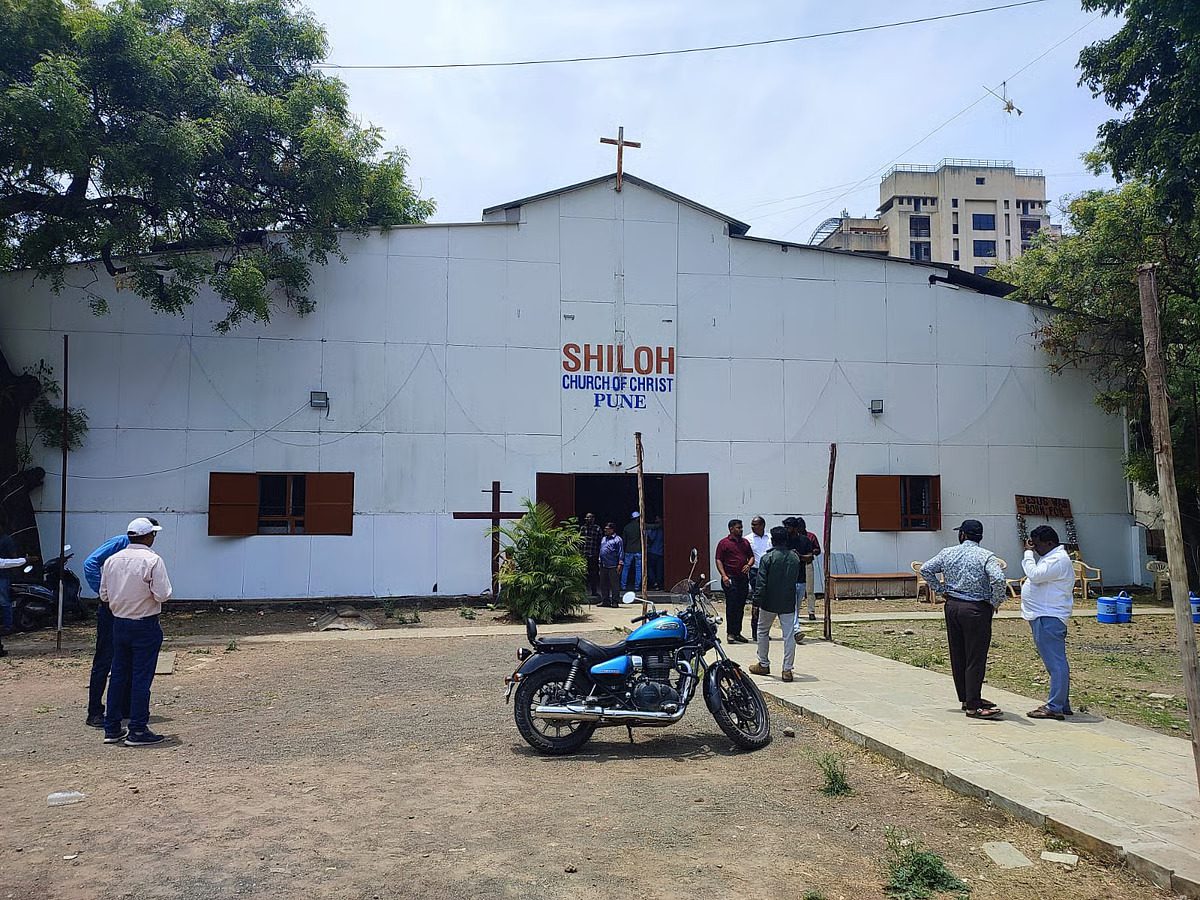
The Pune Cantonment Board has suspended demolition proceedings against a three-decade-old church in Dhobi Ghat, directing its management instead to regularise the structure under existing provisions. The decision follows widespread protests from the local congregation after a demolition notice was issued on March 23. The structure in question, the Shiloh Marathi Church of Christ, spans approximately 10,000 square feet on Class B-1 land. According to official land records, the Holder of Occupancy Rights is listed as the United Kingdom’s High Commissioner. While the land is owned by the central government, the cantonment board exercises administrative control and is empowered to enforce regulations.
A senior official confirmed that the prayer hall was built without submitting building plans or securing mandatory approvals nearly 30 years ago. The board had first issued a notice regarding the unauthorised construction in 2006, and an appeal filed by the church was rejected in 2014. The official stated that the current action followed repeated complaints, dismissing allegations of selective targeting. However, the official also noted that the construction does not fall strictly under encroachment and can be considered for regularisation under applicable provisions. This distinction proved critical. Rather than proceeding with demolition, the board has now asked the church authorities to follow due process by submitting the required application for regularisation.
The congregation had demonstrated on April 17, raising concerns over the short notice period and lack of due process. A delegation later met the board’s chief executive officer to submit a formal request for regularisation. In its official submission, the church highlighted its “peaceful, bona fide and lawful possession” of the property for approximately 30 years. Beyond its religious function, the facility serves as a community hub offering de-addiction counselling, youth empowerment initiatives, and support programmes for women and families. This social role has been cited by community members as a reason to seek a legal resolution rather than demolition.
The church has expressed full cooperation with the board and requested a stay on any demolition activity until documents are thoroughly verified and a joint survey is conducted. It has also stated its willingness to take all necessary steps to compound the matter under the law, including the removal of any excess structure if required. For urban observers, this case highlights a recurring tension in Indian cities: how to balance enforcement of building regulations with the reality of long-standing, community-serving structures that were never formally approved. The board’s decision to pause demolition and pursue regularisation suggests a pragmatic path forward, provided the church completes the required processes.
The situation now appears headed toward an amicable legal resolution. The board has stated that the application will be reviewed in accordance with existing rules before any final decision is made.
Pune Cantonment Board Halts Church Demolition