


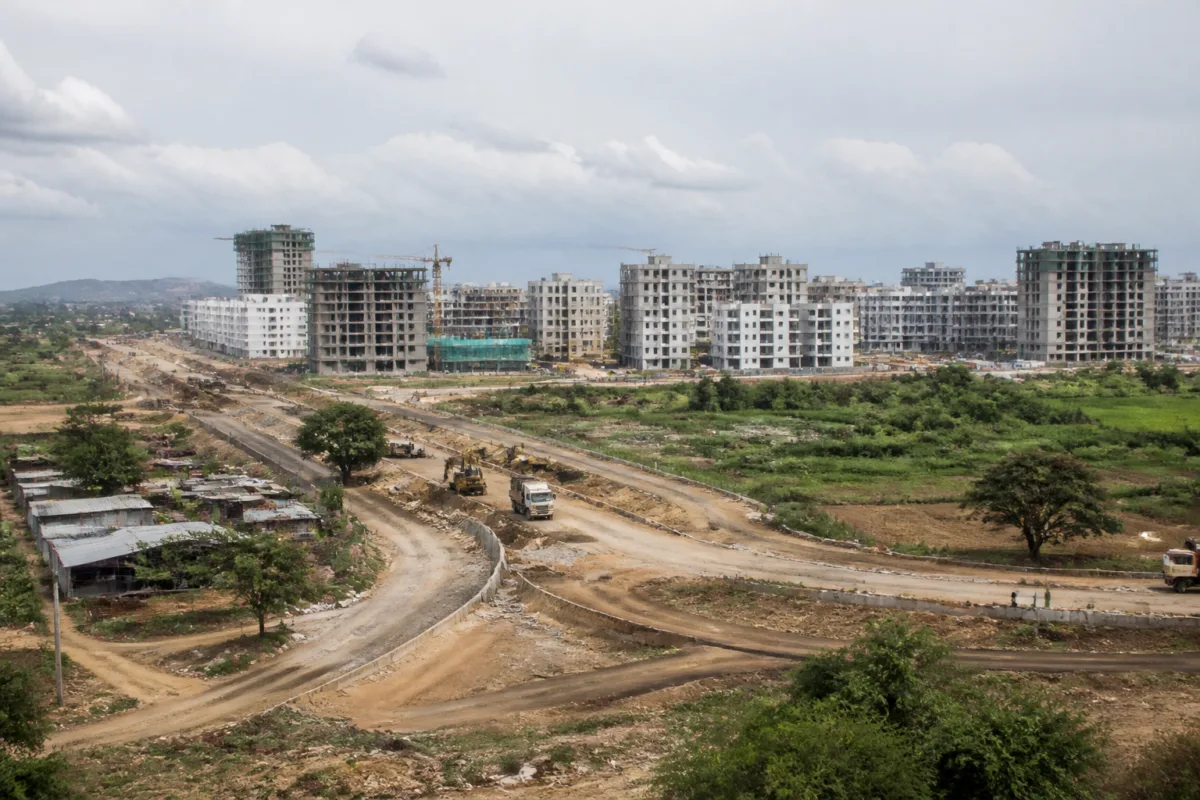
The dispute over planning authority for Pune’s 23 newly incorporated villages has moved from an administrative change to a question with direct consequences for township development, approval timelines and coordination between public agencies. CREDAI-Pune has asked the state Urban Development Department to retain the Pune Metropolitan Region Development Authority (PMRDA) as the planning authority for integrated township projects in these villages, while the department has sought the Pune Municipal Corporation’s response.
The issue follows a government order dated 12 February 2026 that appointed Pune Municipal Corporation as the planning authority for the 23 villages. Before that order, PMRDA had been appointed as the special planning authority for the areas. The change has created uncertainty for projects that had already moved through PMRDA’s approval system, particularly where revised master layouts were approved and premiums had been paid.
The central difficulty is not simply whether one agency or another should issue permissions. It is whether projects that began under one planning framework can continue without interruption after responsibility has shifted to another authority. The supplied report says some integrated township projects are located entirely within PMC’s jurisdiction, while others fall across the jurisdictions of PMC and PMRDA. That overlap makes the question of responsibility more complicated than a straightforward transfer of files.
## Pune 23 villages township projects and the approval transition
CREDAI-Pune Metro president Manish Jain has written to the Urban Development Department seeking directions that PMRDA be appointed as the planning authority for all integrated township projects in the 23 villages. The organisation has argued that several projects had already received approval for revised master layout plans from PMRDA and that the required premiums had been paid to the authority.
According to the report, development work in many of these projects is also substantially complete. A change in planning authority at this stage can therefore affect more than future proposals. It may require developers and public agencies to determine how earlier approvals, pending permissions and remaining development obligations will be treated under the new administrative arrangement.
The report does not establish that existing approvals have been cancelled or that any project has been formally stopped. It records CREDAI’s concern that the transition could create difficulties in the next stages of approval. That distinction is important. The immediate issue is an administrative and procedural uncertainty, not a confirmed cancellation of township projects.
For residents and future occupants, the institutional question can have practical consequences. Integrated townships depend on a sequence of permissions, layout approvals and development work. If responsibility for these steps is unclear, the uncertainty can affect the timing of construction and the completion of associated infrastructure. The report, however, does not provide project-wise details or quantify the number of affected developments.
## Why the competing jurisdictions matter
The 23 villages were added to Pune Municipal Corporation’s expanded limits, bringing them into the municipal planning framework through the February order. At the same time, PMRDA had previously handled the areas as the special planning authority. This creates a transition between a regional development authority and the city corporation that now governs the villages as part of its enlarged boundary.
Their institutional roles are not identical in the way they are described in the report. PMRDA’s involvement covered the villages as a special planning authority, while PMC is now the designated planning authority following the government order. Township projects that cross both jurisdictions create a further layer of coordination because a single development may not correspond neatly to one administrative boundary.
The report says the Integrated Township Regulations allow the government to issue directions on which planning authority should grant permissions and supervise a project when it falls within the jurisdiction of more than one authority. CREDAI has relied on this provision in asking the state to designate PMRDA for all integrated township projects in the 23 villages.
This provision is significant because it identifies a mechanism for resolving overlapping authority. It also shows that the current dispute is not only about processing speed. It concerns the legal and administrative continuity of projects whose layouts, permissions and supervision may involve more than one institution.
## The approval backlog claim
CREDAI has also argued that PMC has a substantially larger number of pending building permission and layout approval proposals than PMRDA. The organisation says this is contributing to longer waiting periods for development permissions from the municipal corporation.
The report does not provide the number of pending proposals, the average processing time at either authority or a project-wise comparison. As a result, the claim establishes the position taken by CREDAI but does not, on the evidence supplied, independently measure the difference in performance between PMC and PMRDA.
CREDAI’s argument is that integrated township projects must be completed within prescribed timelines and that approval processes therefore need to move quickly. It has pointed to PMRDA’s earlier involvement in the affected projects and to the availability of a director of town planning post within the authority. According to the organisation, this institutional capacity could allow technical matters to be handled more efficiently.
The argument places administrative capacity at the centre of the dispute. For a township project, planning permission is not an isolated transaction. Layout scrutiny, development permissions, technical review and supervision are linked to the project’s ability to proceed through successive stages. When the responsible authority changes, the speed and clarity of that chain become important to both project promoters and the public agencies responsible for infrastructure.
At the same time, the supplied report contains only CREDAI’s assessment of the comparative backlog. PMC’s position has not been included. The Urban Development Department has sought the municipal corporation’s feedback, making that response the next significant piece of information in the matter.
## A governance problem created by urban expansion
The case illustrates a recurring challenge in the expansion of Indian cities: municipal boundaries can change faster than planning and approval systems can be integrated. Villages incorporated into a city become part of a larger urban administration, but projects that were initiated under an earlier regional framework do not automatically fit into the new arrangement.
In Pune’s case, the question has emerged in areas where township development is already under way. Some projects are entirely inside the municipal boundary, while others extend across PMC and PMRDA jurisdictions. This means that the boundary change has both a territorial and a procedural dimension. It alters who is responsible for planning while also affecting projects whose development history predates the change.
The available information does not indicate whether the February government order created a transitional protocol for projects already approved by PMRDA. It also does not state whether all affected projects will be transferred, jointly supervised or handled through project-specific directions. Those unanswered questions are central to understanding how the change will operate in practice.
A clear decision would need to establish which authority is responsible for permissions and supervision, how earlier PMRDA approvals will be recognised, and how projects crossing jurisdictional boundaries will be administered. The report records the demand for such clarity but does not yet provide the government’s final position.
## What the next decision will determine
The Urban Development Department’s request for PMC’s feedback indicates that the matter remains under consideration. Until the department issues directions, the immediate uncertainty concerns the route that integrated township projects in the 23 villages must follow for subsequent approvals.
The decision will also clarify whether the government views these projects primarily as part of PMC’s new municipal planning jurisdiction or as a special category requiring PMRDA’s continued involvement. That distinction could determine how earlier approvals, paid premiums and pending applications are handled.
The evidence currently confirms three developments: PMC became the planning authority for the 23 villages under the 12 February 2026 government order; CREDAI-Pune has sought PMRDA’s appointment for integrated township projects; and the Urban Development Department has asked PMC for its opinion. It does not yet confirm a final allocation of responsibility, a quantified approval backlog or any formal stoppage of construction.
The next material development is PMC’s response and any direction issued by the Urban Development Department under the Integrated Township Regulations. Until then, the 23 villages remain a test of whether a change in urban jurisdiction can be implemented without leaving partially approved and cross-boundary township projects in an administrative gap.

