


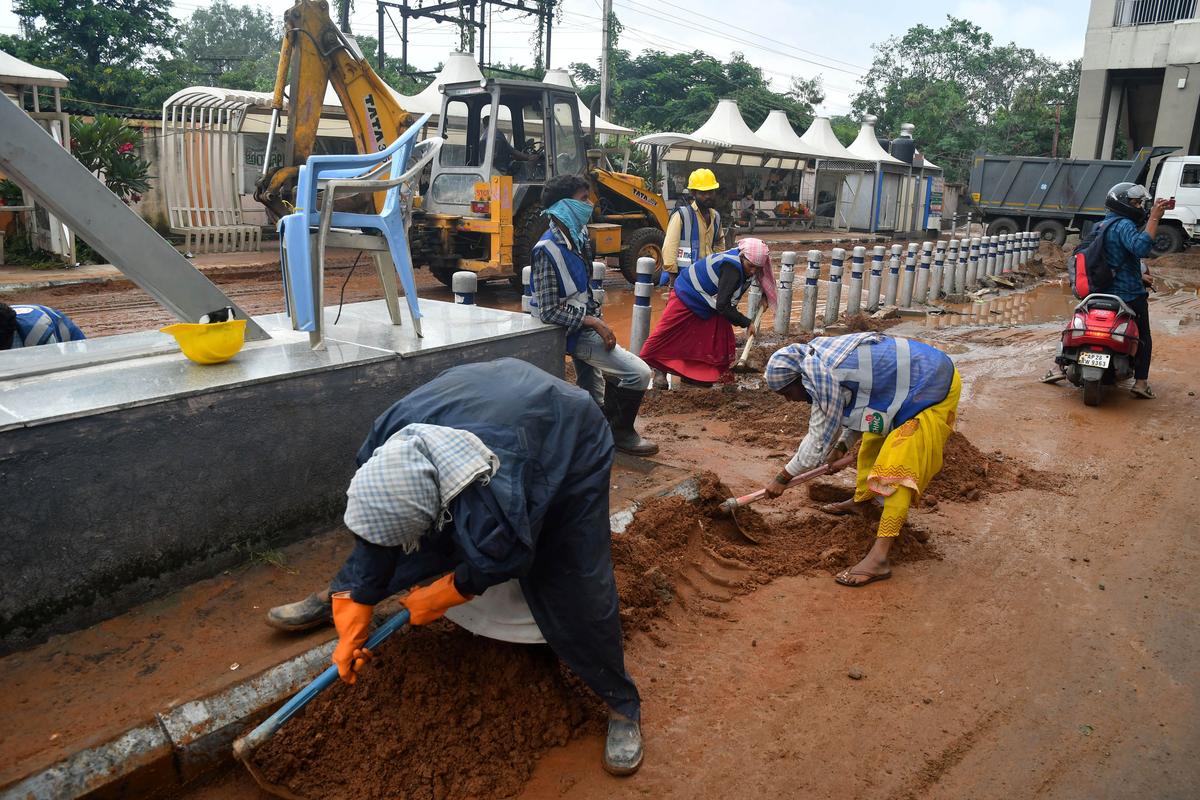
Public Outcry Forces GHMC to Resume Stalled Roadwork in Suryanagar
After months of bureaucratic inaction, alleged corruption, and mounting frustration, the long-delayed roadwork in Suryanagar Colony, Tolichowki, has finally commenced. The 500-metre road stretch, which had been left incomplete for over a year, had turned into a symbol of civic neglect. Persistent complaints from residents, along with allegations of bribery and extortion against Greater Hyderabad Municipal Corporation (GHMC) officials, had stalled progress, leaving locals grappling with deteriorating infrastructure. The breakthrough came after the Suryanagar Colony Welfare Association (SCWA) escalated their grievances to the vigilance and enforcement department, demanding immediate action. The move not only forced accountability within the GHMC but also showcased the power of public advocacy in driving change.
Residents’ Battle Against Civic Neglect and Corruption
The SCWA, representing nearly 5,000 residents, had been vocal about widespread corruption within GHMC Circle 18, accusing officials of demanding bribes to clear civic projects. The roadwork project, sanctioned with a budget of ₹70 lakh, had been inexplicably delayed despite repeated follow-ups. Residents alleged that they faced harassment and bureaucratic hurdles whenever they demanded transparency on the project’s status. “This is not just about a road. It is about the years of neglect we have suffered due to inefficiency and corruption. We had to escalate our complaints to higher authorities to get basic civic work done,” said Asif Sohail, an advisor to SCWA. The protests and continued media attention finally led to the GHMC resuming construction, offering a small but significant victory for the local community.
Civic Infrastructure and Public Accountability in Hyderabad
This incident highlights a larger civic issue affecting Hyderabad’s urban infrastructure. Delays in roadworks, drainage systems, and public amenities have become a recurring issue, often attributed to bureaucratic inefficiency and lack of oversight. Comparatively, other metropolitan cities such as Bengaluru and Mumbai have implemented stricter monitoring mechanisms to prevent such delays, ensuring better transparency in civic project execution. In Hyderabad, however, infrastructure projects frequently remain incomplete for months or even years, disrupting daily life and economic activity. The Suryanagar case underscores the urgent need for improved governance and stricter anti-corruption measures in municipal bodies, ensuring that citizens do not have to fight prolonged battles for basic amenities.
Sustainability and the Need for Long-Term Urban Planning
From a sustainability perspective, the failure to maintain road infrastructure contributes to environmental and economic inefficiencies. Poorly maintained roads lead to increased vehicular emissions, fuel wastage, and air pollution, further impacting Hyderabad’s already deteriorating air quality. Additionally, stalled civic projects result in excessive material wastage, increasing the carbon footprint of urban development. A sustainable approach to infrastructure planning must include timely completion, quality control, and robust monitoring to prevent financial and environmental losses. While the resumption of work in Suryanagar is a positive step, it also serves as a reminder of the urgent need for structural reforms in urban governance, ensuring that such delays do not become a recurring challenge.
